Skiing in Japan for the First Time: Lifts, Words and Rules
This article contains ads (affiliate links). If you book or buy through these links, COTARU, the operator of this site, may receive a commission.
This guide is for visitors skiing at a Japanese resort for the first time. Skiing itself is the same everywhere, but lift passes, slope rules and signs work a little differently in Japan. Using Niseko as an example, here's what you need to know so your first day goes smoothly. For lift pass prices, see our Niseko lift pass guide; for choosing a resort, lessons and rentals, see our Niseko ski resort guide.
Key points
- Lift passes are IC cards (key cards). Hold yours to the reader at the gate to go through
- Niseko's online lift passes need a ¥500 key card on first purchase: not refundable, but reusable
- On the lift, don't rock the chair, jump off or turn around. If you can't get off, stay seated
- Leave the ski area only through the official gates. Never enter closed runs or no-entry zones
The Short Answer: What to Know on Day One
| Topic | Key point | More |
|---|---|---|
| Lift passes | IC card (key card). Hold it to the reader at the gate | "Lift passes and gates" below |
| Chairlifts | Learn how to ride first. No rocking the chair or jumping off | "How to ride a chairlift" below |
| Slope rules | Control your speed, give way to people ahead, follow signs | "Rules on the slopes" below |
| Leaving the ski area | Only through the official gates (the Niseko Rules) | The Niseko Rules |
| Prices | Vary by pass type and period | Niseko lift pass guide |
| Lessons | Recommended for first-timers. Lessons in other languages are available | Niseko ski resort guide |
- All Mountain Pass season28 November 2026 – 5 May 2027
- Night skiing12 December 2026 – 22 March 2027 (planned)
Dates may change. Lift hours differ by resort, so check the official websites
Lift Passes and Gates: Hold Your IC Card to the Reader
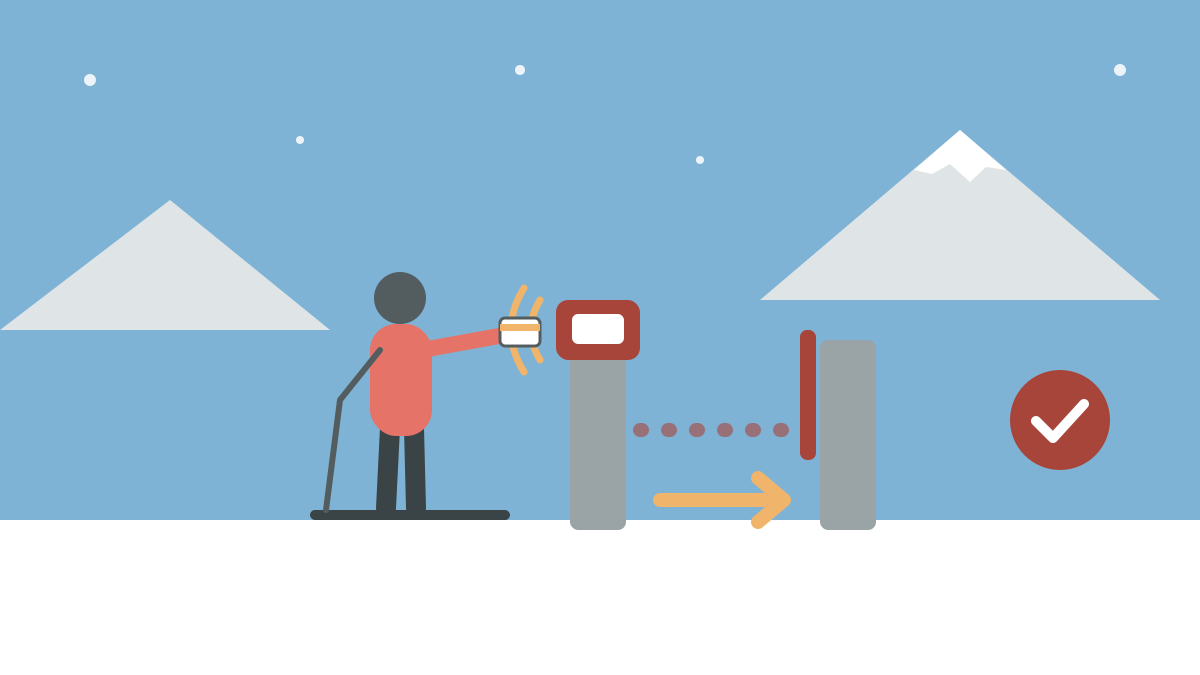
At most Japanese resorts, the lift pass is an IC card. There's a gate at the entrance to each lift; hold your card near the reader and the gate opens. Niseko's lifts also read your card at the gate.
Niseko United's online lift passes (2026-27 season) work like this:
- Buy online and you'll get a QR code (proof of purchase) by email
- Scan the QR code at an automatic ticket machine at the resort and collect your key card
- Head straight to the lift gate. From the second time on, go directly to the gate with your key card
The key card costs ¥500 and is a purchase, not a deposit, so it isn't refunded — but you can use it again and again. If it's damaged you'll need to buy a new one. Keep it safe and take it home for your next trip.
- Your pass starts when the card is first scanned at a lift gate or when you get off a shuttle bus (see Getting Around Niseko in Winter for how this works with the shuttle)
- If the gate doesn't read your card, don't force your way through — show it to the nearest staff member
- Children's passes: at HANAZONO, children aged 3 and under ride free; bring the child to the counter to get the free pass. Children must ride lifts with an adult
This image was generated by AI for illustrative purposes.
How to Ride a Chairlift: Don't Rock, Don't Jump
HANAZONO's resort rules say the following about lifts. If it's your first time, make sure you know how to ride before you get on.
- Understand how to ride the lift safely before using it
- Ride wearing your skis or snowboard, and avoid bumping into other passengers
- If you can't get off, stay seated (don't jump)
- Don't: rock the chair, jump off the chair, play or turn around on the chair, or touch the towers with your poles or anything else
- Preschool children must ride with a parent or guardian
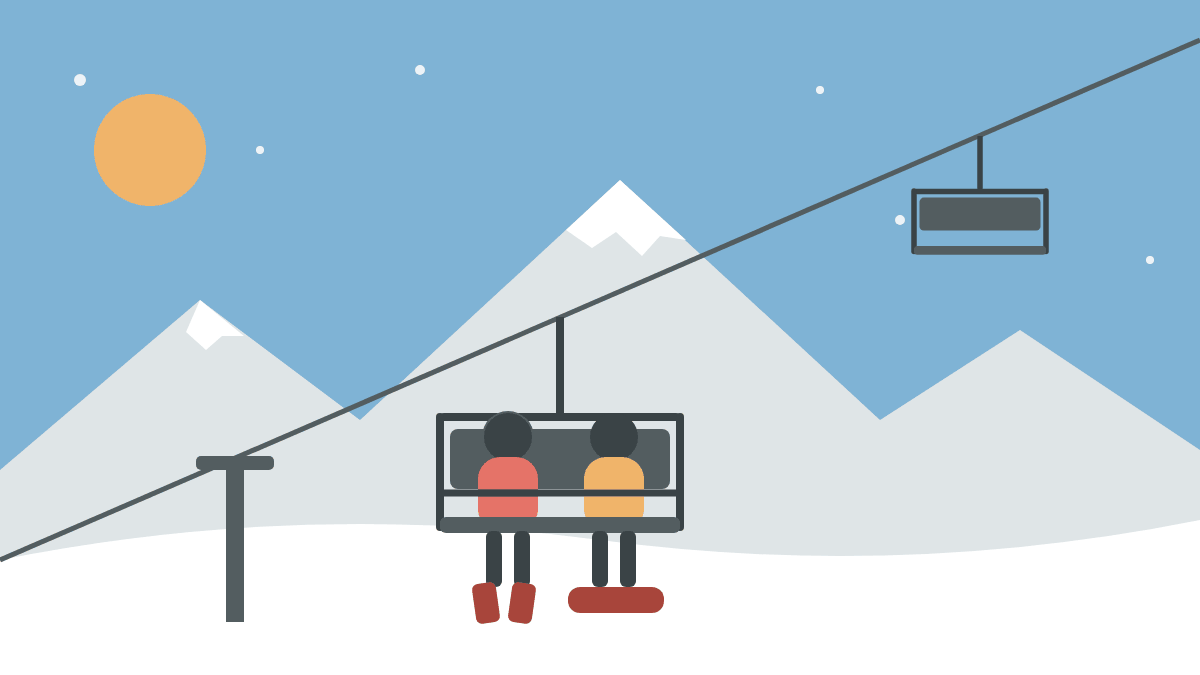
Riding a chairlift generally takes three steps:
- Wait: When the chair ahead leaves, move up to the line, look back over your shoulder and wait for your chair. Hold both poles in one hand
- Sit and lower the bar: Sit down as the chair arrives and lower the safety bar if there is one. Keep your ski tips up
- Get off: As you near the top, raise the bar, keep your skis flat, stand up and glide away from the unloading area
Snowboarders usually ride with only their front foot strapped in. If you're nervous, tell the lift staff "hajimete desu" (it's my first time) before you get on.
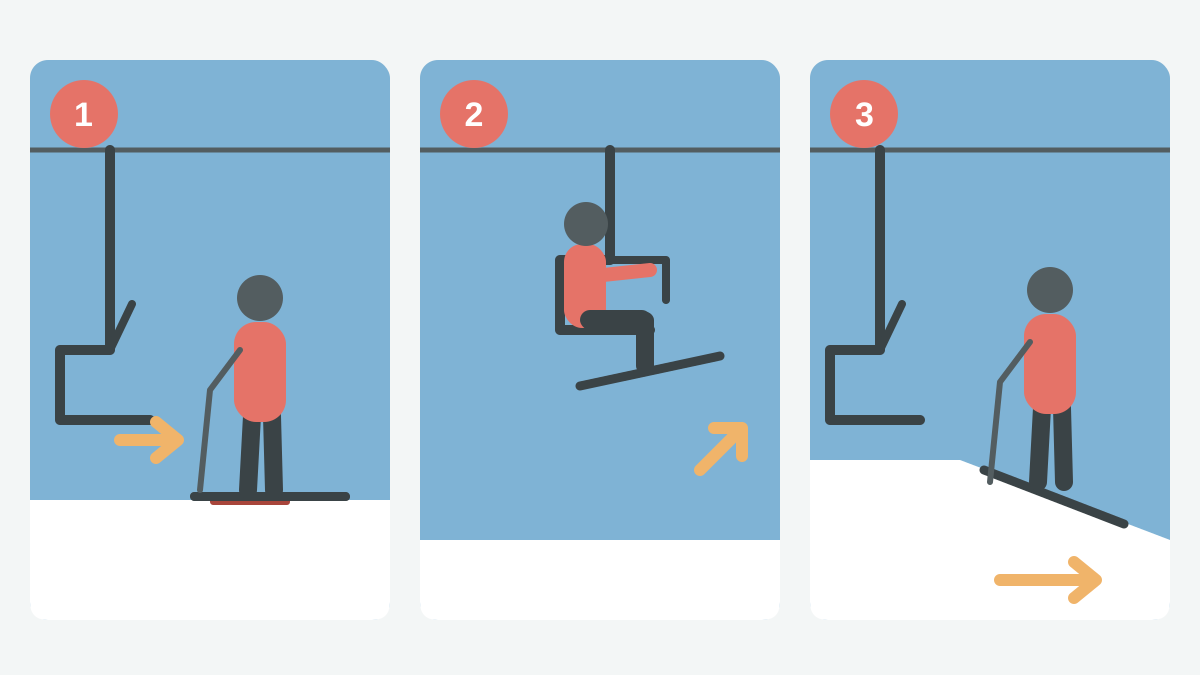
This image was generated by AI for illustrative purposes.
Useful Japanese on the Slopes
Signs in Niseko are often in English too, but knowing a few Japanese words makes signs and staff easier to understand.
| Japanese (reading) | English | Meaning |
|---|---|---|
| ゲレンデ (gerende) | Ski slope / ski area | Where you ski; the ski area |
| リフト (rifuto) | Chairlift | Chairs that carry you up |
| ゴンドラ (gondora) | Gondola | Enclosed cabin lift |
| リフト券 (rifuto-ken) | Lift pass | Ticket for riding lifts |
| 乗り場・降り場 (noriba / oriba) | Loading / unloading area | Where you get on and off the lift |
| 初級・中級・上級 (shokyū / chūkyū / jōkyū) | Beginner / intermediate / advanced | Run difficulty |
| コース外 (kōsu-gai) | Off-piste / out of bounds | Outside the marked runs |
| 立入禁止 (tachiiri kinshi) | No entry | Do not enter |
| 滑走禁止 (kassō kinshi) | No skiing | Do not ski here |
| 運休 (unkyū) | Not operating | Not running (for example, due to wind) |
| パトロール (patorōru) | Ski patrol | Staff who patrol and rescue the injured |
| 休憩所・レストハウス (kyūkeijo / resuto hausu) | Rest house | Place to rest or eat |
| すみません (sumimasen) | Excuse me / sorry | To get attention or apologise |
| はじめてです (hajimete desu) | It's my first time | To say you're a first-timer |
| 助けてください (tasukete kudasai) | Please help | To ask for help |
Check the symbols (colours and shapes) for run difficulty in the legend of each resort's trail map.
Rules on the Slopes: The 10 International Rules
Slope rules in Japan are based on the International Ski Federation's (FIS) "10 Rules." In Japan, the National Ski Safety Council (Zenkoku Ski Anzen Taisaku Kyōgikai) publishes them in Japanese.
| # | Rule | In short |
|---|---|---|
| 1 | Respect for others | Don't put others at risk |
| 2 | Control of speed | Match your speed to your ability, the snow and the crowds |
| 3 | Choice of route | If you're coming from behind, choose a line that doesn't endanger people ahead |
| 4 | Overtaking | Give the person you're passing plenty of room |
| 5 | Entering and starting | Look up and down the slope before starting or merging |
| 6 | Stopping on the piste | Don't stop in narrow or blind spots. If you fall there, move aside quickly |
| 7 | Climbing and descending on foot | Keep to the side of the run |
| 8 | Respect for signs | Always obey signs and markings |
| 9 | Assistance | Help at accidents |
| 10 | Identification | Exchange names and contact details after an accident |
Niseko's resorts also say:
- Don't climb or ski on runs that are closed for weather, maintenance or other reasons
- Follow ski patrol and staff instructions, signs, no-entry zones and resort announcements
- Skis and snowboards must have a leash or ski brake (HANAZONO)
- Helmets are recommended (Grand Hirafu)
The rules for leaving the ski area (the Niseko Rules) are explained in The Niseko Rules. You may only leave through the official gates — never duck under a rope.
If Something Goes Wrong
- Someone is injured: Tell the nearest ski patrol or lift staff. Call 119 for an ambulance and 110 for the police
- Travel problems: JNTO's Japan Visitor Hotline (050-3816-2787, 24 hours, English, Chinese and Korean)
- The lift stops: Don't panic or jump. Stay seated and wait for instructions from staff
- Cold: If your hands or feet get cold, take a break in a rest house. For clothing, see Niseko winter weather and what to wear
JNTO strongly recommends lessons for first-timers and says major resorts offer lessons in English and Chinese. Gear and clothing can be rented at almost every ski area. If you want to try deep snow, read Skiing Powder for the First Time too.
Map
FAQ
How do lift passes work at Japanese ski resorts?
Most resorts use IC card lift passes. Hold the card near the reader at the gate and the gate opens. With Niseko's online lift passes, you scan your QR code at an automatic ticket machine to get a key card, and from the second time on you can go straight to the gate.
Do I get the key card fee back?
No. The key card for Niseko's online lift passes costs ¥500 and is a purchase, not a deposit, so it isn't refunded. It's reusable, so bring it back on your next trip.
Can I take a ski lesson if I don't speak Japanese?
The Japan National Tourism Organization (JNTO) strongly recommends lessons for first-timers and says major resorts offer lessons in English and Chinese. In Niseko, HANAZONO's ski school says it has multilingual instructors.
Who do I contact if I'm injured on the slopes?
Tell the nearest ski patrol or lift staff. For an ambulance, call 119. JNTO's Japan Visitor Hotline (050-3816-2787) is available 24 hours in English, Chinese and Korean.
Summary
At Japanese ski resorts, the lift pass is an IC card you hold to the reader at the gate. Niseko's online lift passes need a ¥500 key card on first purchase (not refunded) that you can reuse. On lifts, don't rock the chair or jump off; on the slopes, control your speed and follow the signs; and leave the ski area only through the gates. If it's your first time, a lesson is the quickest and safest way to enjoy it.