Skiing Powder for the First Time in Niseko | Technique and Gear
This article contains ads (affiliate links). If you book or buy through these links, COTARU, the operator of this site, may receive a commission.
This guide is for anyone who wants to try knee-deep fresh snow (powder) in Niseko for the first time. Skis behave differently than on groomed runs, you tire faster, and there are different hazards to watch for. We cover which skis to rent, what to wear, basic technique, staying safe, and lessons. For how Niseko's resorts differ, see our Niseko ski resort guide.
Key points
- Renting is the easy way in. Powder skis are about 100–120mm underfoot
- Wear a waterproof shell with a powder skirt and bib pants, and bring two goggle lenses
- Start with fresh snow beside groomed runs inside the resort. Don't head into trees or out of bounds alone
- If deep snow is new to you, book a powder lesson or guide early
The Short Answer: Skis, Clothing and Where to Ride
- Powder ski widthAbout 100–120mmUnderfoot (the narrowest point)
- Snowiest monthsDec–Jan253cm of snowfall each month in Kutchan (normal)
- Goggle lenses2One for flat light, one for sun
Ski width and lenses are from Niseko United's deep powder packing advice. Snowfall is the JMA Kutchan normal (1991–2020)
- Skis and boots: renting is the easy way in. Ask for wider powder skis and boots that fit.
- Clothing: a waterproof shell and pants, a powder skirt to keep snow out, bib pants that come up to your chest, and two goggle lenses.
- Where to ride: start with fresh snow beside groomed runs inside the resort. Don't go into the trees or out of bounds alone.
- Learn: if deep snow is new to you, book a lesson or guide early.
When and Where to Find Powder in Niseko
According to Kutchan's climate normals, the most new snow falls in December and January (253cm each month). After a big snowfall, fresh snow also builds up on the runs. For monthly temperatures and snowfall, see Niseko weather by month and what to wear.
If you're trying powder for the first time, this order tends to work well:
- Fresh snow left at the edge of groomed runs: you can drop back onto the groomer easily, so it's easier to stop and less scary.
- Fresh snow on gentle slopes inside the resort: once you're used to the depth, try longer stretches.
- Deeper snow with a guide or instructor: they can show you how to read the snow and ride around trees.
Niseko United explains that runs inside the resort are considered safe from avalanches, while beyond the boundary there is avalanche risk. At first, you can get plenty of powder without leaving the resort.
Skis and Boots: Rent First
Niseko United's deep powder guide suggests that people new to powder rent first. Rental shops across Niseko offer demo skis and expert boot fitting.
| Gear | What to look for | Why |
|---|---|---|
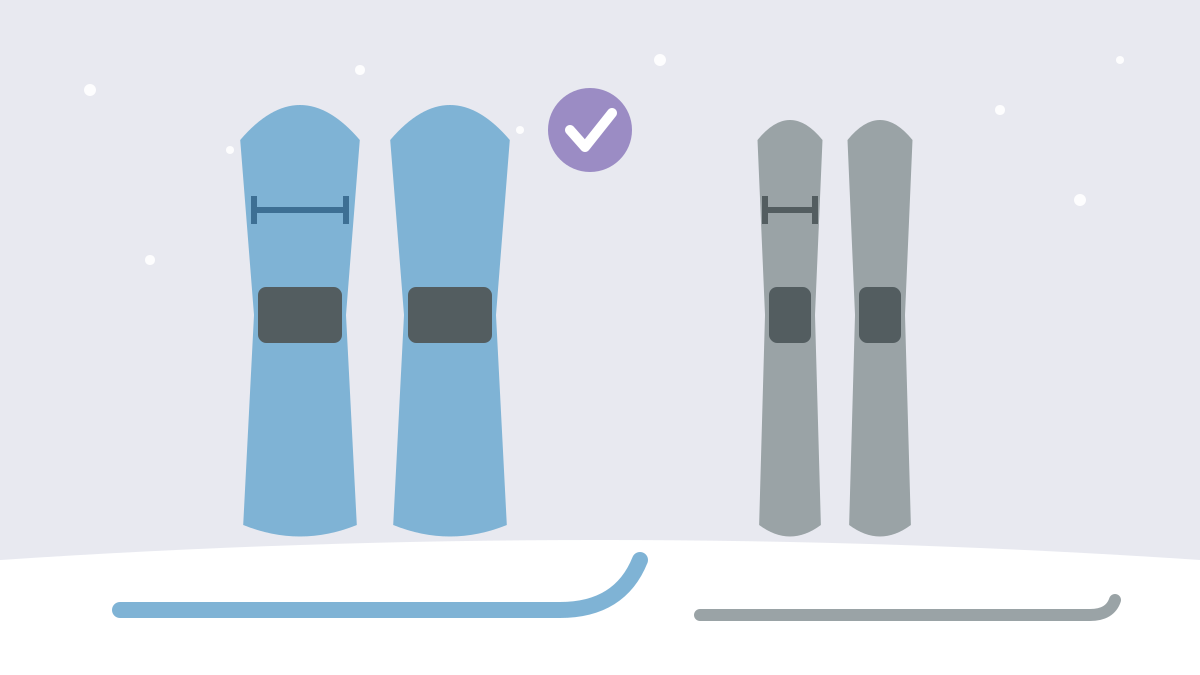
| Skis | About 100–120mm underfoot, with rocker (upturned tip) | They float instead of sinking |
| Snowboard | A directional board with a longer nose, set-back stance | The nose is less likely to dive |
| Boots | A proper fit | The guide says fit matters more than fancy skis |
| Helmet | Rent one if you don't have one | Niseko United lists it as essential |
In busy periods such as New Year and February, it's best to book rentals early. Which skis each shop has varies, so check with the shop.
This image was generated by AI for illustrative purposes.
Clothing: Stay Dry, Warm and Able to See
In deep snow, snow gets in through every gap when you fall or ride through spray. Here's what Niseko United recommends for powder days.
| Area | Recommended | Why |
|---|---|---|
| Base layer | Merino or synthetic (avoid cotton) | Cotton stays wet and makes you cold |
| Socks | Wool-blend, one pair per ski day plus spares | Dry socks keep you warm |
| Mid-layer | One fleece or light down layer | Keeps you able to move |
| Shell and pants | Waterproof, breathable shell with a powder skirt; bib pants | Keeps snow out of your waist and back |
| Hands and face | Mitts with liners, spare gloves, neck gaiter or balaclava | For cold, wet storm days |
| Eyes | Flat-light and sunny-day goggle lenses, a lens wipe | Bumps are hard to see on snowy days |
| Pockets | Hand warmers, sunscreen, lip balm, tissues, a snack, a power bank, a waterproof phone pouch | Cold drains batteries fast |
For walking around town, snow boots with good tread are recommended. For your full winter wardrobe, see Niseko weather by month and what to wear.
Technique Tips (General Skiing Advice)
The tips below are not from Niseko's official guides; they're common advice for skiing deep snow. What works varies from person to person, so a lesson is the best way to check.
- Keep a little speed: skis slow down quickly in deep snow, and going too slowly can make turning harder.
- Use both feet equally: on skis, keeping both skis together and moving them like one wide platform is often said to be more stable.
- Stay centred: leaning back because you're afraid the tips will sink tires your legs quickly.
- Turn with rhythm: a gentle up-and-down bounce is often said to help the skis float.
- Rest before you're exhausted: deep snow is much more tiring than groomed runs. After a few runs, take a break on the groomer.
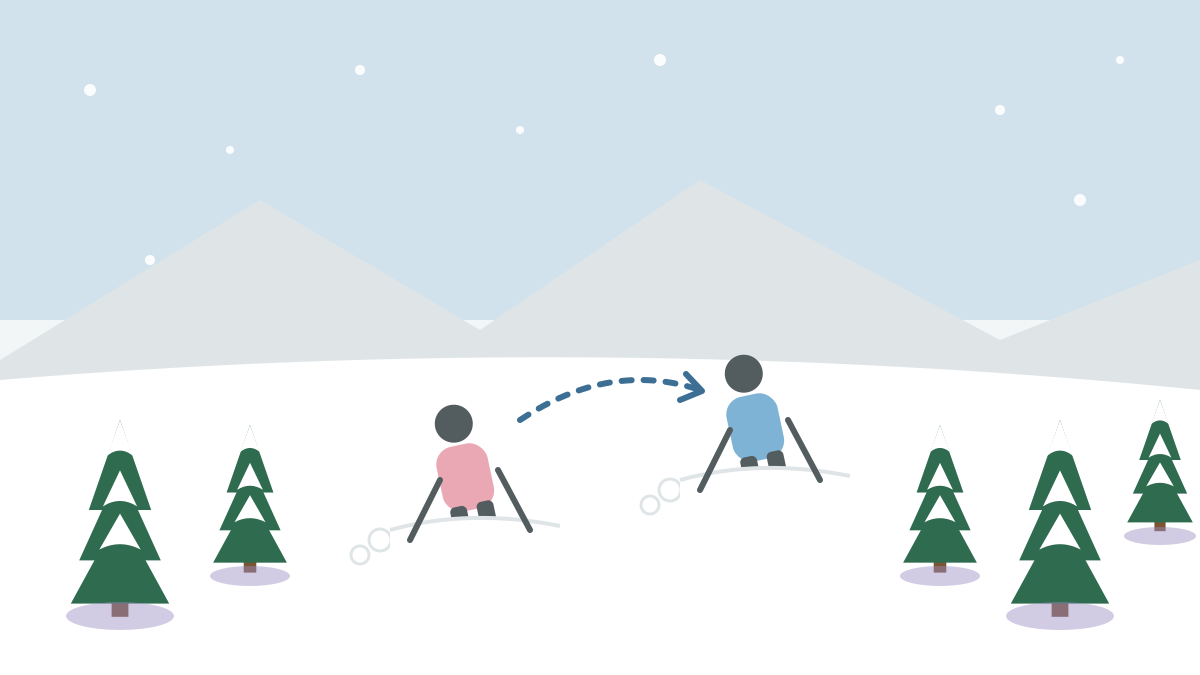
If you fall and lose a ski, it can be hard to find under the snow. Ride with a friend and stay close enough to stop near someone who falls.
Safety: Out of Bounds and Around Trees
On powder days it's tempting to head out of bounds or into the trees. Niseko has local rules for leaving the resort: the Niseko Rules.
- Leave the resort only through the official gates. Don't duck ropes or fences.
- Don't go out when a gate is closed, and never enter off-limits areas.
- Stay out of closed runs and follow ski patrol instructions.
- Beyond the gates is not managed by the resorts. There is avalanche risk, and you go at your own risk.
For details, see the Niseko Rules explained.
Trees need care too. HANAZONO's safety guidance lists natural obstacles such as rocks and trees as hazards. On deep snow days, the snow around the base of a tree is commonly described as soft and hollow, and someone who falls in head-first can find it hard to get out. While you're new to powder, keep some distance from trees and ride where you and your friends can see each other.
If you want to ski beyond the gates, Niseko United's advice is to go with a qualified guide, carry a beacon, probe, shovel and helmet, check the daily avalanche information, and never go alone.
This image was generated by AI for illustrative purposes.
Lessons and Guides: Book Early
Niseko United says that even experienced skiers who are new to Niseko's powder can benefit from a lesson. Lessons are widely available in English, and some schools also teach in Japanese and Mandarin. They sell out well ahead in busy periods, so book before you arrive.
Niseko United's ski school list includes, for example:
| Resort | School | How it's described in the list |
|---|---|---|
| Grand HIRAFU | Niseko Grand HIRAFU Snow School | Powder snow guides, early powder lessons, lessons for advanced skiers |
| Grand HIRAFU | GOSNOW | Powder guiding tours |
| Niseko Village | Niseko Village Snow School | Multilingual instructors |
| HANAZONO | NISS | Focus on beginner facilities |
| Annupuri | Niseko Annupuri Snow School | Check the school's website for details |
For prices, times and whether powder courses are offered, check each school's website.
Map
FAQ
Do I need to bring my own powder skis?
No. You can rent them in Niseko. Niseko United suggests that people new to deep snow rent first and pick gear suited to Niseko's conditions. Powder skis are typically about 100–120mm underfoot with rocker (an upturned tip).
What should I wear on a powder day?
A waterproof, breathable shell with a powder skirt, bib pants, wool-blend socks, mitts with liners, and two goggle lenses (one for flat light, one for sun). Keep hand warmers, sunscreen and a power bank in your pockets.
Can I ski beyond the gates (backcountry) on my first trip?
Beyond the gates is unmanaged mountain terrain with avalanche risk. You must follow the Niseko Rules and carry gear such as a helmet and avalanche beacon, and know how to use it. If you're inexperienced, go with a qualified guide and never go alone.
Where can I learn to ski deep snow?
Every Niseko resort has a ski school, and some at Grand HIRAFU advertise powder guiding and early powder lessons. Lessons sell out in busy periods, so book before you arrive.
Summary
For your first powder in Niseko, rent powder skis and well-fitting boots, wear clothing that keeps snow out, bring two goggle lenses, and start with fresh snow inside the resort. Trees and terrain beyond the boundary carry real hazards, so don't go alone, follow the Niseko Rules, and ride with an instructor or guide until you're comfortable.