Off-Piste Dangers in Niseko and What to Do if You Get Lost
Thinking of chasing Niseko powder into the trees and gullies beyond the runs? This guide covers the hazards official sources warn about, how to prepare before you go, and who to call if you get lost or hurt. For the gates and the rules, see The Niseko Rules; for reading the daily avalanche report, see How to Read the Niseko Avalanche Report.
Key points
- Off-piste is outside the resort's control. Watch for bad weather, trees, gullies, avalanches and getting lost
- Don't go alone; use a guide if you're inexperienced. Carry GPS, a phone and a spare battery
- In an emergency, call 110 (police) or 119 (fire/ambulance), and alert any nearby ski patrol
- Rescue costs money — and in bad weather, rescuers may not be able to reach you
The Short Answer: Uncontrolled Winter Mountains — Call 110 or 119 in an Emergency
Beyond the runs is natural winter mountain terrain that the resorts neither maintain nor patrol. Kutchan Town describes it as "completely different from managed slopes" — a harsh natural environment.
- Hazards officially listed: bad weather (blizzards, poor visibility), hitting trees, falling into creeks and gullies, avalanches and cornices, falling into crevasses, and getting lost
- Preparation: don't go alone. Use a guide if you're inexperienced. Carry GPS, a phone and a mobile battery, and tell someone where you're going
- If something goes wrong: if it's life-threatening, call 110 (police) or 119 (fire/ambulance). Alert any nearby ski patrol
- Cost: search and rescue outside the ski area costs money, and rescuers may not be able to reach you in bad weather
- Police110Emergencies
- Fire / ambulance119Emergencies
- Search and rescueAt least ¥100,000Outside the ski area (Niseko Rules)
What "Off-Piste" Means: Beyond the Rope Is Outside the Resort's Control
Niseko HANAZONO says off-piste and backcountry areas are "outside the jurisdiction of ski area," and that passing ropes, nets or bamboo poles to enter them is prohibited. A 2018 Niseko United notice likewise explains that the areas beyond the boundary, including the peak, are not controlled or supervised by the resorts, and that you enter at your own risk.
- You may go out only through designated gates, and only when they're open (the Niseko Rules).
- Never enter off-limits areas such as Yu no Sawa and Haru no Taki.
- Inside the resort, too, stay off courses closed for weather, maintenance or any other reason.
The rest of this guide covers dangers you can face even when you leave correctly through an open gate.
The Hazards Official Sources Warn About: Weather, Trees, Gullies, Cornices, Getting Lost
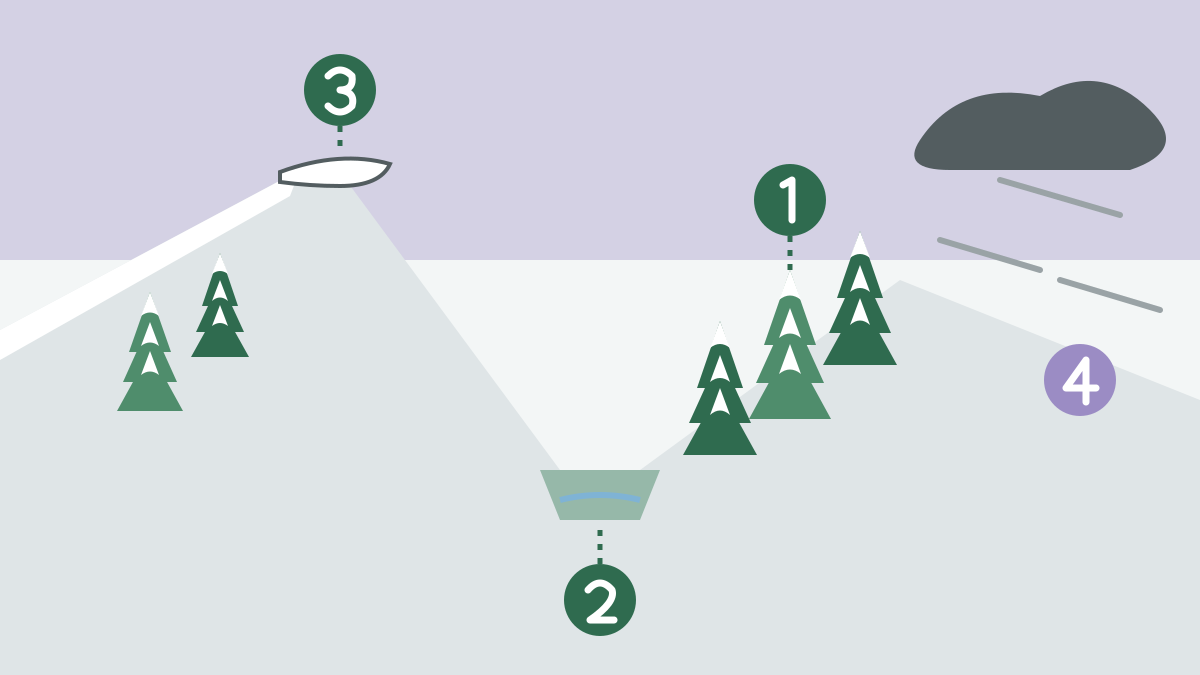
The Niseko Rules page, the Niseko Avalanche Information, Kutchan Town and the Hokkaido Police list these hazards.
| Hazard | Official wording |
|---|---|
| Bad weather | Many past accidents have occurred during bad weather. In blizzards or poor visibility, postpone or turn back partway |
| Hitting trees | "Be careful of falling, hitting trees, or falling into creeks." |
| Creeks and gullies | "Most accidents occur in leeward gullies during heavy wind and snow." "Stay out of the valley bottoms." |
| Avalanches and cornices | Hard-to-predict dangers such as sudden weather changes, avalanches, cornices, getting lost and hitting trees |
| Crevasses | "Beware of crevasses and trees" |
| Getting lost | One of the hard-to-predict dangers. The checklist asks: "Do you have a GPS that allows you to check your current position?" |
What this means in practice:
- Bad-weather days are especially dangerous: blizzards mean poor visibility and more accidents. Don't go in if the weather looks like turning, and head back early if it does — that's in line with the official advice.
- Stay away from gully bottoms: the avalanche report repeatedly tells riders not to be in the bottoms of gullies and valleys. Slopes with cornices (overhanging lips of wind-blown snow) are also named as dangerous spots.
- The trees aren't safe either: hitting trees is listed by the Niseko Rules page, the avalanche report, Kutchan Town and the Hokkaido Police alike.
The Niseko Rules page reminds you that "Mountains are never 100% safe" and warns against overestimating your knowledge, skills and equipment.
This image was generated by AI for illustrative purposes.
Before You Go: Kutchan Town's Checklist
Kutchan Town publishes a backcountry safety leaflet in Japanese, English, Korean, Traditional Chinese and Simplified Chinese. Its checklist asks:
- Are you up to date with the latest weather forecasts and avalanche information?
- Does your skill and physical strength match your planned route?
- Do you have beacons (transceivers for finding buried people), probes and shovels?
- Do you have a GPS that allows you to check your current position?
- Do you have a mobile phone and a mobile battery?
- Have you told your family or friends where you're going? Always submit a climbing plan
- Move in groups. If you're inexperienced, use a guide
- Observe the rules of the ski resort
The Hokkaido Police also ask you to fill in a climbing plan, give it to family or colleagues, and submit it to the police — partly so it can be used "for speedy search and rescue in case of emergency." An English form (Climbing Plan) is available, and the police also introduce Compass, an online system for submitting plans. They also ask you to postpone or turn back partway when blizzards or heavy snow cut visibility. The earlier you decide to turn back, the safer.
If You Get Lost or Hurt: Call for Help First
The official sources don't spell out a step-by-step procedure for getting lost. Below are only the contacts and preparation points they do give.
- If it's life-threatening: call 110 (police) or 119 (fire/ambulance), as listed by the Japan National Tourism Organization (JNTO).
- Alert the ski patrol if they're nearby: close to the resort, tell the ski patrol. If you're involved in or witness an accident, cooperate with the rescue team and report it (Niseko HANAZONO).
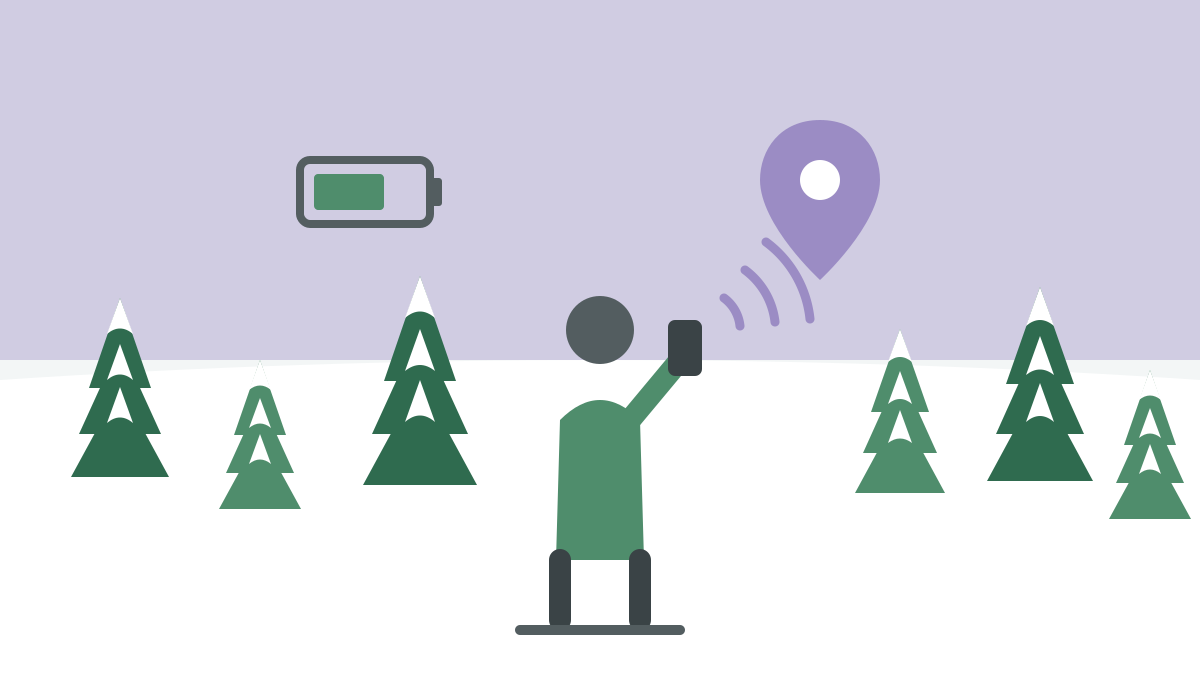
- Say where you are: Kutchan Town recommends carrying a GPS that shows your current position. On the phone, give your location as best you can.
- Protect your battery: if you can't make calls, you can't get help. Bring a mobile battery (Kutchan Town's checklist).
For non-urgent help (such as finding a hospital after an injury), JNTO's Japan Visitor Hotline (050-3816-2787) is open 24 hours a day in English, Chinese and Korean.
This image was generated by AI for illustrative purposes.
Rescue Costs — and Why Help May Not Come Quickly
- Niseko Rules: "A minimum of ¥100,000 will be charged for search and rescue operations in backcountry areas."
- Niseko HANAZONO: in the event of an accident, those involved are liable for search and rescue expenses.
- Kutchan Town: if you request a rescue, you "may be charged a high amount for search fees," and "rescue may not be possible if the weather conditions are poor."
- Niseko Avalanche Information: every report carries the line "Inbounds rescue will be prioritised."
Rescue doesn't arrive the moment you call. Many accidents happen in bad weather — exactly when rescue is hardest. Staying inside the resort when in doubt, and heading back before the weather turns, protects both you and the people who would come to find you.
Map
FAQ
What counts as off-piste?
Anywhere outside the runs the resort grooms and manages. Beyond the ropes, nets and bamboo poles is natural winter mountain terrain outside the ski area's control. The Niseko Rules set out how to use the gates.
What are the main off-piste dangers?
Official sources list bad weather (blizzards and poor visibility), hitting trees, falling into creeks and gullies, avalanches and cornices, falling into crevasses, and getting lost. Many past accidents happened in bad weather.
Who do I call if I'm lost or injured?
If it's life-threatening, call 110 (police) or 119 (fire/ambulance). Alert the ski patrol if they're nearby. For non-urgent help, the Japan Visitor Hotline (050-3816-2787) takes calls 24 hours a day in English, Chinese and Korean.
Do I have to pay for a rescue?
Under the Niseko Rules, search and rescue outside the ski area costs at least ¥100,000. Kutchan Town warns that you may be charged a high amount for search fees, and that rescue may not be possible in poor weather.
Summary
Off-piste in Niseko means winter mountains outside the resorts' control. Official sources warn about bad weather, trees, gullies, cornices, crevasses and getting lost. Before you go, check the avalanche report and the weather, don't go alone, and carry GPS, a phone and a spare battery. In a life-threatening situation call 110 or 119 — and remember that rescue costs money and may not come quickly.