
How to Read the Niseko Avalanche Report
If you're thinking about riding beyond the gates in Niseko, this guide explains where to find the daily Niseko Avalanche Information each morning, how to read each section, and how to use it in your decisions for the day. The wording examples are taken from reports actually issued last season. For the rules themselves, see The Niseko Rules.
Key points
- The Niseko Avalanche Information is basically issued every morning — online, at lift stations and via an app
- Read the gate section first, then the hazard locations, then the weather numbers
- Danger isn't given as a numbered level; it's described in words
- Open gates don't mean it's safe. If in doubt, stay on the groomed runs
The Short Answer: First Thing in the Morning, Read the Gates and the Hazard Spots
The Niseko Avalanche Information is the area's official avalanche report, issued by the Niseko Avalanche Institute, which forecasts the day's hazards. According to Niseko Town, it is "basically issued every morning." On any day you might head out through the gates, read it before you start riding.
- Where: the Niseko Avalanche Information site (niseko.nadare.info), the Niseko United website, notices at lift stations and ticket counters, and app notifications
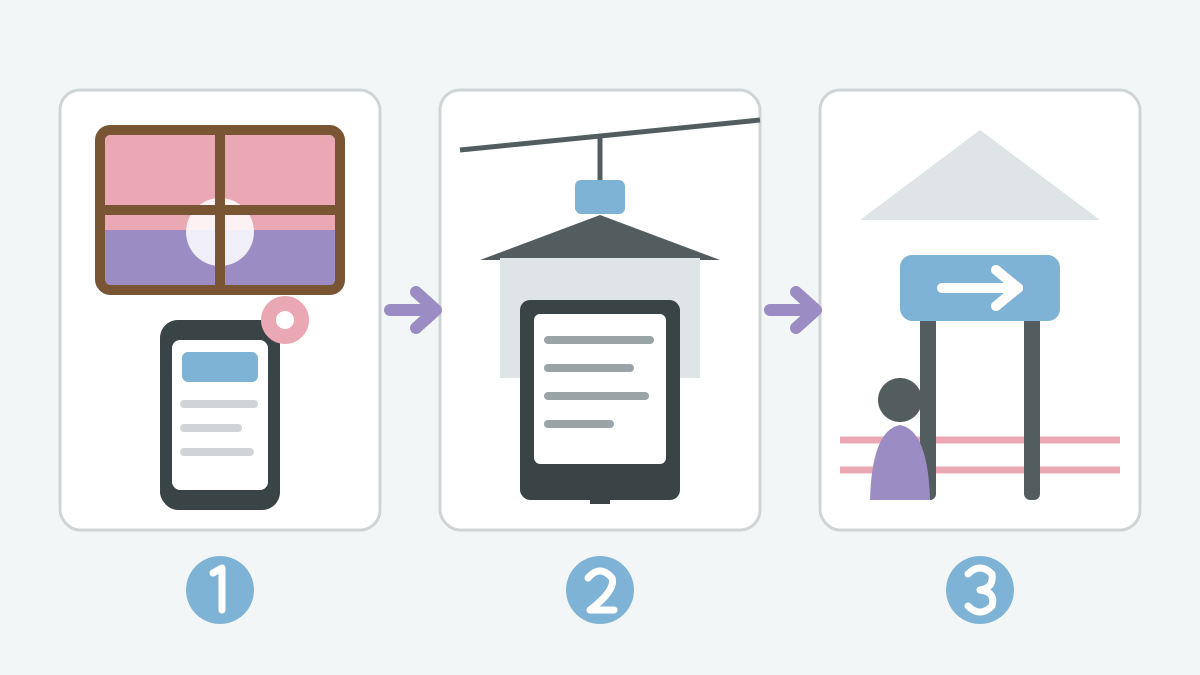
- Reading order: ① gate status → ② hazard locations and advice → ③ weather observations
- How to use it: if the gates are closed, don't go out. Open gates are no guarantee of safety. If in doubt, stay inside the resort
- IssuedBasically every morningNiseko Town
- LanguagesJapanese + EnglishIn every report
- How danger is shownIn wordsNo numbered levels
Where to Find It: On Your Phone Before You Leave, Again at the Lift
These are the places officially listed:
| Where | What you'll find |
|---|---|
| Niseko Avalanche Information site (niseko.nadare.info) | Reports from the Niseko Avalanche Institute, with past reports archived |
| Niseko United website | The avalanche report page shows the latest report |
| Lift stations and ticket counters | According to Niseko HANAZONO, available every day at lift stations and ticket counters in all ski areas |
| Participating accommodations | According to Niseko Town, a PDF is emailed to them and posted |
| App (SKIDAY) | According to Niseko Town, tick the Niseko avalanche information box and you get a push notification each time it's issued |
| Radio Niseko | According to Niseko Town, the report is read out on each update, including in English |
- Release time: not stated on the official pages. Reports often open with morning observations such as "Mountain base 6am," so treat it as a morning report and check again just before you head out.
- Season dates: these change every year — check the official site for when the 2026-27 season starts. Early-season reports have noted that "the report will be issued irregularly for some time," and the last spring report announces the end of the season's information.
- At the gates: a 2018 official notice says the avalanche information is available at lift stations, access gates and online. Check the signs at the gate too.
This image was generated by AI for illustrative purposes.
How to Read Each Section: Observations, Hazards, Gates and Advice
The report isn't a fixed table — it's a series of short sentences. Last season's reports generally followed this order.
1. Opening observations (temperature, new snow, wind)
The first few lines are observations by location and elevation, for example "Mountain base 6am: -7℃, 12h snowfall 20cm, NW5m/s." You'll see temperature (°C), snowfall over the past 12 hours, and wind direction and speed (m/s). Locations include the mountain base, Moiwa 800m, Annupuri 1100m, Village 1000m, Hirafu/Hanazono 1000m and Hanazono 800m. Wind and pressure at the coastal points of Benkei Cape and Kamui Cape sometimes appear too.
- Lots of new snow and strong wind often go together with higher danger in the sentences that follow. Don't judge from the numbers alone — read them together with the text.
2. Hazard description (where, and how much)
Danger isn't expressed as a numbered level like "Level 3." Instead, words such as "high" or "extremely high" are used together with where the danger is. Examples from last season:
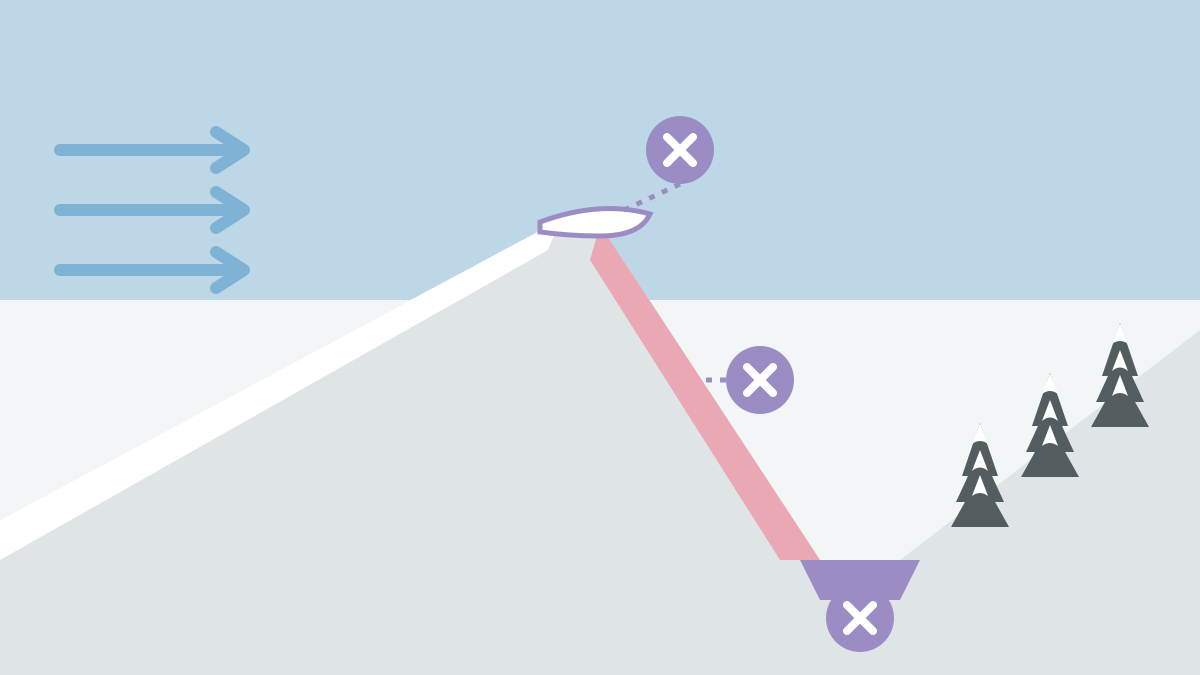
- "Avalanche risk is extremely high on open leeward slopes above the tree line."
- "Most accidents occur in leeward gullies during heavy wind and snow."
- "Stay out of the valley bottoms."
- The risk of full-depth avalanches (where the whole snowpack down to the ground slides at once) on the Backbowl sidewalls and the Annupuri Osawa cornice face
"Leeward slopes," "gully and valley bottoms" and "cornices" (overhanging lips of wind-blown snow) come up again and again.
This image was generated by AI for illustrative purposes.
3. Advice and opinion
You may also see short warnings such as "Beware of sudden changes in weather" or "Be careful of falling, hitting trees, or falling into creeks," gear checks, and longer opinion pieces. Every report ends with the same four lines:
- "This information is not to guarantee the safety of out of bounds riding."
- "Please respect the Niseko Rules."
- "Inbounds rescue will be prioritised."
- "Step out of bounds at your own risk."
The Gate Section: Common Wording and What It Means
The gate section matters most. Here are examples of wording from last season's reports, in Japanese and English. The exact phrasing varies from report to report.
| Japanese wording | English wording | What it means |
|---|---|---|
| 各山頂ゲートは開けられる。 | All peak gates are expected to be open. | Expected to open — not a guarantee of safety |
| 各山頂ゲートは閉じられる。 | All peak gates will be closed. | Closed — you can't go out through the gates |
| 各ゲート開閉は未定、パトロールに従うこと。 | Gate openings remain undecided; follow the ski patrol instructions. | Not decided yet — follow on-site signs and the patrol |
| 各ゲート開閉の判断はパトロールが行う。 | Patrol will make open/close decisions at each gate. | The patrol decides gate by gate |
| モイワ以外のゲートは開けられる。 | Gates will open as soon as preparations are complete. However Moiwa will remain closed. | Partly closed — check the gate you want by name |
- "Expected to open" is a forecast. It can change depending on whether the lifts run and how the weather develops.
- Gates are sometimes named by number or location (for example, Hanazono Gate 5). Check what the report says about the gate you plan to use.
- The Japanese and English texts aren't always identical. If they seem to differ, ask the ski patrol.
After You Read It: Closed Days, Undecided Days and No-Report Days
The avalanche report doesn't tell you whether you may go out — it's information for your own decision. Here's how to act on it, following the official wording.
- Gates closed: don't go out. Niseko Rule 4: "Backcountry skiing/snowboarding is prohibited when gates are closed."
- Undecided, or the patrol decides: follow the signs at the gate and the ski patrol's instructions. Wait for the sign, or ride inside the resort.
- "Stay on the ski courses today": last season one report said, "It is advisable to stay on the ski courses today." On such days, stay on the groomed runs.
- No report that day: some reports simply say "The Niseko Avalanche Report is not available today." Without that key information, we recommend not heading out through the gates.
- Gates open: read the hazard sentences and avoid the slopes and gully bottoms they mention. Even with open gates, as the Niseko Rules page puts it, "Mountains are never 100% safe."
If you're not confident about avalanche knowledge or using your gear, don't decide alone — book a tour with a qualified guide. For off-piste hazards (trees, gullies, bad weather) and what to do if you get lost, see Off-Piste Dangers in Niseko.
A Sample Morning Routine — and the Bangs You May Hear
On a morning when you might head out, a routine like this helps you miss less:
- When you wake up, read the day's report via the app notification or the website (gates → hazard spots → observations)
- Check the weather forecast too (many accidents happen in bad weather)
- Check the gate section again on the notice at the lift station or ticket counter
- Before going out, check the sign at the gate and any ski patrol instructions
In the morning you may hear loud bangs from the direction of Niseko Annupuri. According to Niseko Town, some ski areas use dynamite to trigger small avalanches in advance to prevent accidents — this is called avalanche control, and that's the sound you hear.
Map
FAQ
What time is the Niseko avalanche report issued?
The official pages don't give a release time. Niseko Town says it is "basically issued every morning," and reports often open with observations taken at the mountain base at 6am.
Where can I read it?
On the Niseko Avalanche Information site (niseko.nadare.info) and the Niseko United website, plus notices at lift stations and ticket counters in every ski area and at participating accommodations. Niseko Town also points to the SKIDAY app, which sends a notification each time a report is issued, and to Radio Niseko.
Is it available in English?
Yes. Each report has the Japanese text followed by an English version. The two aren't always word-for-word the same, so ask the ski patrol if anything is unclear.
What should I do if there's no report that day?
Some days the report simply says it is not available today. With less information about that day's hazards, it's wiser not to push out through the gates — follow patrol instructions and on-site signs, and ride inside the resort.
When does the avalanche report season start and end?
It varies by year — check the official site for the 2026-27 start date. Early-season reports may be issued irregularly, and the last spring report announces that the information has concluded for the season.
Summary
The Niseko Avalanche Information is basically issued every morning and can be read online, at lift stations and via an app. Read the gate section first, then the hazard locations, then the weather numbers. Danger is described in words rather than numbered levels, with "leeward slopes," "gully bottoms" and "cornices" appearing often. If the gates are closed, don't go out — and on days with no report or when you're unsure, stay inside the resort.