Walking on Snow and Ice in Otaru | Slopes, the Canal and the Station
This guide is for people who are not used to snow and ice and want to walk around Otaru in winter with confidence. Otaru slopes down to the sea from the station to the canal, and one street inland the hills get steep. Short steps, the whole sole on the ground and no rushing is the basic rule, and what to watch for changes from place to place. It covers typical snow depths, how to walk, shoes and spikes, the walk from the station to the canal and Sakaimachi Street, and care on slopes.
Key points
- Take short steps, keep your whole sole on the ground and don't rush. Keep both hands free and out of your pockets
- Otaru Station to the canal is about 10 minutes on foot: downhill on the way there, uphill on the way back. Leave bags at COTARU, about 5 minutes from the station
- Waterproof winter boots with non-slip soles are the basics. Buy slip-on spikes in Sapporo or at New Chitose Airport beforehand
- Typical maximum snow depth is 54 cm in December, 92 cm in January and 117 cm in February. Take extra care going downhill on steep slopes such as Hagemashi no Saka

The Short Answer: Short Steps, Leave Your Bags, Don't Push It on Slopes
Otaru in winter stays around 0°C even in the daytime. Snow is deepest in February, and some stretches of road stay icy even after the snow stops.
- January daily high-0.5°COtaru normal
- February maximum snow depth117 cmOtaru normal
- Station to canalabout 10 min on footdownhill there, uphill back
- Luggage storageabout 5 min on footOtaru Station to COTARU. Open in winter
| What to do | Details |
|---|---|
| How to walk | Take short steps with your whole sole on the ground. Don't rush |
| Shoes | Waterproof boots with non-slip soles. For a short stay, slip-on spikes |
| Station to canal | Leave your bags and walk light. The way back is uphill, so allow time |
| Steep slopes | Take special care going downhill on snowy days. Keep walks short and use a bus or taxi too |
| Hands | Wear gloves and keep both hands free, not in your pockets |
The advice from the Sapporo City Fire Bureau and the Winter Life Promotion Council (Sapporo's fall-prevention group) is written for Sapporo, but how to walk on snow and ice is the same in Otaru. The figures for Otaru's slopes and canal come from the City of Otaru and the Otaru Tourism Association.
Otaru's Winter Roads: Typical Snow Depths
According to the Japan Meteorological Agency (JMA) normals for 1991–2020, Otaru's January daily high is -0.5°C and the daily low is -5.8°C. In the 10-day normals, the lowest minimum is -6.5°C in early February. The normal monthly maximum snow depths are as follows.
JMA normals (1991–2020). Snow depth in any given year varies a lot
Snow is deepest in February, but March still has 106 cm, and when the road thaws and freezes again it is slippery. Keep your snow-road preparations up from December to March. Normals are 30-year averages, so check the forecast before you leave. For the 10-day tables of temperature and snow and a fuller guide to clothing, see Otaru Winter Weather and What to Wear. This article only covers shoes and what you wear on your hands.
How to Walk: Short Steps, Whole Sole, No Rushing
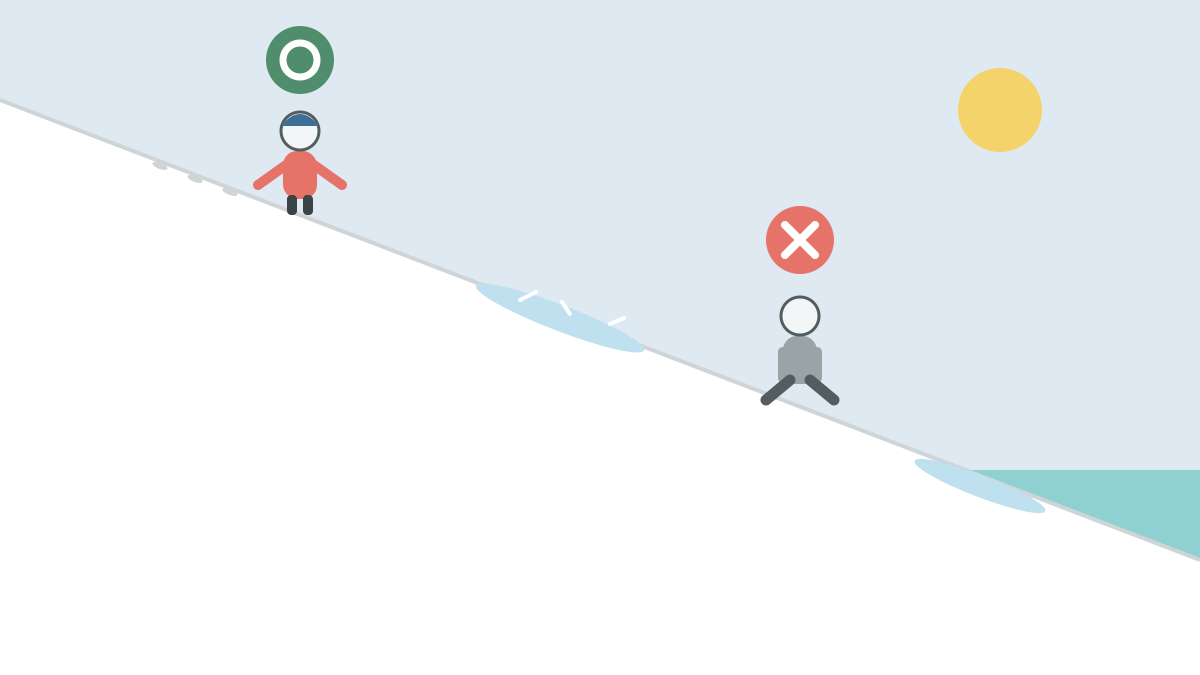
This is the way of walking recommended by the Sapporo City Fire Bureau and the Winter Life Promotion Council.
- Take short steps: With big strides you land on your heels or toes, your weight swings, and you fall more easily.
- Keep your whole sole on the ground: Keep your feet about 20 cm apart and your weight a little forward.
- Shuffle on slippery ice: On ice-like surfaces, walk with a shuffle, but lift your feet slightly so you don't trip.
- Don't rush: Leave plenty of time. Walking slowly helps you spot slippery places.
- Take care when you start or change speed: It is especially slippery when you set off again after stopping at a crossing.
The Sapporo City Fire Bureau says that more people head out between about 7 a.m. and noon, and more people are taken away by ambulance after falling. Take extra care on morning roads.
The ways of walking that make you fall easily are hurrying, walking after drinking, looking at your phone or the scenery as you walk, and having both hands full. When you walk back to your hotel after dinner and drinks, go slowly or take a taxi.
If you fall, call 119 for an ambulance and 110 for the police. For advice, the Japan National Tourism Organization's Japan Visitor Hotline (050-3816-2787) is open 24 hours a day, every day, in English, Chinese and Korean.
This image was generated by AI for illustrative purposes.
Shoes and Spikes: Waterproof Winter Boots with Non-Slip Soles
The Sapporo City Fire Bureau gives three points for choosing winter shoes.
- Non-slip: the sole does not slip.
- Waterproof: water does not get in when they get wet.
- Warm: the inside is warm.
Ordinary sneakers get wet and cold and become slippery. For a short trip, slip-on spikes you can fit to the shoes you already have are an easy option. According to the Winter Life Promotion Council, they are sold at department stores, supermarkets and shoe shops in central Sapporo, and at souvenir shops, kiosks and convenience stores at New Chitose Airport. We have not been able to confirm whether you can buy them in Otaru, so please ask the shops. Buying them at New Chitose Airport or in Sapporo beforehand is safer.
What you wear on your hands matters too. If your hands are in your pockets, you can't catch yourself when you fall. Wear gloves and keep both hands free. If both hands are full, you can't steady yourself when you slip.
If you walk on tiled floors inside buildings with spikes on, the metal parts can actually slip. Take care when you go into a shop or hotel, and take the spikes off if you can.
From the Station to the Canal and Sakaimachi Street: Leave Your Bags and Allow Time for the Uphill Return
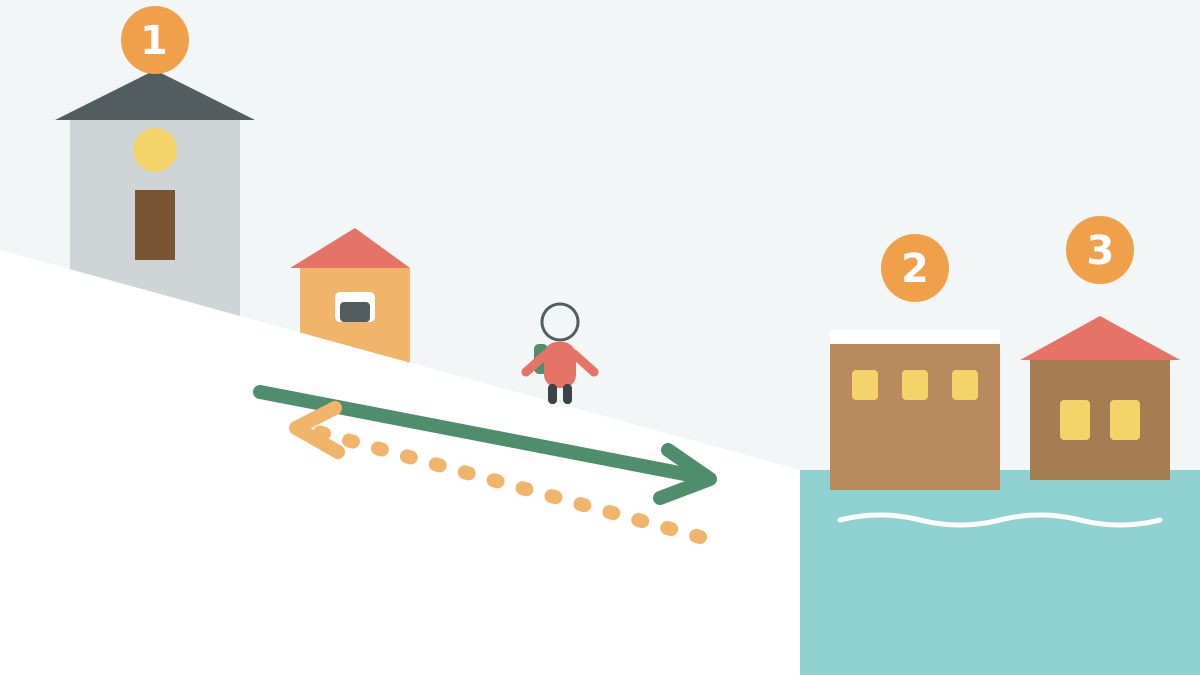
Otaru Station to the Otaru Canal is about 10 minutes on foot according to the Otaru Tourism Association (the City of Otaru gives 8 minutes). Leave the station and head toward the sea, going down Chuo-dori. Sakaimachi Street is about 5 minutes on foot from the canal.
- Otaru StationLeave your bags first
- about 10 min on foot
- Otaru CanalDownhill on the way there
- about 5 min on foot
- Sakaimachi StreetUphill on the way back
Simplified diagram, not a map (distances are not to scale)
Things to keep in mind on a snowy day:
- Leave your bags: A suitcase rolls poorly on snow and ice. COTARU is about 5 minutes on foot from Otaru Station and the canal, and offers luggage storage. The rental bikes are closed from December 1 to March 31, but luggage storage is open in winter. Please check the shop's page for the fee and pick-up times. For ways to leave bags at the station, such as lockers, see Luggage Storage at Otaru Station.
- The canal side and Sakaimachi Street can be icy: Take short steps and walk slowly. When you take photos, stop at the edge of the walkway.
- The way back is uphill: Going from the station to the sea is easy because it is downhill, but the same road is uphill on the way back. Leave time and energy, and decide in advance how you will get back (on foot, by bus and so on). For details, see the Otaru Station Area Guide.
- It is dark underfoot at night: The canal's gas lamps are lit from sunset until midnight, but in winter there can be snow and icy ground. The more you are looking at the lights, the more you need to look at your feet.
- Bus stops, crossings and building entrances: The Winter Life Promotion Council lists bus stops and taxi stands, pedestrian crossings and building entrances as especially slippery. Its advice is for Sapporo, but take the same care in similar places around Otaru Station.
This image was generated by AI for illustrative purposes.
On heavy snow days, trains can be delayed or stopped. On the day you come from Sapporo or go back, check JR Hokkaido's operation information (Sapporo area) first. For a half-day walk from the station to the canal, see the Otaru Winter Half-Day Model Course.
Care on Slopes: Hagemashi no Saka, Mt. Tengu and the Observatories
Around the canal and Sakaimachi Street Otaru is flat, but the slopes start as soon as you go inland. The figures from the City of Otaru and the Hokkaido official tourism site are as follows.
| Slope | Published figures | How to see it on a snowy day |
|---|---|---|
| Hagemashi no Saka | about 904 m long, about 83 m of elevation gain, maximum gradient 24% | Relatively gentle up to around Temiya Elementary School, then steep. Take special care going down on a slippery snowy day (City of Otaru) |
| Funamizaka | maximum gradient 15% | A residential street. Don't go out of your way |
| Jigoku-zaka | a steep slope of about 1.5 km, about 10 minutes on foot from the station | A long climb. On snowy days, keep your walking shorter |
Some winter access information is confirmed in official guidance.
- Asahi Observatory: closed in winter (City of Otaru). The Matsuyama Line leading to it is closed for the winter from November 13, 2026 to April 15, 2027 (Otaru Tourism Association).
- Shukutsu Panorama Observatory: In February 2026, a trial restricting access on the steep slope for winter safety was reported (Hokkaido Shimbun). Please check this season's arrangements with official sources such as the City of Otaru.
- Rental bikes: COTARU's rental bikes are closed from December 1 to March 31. Go toward the winter slopes on foot or by bus.
If you want to go up beyond the slopes, the Mt. Tengu ropeway is an option. It runs in winter from November 28, 2026 to March 28, 2027, and may be suspended depending on the weather. From stop 4 at Otaru Station Bus Terminal, take the route 9 bus, about 17–20 minutes, ¥240 for adults. It can be slippery underfoot at the bus stop and the ropeway station too, so take short steps here as well. It is colder and windier at the top than by the sea. For opening hours and fares, see Otaru Mt. Tengu in Winter.
Map
FAQ
What shoes should I wear to walk around Otaru in winter?
The Sapporo City Fire Bureau recommends winter boots with non-slip soles that are waterproof and warm inside. Ordinary sneakers get wet and cold and are slippery. For a short trip, slip-on spikes for the shoes you already have are an easy option.
Can I walk from Otaru Station to the canal on a snowy day?
The Otaru Tourism Association gives about 10 minutes on foot. On snowy or icy days it takes longer than in summer, so allow extra time. The way there is downhill, and the way back to the station is uphill.
Where can I buy slip-on spikes?
According to the Winter Life Promotion Council, they are sold at department stores, supermarkets and shoe shops in central Sapporo, and at souvenir shops, kiosks and convenience stores at New Chitose Airport. Please ask shops in Otaru whether they carry them; it is safer to buy them in advance at the airport or in Sapporo.
Can I pull a suitcase through the snow?
A suitcase rolls poorly on snow and ice. COTARU is about 5 minutes on foot from Otaru Station and the canal, and its luggage storage is open in winter too. Please check the shop's page for the fee and pick-up times.
Is it safe to walk on slopes on a snowy day?
The City of Otaru says that Hagemashi no Saka gets steep beyond the Temiya Elementary School area, and that you need to take special care on the descent on a slippery snowy day. On days you head toward slopes, keep your walking short and use a bus or taxi when you need to.
Summary: Short Steps, Leave Your Bags, Don't Push It on Slopes
On Otaru's snowy roads the basic rule is to take short steps, keep your whole sole on the ground and not rush. Bring waterproof winter boots with non-slip soles or slip-on spikes, wear gloves and keep both hands free. From the station to the canal it is downhill on the way there and uphill on the way back. Leave your bags at COTARU or somewhere similar, walk light and allow extra time.
On steep slopes such as Hagemashi no Saka, take special care going downhill on snowy days, and use a bus or taxi as well. Dates and opening information can change, so please check the latest details on each official page.