Otaru Station Area Access 2026 | Walking to the Canal, Sakaimachi and COTARU
・
When you arrive at Otaru Station, the first things to decide are "whether to store your luggage," "whether to eat on the left side of the station" and "whether to walk straight to the canal." JR Otaru Station has a tourist information center, and JR Hokkaido's station locker information confirms there are coin lockers at Otaru Station. The Otaru Canal is about a 10-minute walk away, so just sorting out the first 30 minutes after arrival makes a half-day of sightseeing flow more easily. If you're unsure because of the weather or luggage, you can also use COTARU in the station area as a base for a break and route advice.
The short answer: think in three directions after arriving at Otaru Station
This image was generated by AI for illustrative purposes.
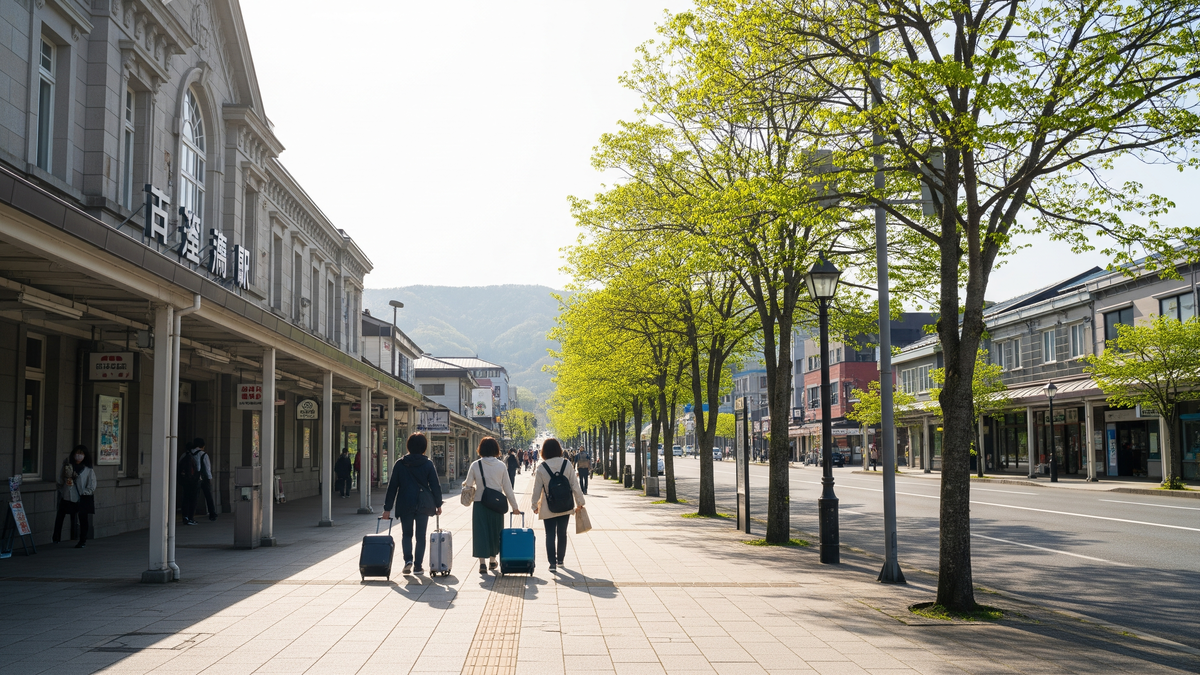
JR Otaru Station is the gateway to Otaru sightseeing. The Otaru Tourism Association says "the Otaru Canal is a 10-minute walk," and if you leave the station and walk down Chuo-dori, you'll naturally reach the canal area.
You're less likely to get lost if you think about what to do after arriving in these three directions.
| Purpose right after arriving | Where to go | Approx. time | Suits people who |
|---|---|---|---|
| Sort out luggage, maps and rain gear | Station tourist information center and lockers | 5–15 min | Are new to Otaru, have a lot of luggage |
| Start with a meal | The Sankaku Market on the left of the station | 30–60 min | Arrive in the morning, want seafood bowls or the market first |
| Head straight to the sights | Chuo-dori to the Otaru Canal | About 10 min walk | Have little time, want to take photos first |
| Settle down first and decide | Around COTARU | 15–30 min | Rainy days, with children, want to rework the plan |
The Otaru Station area slopes down from the station toward the sea. Going to the canal is mostly downhill and easy to walk, while the way back to the station is uphill. If you expect more luggage on the way back, checking the station lockers or coin lockers for space first makes things easier.
Comparing travel from Otaru Station to the main spots
For sightseeing around Otaru Station, walking is enough if you stay in the center. It's easier to decide if you limit buses and taxis to situations where walking alone is a burden, such as Mt. Tengu, Shukutsu, rainy or snowy days, or days with lots of luggage.
| Destination | Basic transport | Approx. time | Points to decide |
|---|---|---|---|
| Sankaku Market | On foot | Right there | Stop here first if you want breakfast or the market first |
| Otaru Canal | On foot | About 10 min | Start here on a first visit. Walk down from the front of the station toward the sea |
| Sakaimachi Street | On foot | About 10–15 min | Easy to include on days with 2 hours or more |
| Around COTARU | On foot | Station area | When you want a break, a café or rental bike advice |
| Mt. Tengu and Shukutsu | Bus, taxi, bike | Depends on destination | Don't stretch too far on foot alone. Choose by weather and stamina |
Fares and timetables change, so on days you use buses, taxis or car parks, check official information and on-site displays. If you keep to the station area, the realistic plan is to first walk to the canal and decide on a place to rest in preparation for the uphill walk back.
What to check first at Otaru Station
This image was generated by AI for illustrative purposes.
Otaru Station is at 2-22-15 Inaho, Otaru. Otaru City's cultural property page confirms that the current station building was built in 1934 as the third station building and is a nationally Registered Tangible Cultural Property. The station itself is worth photographing, so looking at the building's exterior once after you exit the ticket gates before setting off makes a very Otaru-like start.
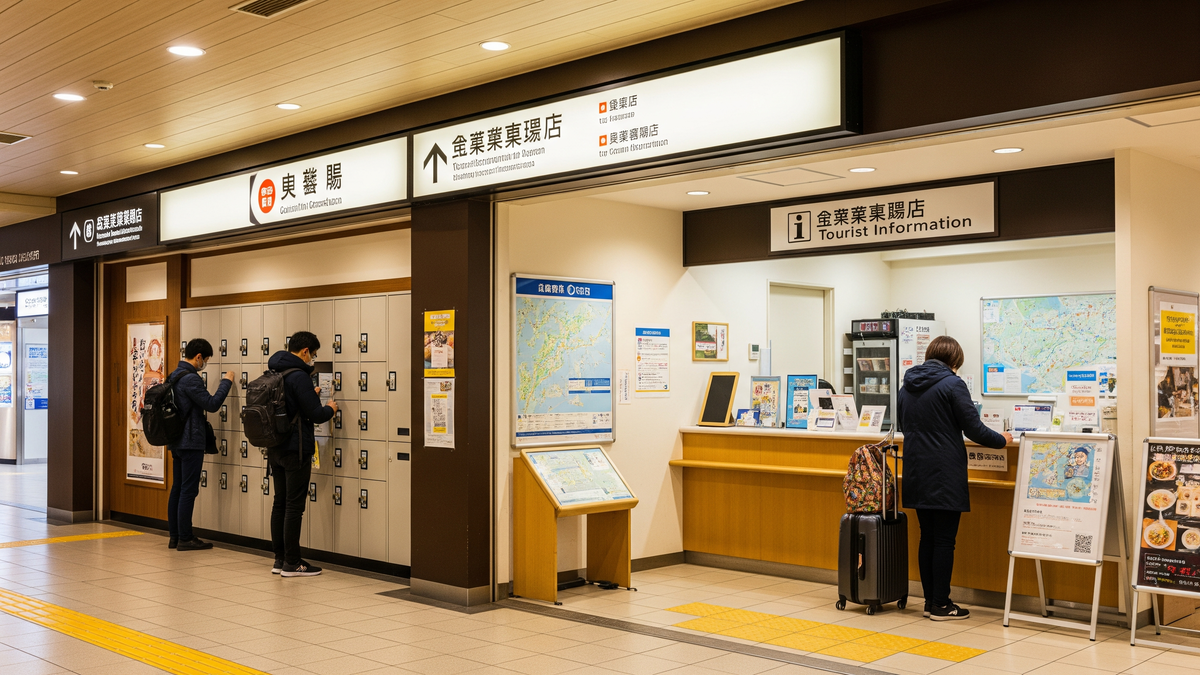
There is an Otaru Station tourist information center inside the station. According to Otaru City's official information, it is at 2-22-15 Inaho, open 9:00–18:00, with no closing days, inside JR Otaru Station, phone 0134-29-1333. Hours may change by season, so check in advance if you arrive at night or over the New Year holidays.
JR Hokkaido's station locker information includes Otaru Station among stations with coin lockers. You'll need to check sizes, prices and availability on site, but since you may be able to store large luggage before sightseeing, checking inside the station first steadies your route.
One thing to note is the tourist information center's temporary luggage storage. It was announced in the past, but there is also a notice that the service ended on June 30, 2021. For now, make the station lockers your first choice, and for luggage that doesn't fit, assume you'll check the latest options individually with your lodging, delivery services or nearby shops.
To the left of Otaru Station: a detour to the Sankaku Market
Just to the left as you exit the station is the entrance toward the Sankaku Market. The Otaru Tourism Association's JR Otaru Station page also says "the Sankaku Market is just to the left as you leave the station," making it an easy detour for people who want a meal or shopping right after arriving.
If you stop at the Sankaku Market, decide first what to do with your luggage. Walking the market's aisles with a large suitcase is hard when it's crowded. If your luggage fits in a station locker, store it first; if not, keep your meal short or drop the luggage at your lodging and come back.
If you arrive in the morning, an easy flow is "check station lockers → eat at the Sankaku Market → back to the front of the station → down Chuo-dori to the canal." If you arrive after midday, rather than starting with the market, it's easier to cut lost time by heading toward the canal and Sakaimachi Street and fitting in a meal or café break along the way.
Walking from Chuo-dori to the Otaru Canal
This image was generated by AI for illustrative purposes.
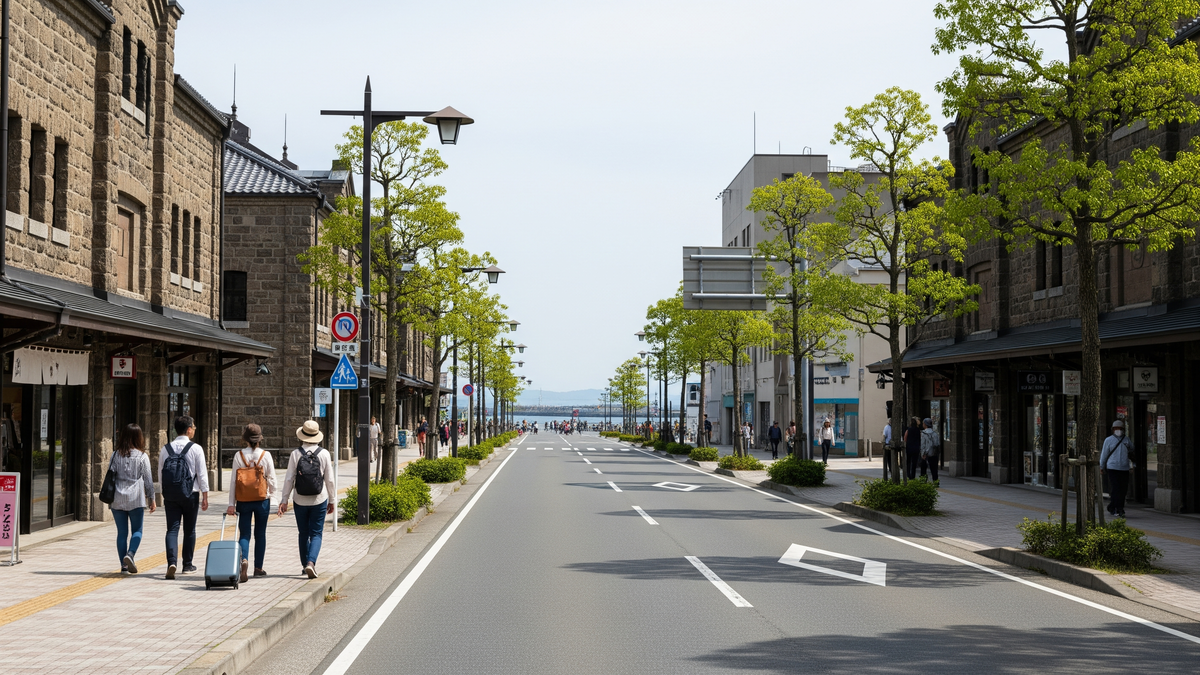
It's about a 10-minute walk from Otaru Station to the Otaru Canal. Hokkaido's official tourism site "HOKKAIDO LOVE!" also gives access to the Otaru Canal as "about 10 minutes from JR Otaru Station."
Leave the station and walk down Chuo-dori in front of you toward the sea. The view opens up toward the port ahead, and along the way you also have the option of stopping by the Bank of Japan Otaru Museum and the "Wall Street of the North." If you want to see Otaru-like scenery in a short time, don't add too many detours; heading first to the canal around Asakusa Bridge is easiest.
Location of Otaru Station (Google Maps)
You can check the location of Otaru Station on Google Maps. Get your bearings from the station before heading to the canal, the Sankaku Market or Sakaimachi Street.
When you reach the canal, don't just take photos and turn back; walking a little around Chuo Bridge and Asakusa Bridge helps you get a feel for the atmosphere. If you have only 30 minutes, just walking to the canal and back and seeing the Asakusa Bridge area works. If you have an hour or more, continuing from the canal toward Sakaimachi Street packs in more sightseeing.
Continue to Sakaimachi Street, or go back to the station?
This image was generated by AI for illustrative purposes.
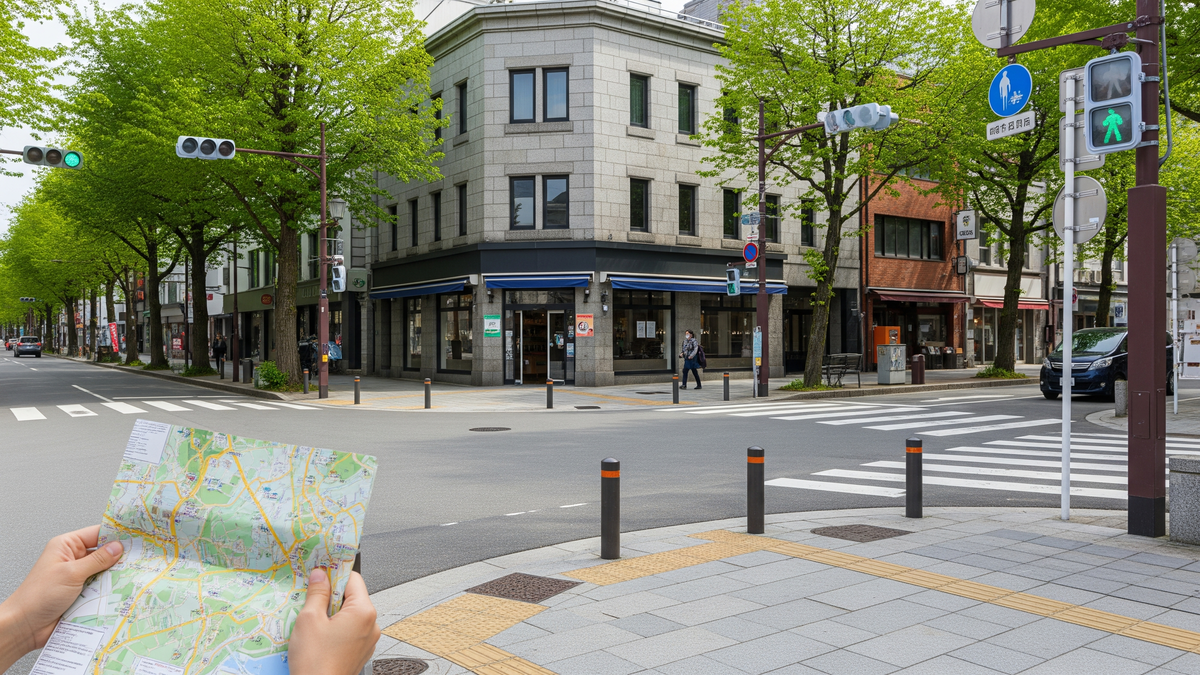
A common dilemma when walking around Otaru Station is whether to return to the station after seeing the canal or continue to Sakaimachi Street. In short, if you have 2 hours or more, it's worth continuing to Sakaimachi Street. Glass, music boxes, sweets and cafés are concentrated there, making it easy to fit in shopping and breaks.
On the other hand, if you have only about an hour or your train time is approaching, it's safer to go back to the station from the canal. The way back to Otaru Station is uphill, so allow extra time on winter roads, in the rain or with large luggage.
If you walk as far as Sakaimachi Street, decide in advance how you'll get back to the station for peace of mind. Options include walking back, going on to Minami-Otaru Station, taking a taxi, or combining with a rental bike. Central Otaru has many slopes, so it's practical not to push your range on foot alone, and to decide it according to your stamina and the weather.
Notes if you come to Otaru Station by car
If you come to the Otaru Station area by car, the station plaza car park and the station-side car park are options. According to Otaru City's official municipal parking information, the station plaza car park is free for the first 30 minutes, then ¥100 per 20 minutes, open 24 hours, with 20 spaces. The station-side car park is ¥130 per 30 minutes, open 24 hours, with 30 hourly spaces.
The station car parks are for drop-offs and short stays. If you'll walk a lot for sightseeing, a car park in the canal or Sakaimachi area may suit your route better than parking near the station. Parking fees, number of spaces and conditions may change, so always check the latest information and on-site displays.
If you walk everywhere after parking, you'll tend to go back and forth between the station, the canal and Sakaimachi Street. If you have half a day or more, deciding "how far to walk" and "how to get back" from where you park makes a less tiring plan.
How to walk by arrival time
Around Otaru Station, the easiest itinerary changes with your arrival time. Changing priorities by time of day makes it easier to get around: the market in the morning, the canal to Sakaimachi Street at midday, and the canal illumination and restaurants near the station in the evening.
| Arrival time | Plan | Notes |
|---|---|---|
| 9:00–11:00 | Check station lockers → Sankaku Market → canal | An easy time to fit in a meal first |
| 11:00–14:00 | Station tourist information → canal → Sakaimachi Street | The standard half-day route |
| 14:00–16:00 | Straight to the canal → break at Sakaimachi Street or COTARU → back to the station | Leave energy for the uphill walk back |
| After 16:00 | Canal stroll → break near the station and check dinner options | In winter it gets dark early, so watch your footing |
On your first visit to Otaru, using the first hour as "time to grasp where the station, canal and Sakaimachi Street are in relation to each other" makes everything after easier. Rather than cramming in shops, it's more practical just to keep in mind the terrain: downhill from the station toward the sea, uphill on the way back.
Deciding on days with rain, snow, children or luggage
On rainy days and winter roads, the uphill walk back to the station is harder than the downhill walk to the canal. If you have umbrellas, a stroller or large luggage, decide before going as far as Sakaimachi Street whether to finish with a round trip to the canal or take a break near the station.
With children or older companions, narrowing it down to three things, "check station lockers," "walk to the canal" and "take a break," is less likely to go wrong than adding destinations. If you use COTARU, think of it naturally as a place for a café break or to decide your next move, not only for renting a bike.
Summary: decide your route in the first 30 minutes at Otaru Station
Around Otaru Station, how easy a half-day of sightseeing is depends on your decisions right after arriving. The basic approach is to first check the tourist information center inside the station and the JR coin lockers, sort out your luggage and map, and then set off.
To the left of the station is the way to the Sankaku Market; walking down from the front of the station toward the sea takes you to the Otaru Canal; and if you have more time, you can continue toward Sakaimachi Street. If you're unsure because of rain or luggage, take a break in the station area and rework your plan without strain. The Otaru Canal is about a 10-minute walk, but the way back to the station is uphill, so it's important to save time and energy for the return.
If you have half a day or more, walk to the canal after arriving, fit in a break or shopping on Sakaimachi Street, and combine with a taxi or rental bike as needed to tour central Otaru efficiently.
FAQ
Can I walk from Otaru Station to Otaru Canal?
Yes. Follow Chuo-dori from the station and it's hard to get lost, even on a first visit.
Should I drop off my luggage right after arriving?
If you have large bags, check lockers or luggage storage first. Travel light before snacking around town or walking up hills.
Can I sightsee just around Otaru Station?
With little time, you can combine the station area, the old Temiya Line and the canal. With half a day or more, extend to Sakaimachi Street or the North Canal.