Otaru Winter Weather and What to Wear | Dec–Feb Temperatures, Snow, Packing
"What should I wear in Otaru in winter, and how deep is the snow?" is one of the most common questions before a trip. In short, from December to February Otaru stays near or below freezing even at midday, and the snow is deepest in February.
This guide sets out winter temperature, precipitation, snow depth and sunshine by month and by ten-day period, using Japan Meteorological Agency normals (1991–2020), and then gives a guide to clothing and packing for snowy streets. Normals are 30-year averages, so check the forecast just before you leave for the actual weather.
Key points
- January in Otaru averages a daily high of -0.5°C and a low of -5.8°C, so many days stay below freezing even at midday
- Deepest snow by month: 54 cm in December, 92 cm in January, 117 cm in February (normals). February is the deepest
- March reaches 4.1°C by day, but snow is still 106 cm deep. Keep your snow-road gear in March too
- Waterproof non-slip shoes, a hat, gloves and layers are the basics. On snowy days, check JR train status first
The short answer: around 0°C even at midday. Bring shoes, a hat, gloves and layers
In January, Otaru's daytime high is -0.5°C on average and the morning and evening low is -5.8°C. Days are short, so plan your walking for midday and put warm feet and hands first.
- January daily high-0.5°Cmonthly average
- January daily low-5.8°Cmonthly average
- February deepest snow117 cmnormal for the month's deepest
- January sunshine63.5 hoursmonthly total
| Month | Daily high | Daily low | What to wear |
|---|---|---|---|
| December | 1.6°C | -3.8°C | Winter coat. Waterproof shoes on snowy days |
| January | -0.5°C | -5.8°C | Thick coat over layers, hat and gloves |
| February | 0.2°C | -5.7°C | Same as January. Keep your neck warm if you walk at night |
| March | 4.1°C | -2.4°C | Easier by day, but keep gear for mornings, evenings and snowy roads |
The clothing column is a rough guide. If you feel the cold or plan to walk the canal for long at night, add one more layer.
Normals: January is coldest and snow keeps deepening until February
Monthly temperature and precipitation normals from November to March.
| Item | Nov | Dec | Jan | Feb | Mar |
|---|---|---|---|---|---|
| Mean temperature | 4.9°C | -1.1°C | -3.1°C | -2.7°C | 0.8°C |
| Daily high (average) | 8.3°C | 1.6°C | -0.5°C | 0.2°C | 4.1°C |
| Daily low (average) | 1.6°C | -3.8°C | -5.8°C | -5.7°C | -2.4°C |
| Precipitation (total) | 152.4 mm | 151.9 mm | 138.1 mm | 106.6 mm | 87.3 mm |
| Snowfall (total) | 36 cm | 142 cm | 157 cm | 130 cm | 80 cm |
| Deepest snow cover | 15 cm | 54 cm | 92 cm | 117 cm | 106 cm |
| Sunshine (total) | 79.6 h | 59.0 h | 63.5 h | 78.2 h | 128.8 h |
January is the coldest month (monthly mean -3.1°C). It also has the most snowfall at 157 cm, while the depth of snow already on the ground peaks in February at 117 cm. Snowfall and snow on the ground are out of step, so you need snow-road gear in February and March as well.
The deepest snow cover in each month (normals), as bars:
Japan Meteorological Agency normals (1991–2020). Snow in any given year varies greatly
By ten-day period: about 0°C in early December, deepest snow in February
If your dates are fixed, the normals for each ten-day period (early, mid, late) are a useful guide.
| Period | Normal low–high | Snowfall (period total) | Deepest snow cover |
|---|---|---|---|
| Early December | -2.6 to 3.0°C | 39 cm | 24 cm |
| Mid December | -4.2 to 1.1°C | 47 cm | 38 cm |
| Late December | -4.5 to 0.8°C | 56 cm | 53 cm |
| Early January | -5.2 to 0.0°C | 53 cm | 67 cm |
| Mid January | -6.0 to -0.9°C | 49 cm | 80 cm |
| Late January | -6.2 to -0.6°C | 55 cm | 91 cm |
| Early February | -6.5 to -0.7°C | 49 cm | 101 cm |
| Mid February | -5.6 to 0.0°C | 50 cm | 110 cm |
| Late February | -4.8 to 1.5°C | 31 cm | 109 cm |
| Early March | -4.1 to 2.1°C | 35 cm | 105 cm |
| Mid March | -2.3 to 4.1°C | 25 cm | 96 cm |
| Late March | -0.9 to 5.9°C | 20 cm | 74 cm |
The lowest normal temperature is -6.5°C in early February. The Otaru Snow Light Path on 6–13 February falls in this period. If you plan to be out at night, dress for about -6°C.
From late February into March the daytime high rises above zero more often. Even so, snow is still 96 cm deep in mid March, and roads that melt by day and refreeze are slippery.
What to wear: three layers, and feet, hands and head first
You are walking a town where the midday high is around 0°C, so think "adjust with layers, and protect feet, hands and head first".
| Part | What to choose |
|---|---|
| Upper body | Three layers: warm base layer, sweater or fleece, thick windproof waterproof coat. Indoors is warm, so be able to take layers off |
| Feet | Winter shoes with non-slip soles, waterproof and warm inside |
| Hands | Warm waterproof gloves. Do not walk with hands in your pockets |
| Head and neck | A hat that covers the ears and a scarf (especially by the night canal and in sea wind) |
| Legs | Thick trousers. Water-resistant fabric is easier on snowy days |
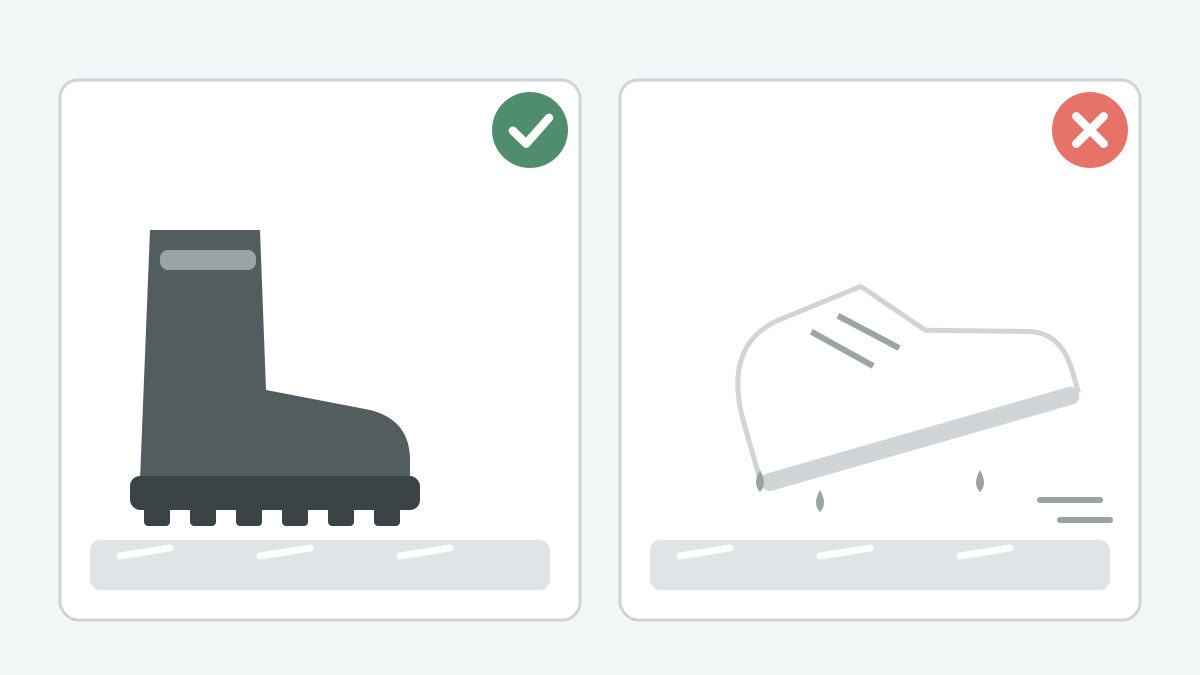
For winter shoes, the Sapporo City Fire Department lists three points: non-slip soles, waterproof so water does not soak in, and warm inside. Ordinary sneakers get wet and cold and are slippery. For a short trip, grips that attach to the shoes you already have are an easy option. For more on shoes and how to walk, see Niseko winter: walking on icy roads (it is about Niseko, but the same applies in Otaru).
This image was generated by AI for illustrative purposes.
Short winter days: walk while it is light
Monthly sunshine totals are 59.0 hours in December and 63.5 in January, less than half of June (170.4 hours). With many cloudy and snowy days, the time you can walk outdoors in daylight is shorter than in summer.
- Walk from morning to early afternoon: after evening the temperature drops and roads ice up
- If you walk at night, decide where to warm up first: on the night you see the canal lights, build in time indoors, as in the Otaru winter half-day course
- Allow extra time on snowy days: snow and ice slow you down compared with summer
Getting around on snowy days: check train status first
In heavy snow, trains from Sapporo may be delayed or cancelled. On the day you go to Otaru, and the day you return to the airport, check JR Hokkaido's operation information before you leave (Sapporo area, which includes the Rapid Airport).
On the day you return to the airport, also see New Chitose Airport in winter: delays and cancellations and Otaru to New Chitose Airport: the way back by JR and bus, and departure time. Leave extra time before your flight.
Packing checklist
- Waterproof non-slip winter shoes (or grips for your shoes)
- Hat, gloves and scarf (a spare pair of gloves helps when one gets wet)
- A warm base layer and a mid layer you can take off
- A thick windproof waterproof coat
- Lotion, lip balm and hand cream (indoor air is dry)
- Disposable heat packs
- A bag for wet gloves and socks
For seasonal packing across Hokkaido, see Hokkaido clothing and packing: temperatures and tips for each season.
Map
FAQ
How cold is Otaru in winter?
In the Japan Meteorological Agency normals (1991–2020), January has an average daily high of -0.5°C, a low of -5.8°C and a monthly mean of -3.1°C. February is 0.2°C / -5.7°C and December is 1.6°C / -3.8°C.
When does snow lie on the ground in Otaru?
The normal deepest snow cover per month is 15 cm in November, 54 cm in December, 92 cm in January, 117 cm in February and 106 cm in March. It is 24 cm in early December and still 74 cm in late March.
When is the snow deepest in Otaru?
By ten-day period, mid-February is deepest at 110 cm, followed by late February at 109 cm and early March at 105 cm.
Are the winter days sunny in Otaru?
Monthly sunshine totals (normals) are 59.0 hours in December, 63.5 in January and 78.2 in February. That is less than half of June (170.4 hours), so clear spells are limited.
What shoes should I wear in Otaru in winter?
The Sapporo City Fire Department advises winter shoes with non-slip soles that are waterproof and warm inside. Ordinary sneakers get wet and cold and are slippery.
Summary
In winter Otaru drops to a daytime high of -0.5°C and a low of -5.8°C in January (normals), and snow reaches 117 cm in February. Get shoes, gloves, a hat and layers first, and plan your walking for the daytime. On snowy days, check train status before you leave so the trip back is not rushed.