Hokkaido Area GuideChitose & New Chitose Airport
New Chitose Airport Winter Delays & Cancellations | What to Do on Snowy Days 2026
・
This article contains ads (affiliate links). If you book or buy through these links, COTARU, the operator of this site, may receive a commission.
In winter, New Chitose Airport can see delays and cancellations caused by snow, blizzards, runway snow clearing and aircraft rotation. Even if it's not bad enough to call off your Hokkaido trip, you may need to decide whether to go to the airport, whether to wait for a rebooking, and whether it's safe to head to Otaru.
This article sorts out the official information to check at New Chitose Airport in winter, what to do if your flight is cancelled, how to spend a wait at the airport, how to prepare for the cold and handle your bags, and how to decide whether to head to Otaru. Read it before you leave and you'll be able to act calmly even on a snowy day.
Key points
- In winter, snow, runway clearing and late aircraft can combine to cause delays and cancellations at New Chitose
- Before you leave, check three official sources: your airline, the airport and JR Hokkaido
- If your flight is cancelled, use the online procedures first. In bad weather, don't force the trip to Otaru

What Tends to Happen at New Chitose Airport in Winter
Winter delays and cancellations don't always have a single cause. Snow falls, snow clearing is needed, the aircraft due to arrive is late, and JR and buses are disrupted too. This chain of events can throw your plans off.
This image was generated by AI for illustrative purposes.
A weather bulletin from the New Chitose Aviation Weather Station records heavy snow at New Chitose Airport from the evening into the night of January 15, 2024, with 83 flights cancelled by that night. This doesn't mean it happens on the same scale every year, but it's a real example showing that snow can have a big impact on flights at New Chitose in winter.
Delays aren't caused only by the weather where you depart. The aircraft due at New Chitose may be late from another airport, snow clearing may limit runway and taxiway use, and security checkpoints and baggage claim may get crowded.
During heavy snow, JR trains and buses from the airport toward Sapporo and Otaru can also be disrupted. Even if your plane lands, don't assume the rest of your journey will go as planned.
Three Official Sources to Check Before You Leave
For winter trips, it's safest to start checking information the night before, not just on the morning of departure. The three sources to check are your airline, the airport and ground transport.
First, check your airline's flight status and your booking details page. ANA says it provides information on delays and cancellations due to bad weather or airport congestion through airport displays, announcements, its website and its reservations and customer center.
JAL provides guidance on its website for changing or refunding bookings on flights where delays or cancellations are expected or have been decided due to bad weather, natural disasters or aircraft problems. Before you line up at the counter, check whether your booking details page shows that your flight is affected.
With low-cost carriers such as Peach, there's no fixed time for deciding on cancellations and delays, and the decision may come close to the scheduled departure time. Check app notifications, email, the airport boards and the website frequently.
Next, check the New Chitose Airport official site and official social media for terminal opening status, important notices and congestion information. Finally, check JR Hokkaido's train service information to see whether the Rapid Airport or trains toward Sapporo and Otaru are suspended.
| Where to check | What to look at | When it helps you decide |
|---|---|---|
| Airline | Delays, cancellations, rebooking and refund eligibility | Whether to fly or change plans |
| New Chitose Airport official | Terminal information, opening, airport guidance | Whether to wait at the airport |
| JR Hokkaido / buses | Rapid Airport, trains toward Sapporo and Otaru | Whether to leave the airport |
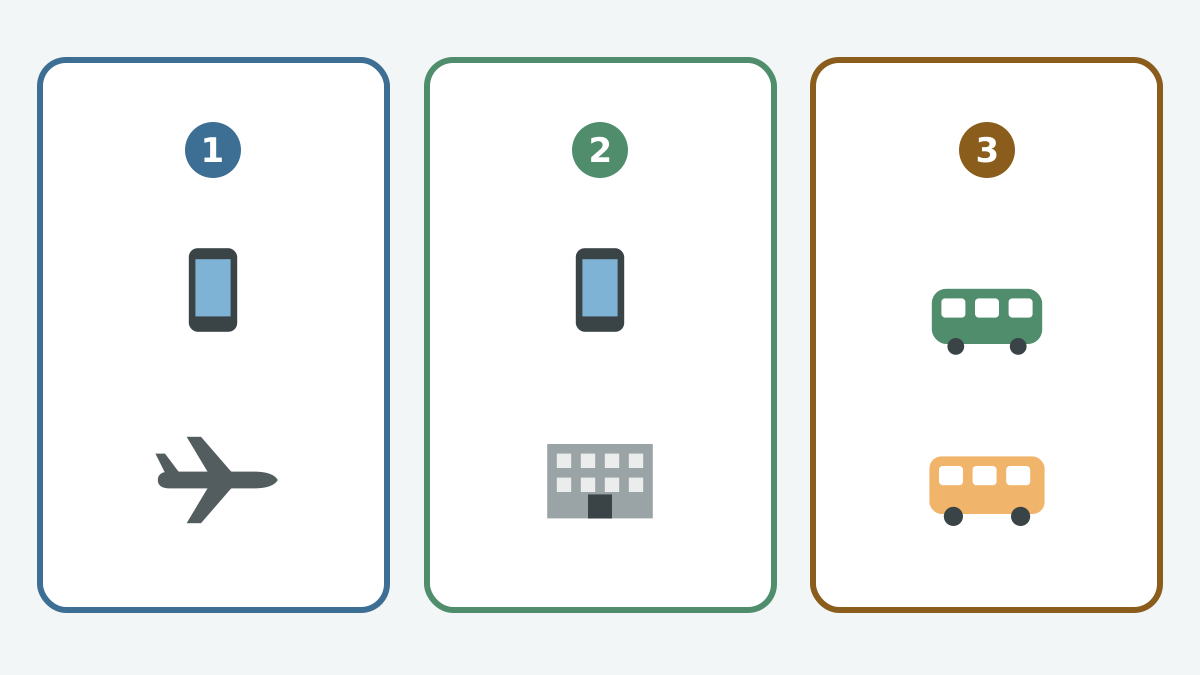
The diagram below shows the three official sources to check before you set out: 1 your airline, 2 New Chitose Airport, 3 JR Hokkaido and buses. Check them in this order the night before and on the morning.
This image was generated by AI for illustrative purposes.
What to Do First If Your Flight Is Delayed or Cancelled at the Airport
If a delay or cancellation comes up after you reach the airport, don't act on instinct. Get your booking number and the official screens ready before you decide. There's a lot you can do before lining up at the counter.
First, open your airline's app or booking confirmation email and check your booking number, flight number, passenger names and departure date. If you're traveling as a family, check that everyone's booking is being handled the same way, not just the lead passenger's.
Next, check whether you can make changes or get a refund online. Airlines such as JAL and ANA provide online procedures for delays and cancellations. In bad weather, counters get long lines, so finishing what you can online first saves time.
Note that hotel and transport costs are handled differently depending on whether the delay or cancellation is caused by the airline or by weather and other events beyond its control. ANA explains that expenses are treated differently in these two cases. Don't assume your hotel will be covered; always check your airline's official guidance.
If you booked flights and hotels as a package through a travel agency or online travel agency, the airline alone may not be able to sort everything out. For tours, dynamic packages and bookings made through overseas online travel agencies, contact the seller's support desk at the same time.
Where to Wait and How to Spend the Time: Hot Springs, Lockers, Food and Charging
How you spend your time at the airport depends on whether the delay is 1–2 hours or half a day or more. To save your energy, leave your bags, find a warm spot and don't let your phone battery run out.
New Chitose Airport Onsen is on the 4th floor of the domestic terminal. Its official site lists 23-hour opening from 10:00 to 9:00 the next morning, with last entry at 7:30. It's an option for long waits or for waiting for a morning flight, but during heavy snow it may be crowded or limit entry, so check the congestion status and hours on its official site.
Coin lockers and Baggage Port are also important. According to New Chitose Airport's official site, there are large, medium and small coin lockers in the terminal, usable for up to 3 days, at ¥300, ¥400, ¥500, ¥800 or ¥900 per 12 hours. Baggage Port costs ¥200 per item for the first hour and ¥100 for each 30 minutes after that, and accepts cashless payment only.
- New Chitose Airport Onsen10:00–9:00 next dayDomestic 4F, last entry 7:30
- Coin lockers¥300–¥900 per 12 hoursUsable for up to 3 days
- Baggage Port¥200 first hour¥100 per 30 min after, cashless only
Moving between restaurants and waiting areas with your bags is more tiring than you'd expect. If the wait looks like it will last several hours or more, look into leaving your bags early. For details, see the New Chitose Airport coin locker and luggage delivery guide.
Where to wait and eat inside the airport is covered in these guides:
- Breakfast and late-night food: what is open, when and where
- Cafes and snacks: where to sit before and after security
- Lounges: ¥1,500, or free for eligible card members
- New Chitose Airport Onsen: hours and fees for resting until morning
You'll need your phone for everything: the airline app, email, contacting your hotel, transport information and maps. Keep a power bank in your carry-on, and top up early whenever you find a place to charge at the airport.
How to Decide If You Plan to Head to Otaru
If you plan to go from New Chitose Airport to Otaru, in winter you need to check the state of JR, buses and roads before moving, rather than setting off as soon as your plane lands.
If the Rapid Airport is running normally, it's easier to decide to head toward Otaru. However, during heavy snow, trains across the Sapporo area may be delayed or suspended. Check JR Hokkaido's official train service information, including the transfer at Sapporo and trains toward Otaru.
- New Chitose AirportCheck the Rapid Airport is running
- SapporoCheck the transfer and trains to Otaru
- OtaruTell your hotel if you'll be late
Simplified diagram, not a map (distances are not to scale)
If services are disrupted, you can wait at the airport, stay in Chitose or Sapporo, or move the next morning
If you arrive at night, the weather is bad and JR or buses are disrupted, deciding not to force the trip to Otaru is a realistic choice. Compare your options: wait at the airport, stay around Chitose or Sapporo, or move to Otaru the next morning.
If you're heading to a hotel in Otaru, let them know early about your check-in time and any arrival delay. If you'll send your bags from the airport or switch to traveling the next day, also check whether the hotel can receive them.
If you go to Otaru after the weather settles, a plan that lets you travel light makes it easier to get your trip back on track. For what to do after arriving in Otaru, also see From arriving at New Chitose Airport to checking in at your Otaru hotel.
Winter Packing and Cold-Weather Checklist
Checking information isn't enough to prepare for winter delays. Pack your carry-on assuming you may spend longer at the airport than planned, have to walk outside, or reach your hotel late at night.
At a minimum, it's safer to put the following in your carry-on rather than your checked bags.
| Item | Why |
|---|---|
| Warm jacket, gloves and hat | You may need to go outside right after arriving |
| Power bank | Essential for flight information, contacting your hotel and maps |
| Regular medicine and children's items | You may not be able to get your checked bags right away if your flight is cancelled |
| Snacks and drinks | Shops can be hard to use late at night or when crowded |
| Charging cable | For charging at the airport or hotel |
| Travel insurance and booking details | For changes and checking compensation |
Shoes matter too. In a Hokkaido winter, the airport may be warm inside, but sidewalks around stations and hotels can be icy. Choose shoes that are slip-resistant, waterproof and don't get cold easily when wet.
FAQ
What should I do first if my flight is cancelled at New Chitose Airport in winter?
Open your airline's app or booking page and check whether you can rebook or get a refund online. Counters get crowded in bad weather, so finishing what you can online first saves time.
Will the airline pay for my hotel if my flight is cancelled because of snow?
For cancellations caused by weather or other events beyond the airline's control, hotel and transport costs may not be covered. This is handled differently from cancellations caused by the airline, so always check your airline's official guidance.
Where can I spend a long wait at New Chitose Airport?
New Chitose Airport Onsen on the 4th floor of the domestic terminal is one option. Leave your bags in a coin locker or Baggage Port, and keep your phone charged.
Is it OK to travel from New Chitose Airport to Otaru on a heavy snow day?
Check JR Hokkaido's service information for the Rapid Airport and trains toward Otaru before you set off. If you arrive at night and services are disrupted, staying at the airport or in Chitose or Sapporo and moving the next morning is a realistic choice.
Summary: At New Chitose Airport in Winter, Check Early and Don't Force It
At New Chitose Airport in winter, flights, JR, buses and your hotel arrival time can all shift in a chain. First check your airline booking details, the airport's official site and JR Hokkaido's service information, and if your flight is cancelled, use both the online procedures and the counter guidance.
If you have a long wait, leave your bags, find a warm spot and protect your phone battery. Even if you plan to head to Otaru, don't force the trip in bad weather; include waiting at the airport or moving the next day among your options.
Once the weather settles, you can still fully enjoy sightseeing in Otaru. Travel light, give yourself plenty of time, and safely enjoy the canal, Sakaimachi Street and a winter walk around town.