Hokkaido Area GuideChitose & New Chitose Airport
New Chitose Airport Guide for International Visitors | SIM, Currency Exchange & IC Cards
・
This article contains ads (affiliate links). If you book or buy through these links, COTARU, the operator of this site, may receive a commission.
International visitors arriving at New Chitose Airport will find it easier to get around if they first sort out four things: connectivity, cash, transport and the information desk. On a Hokkaido trip, it's safer to take care of the basics inside the airport than to run into trouble after moving on to Sapporo or Otaru.
This article is for travelers visiting Japan or Hokkaido for the first time. It covers SIM cards, currency exchange, information desks, JR and buses, IC cards, and what to prepare before heading to Otaru from New Chitose Airport.
Key points
- Before leaving the airport, make sure you can use maps, have a little cash and know your next transport
- SIMs from vending machines; currency exchange on international terminal 2F and elsewhere. Don't count on exchange for late-night or early-morning flights
- IC cards work on JR and some buses, but not on every kind of transport
The Short Answer: After Arrival, Sort Out Connectivity, Cash and Transport, in That Order
You don't need to get everything perfect right after you land. What matters is that before you leave the airport, you can view maps, have at least a little cash and know your next means of transport.
This image was generated by AI for illustrative purposes.
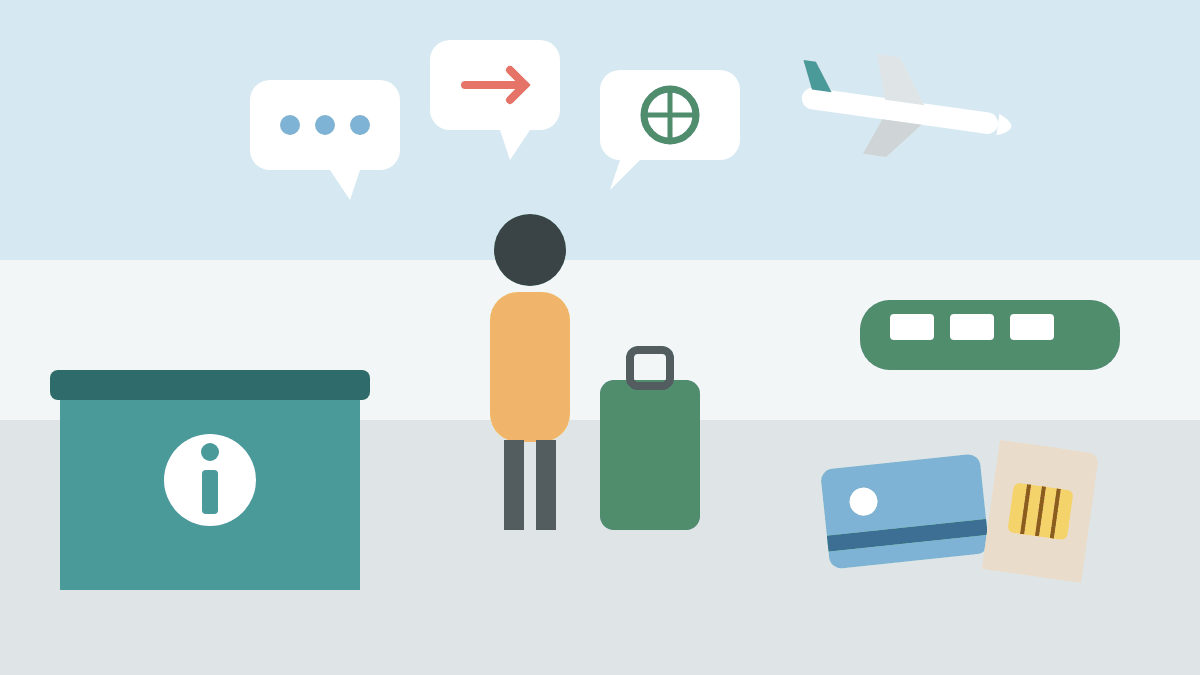
If you arrive on an international flight, check the information desk, currency exchange, SIM cards and transport information around the 2F arrivals lobby. If you arrive on a domestic connecting flight, also check your connectivity and payment options before heading to JR New Chitose Airport Station or the bus counters.
| Priority | What to do | Why |
|---|---|---|
| 1 | Check SIM / Wi-Fi | Needed for maps, translation and contacting your hotel |
| 2 | Cash / currency exchange | Needed at small shops and in emergencies |
| 3 | Check JR / buses | To decide how to get to Sapporo or Otaru |
| 4 | Ask at the information desk | Easier to check things in languages other than Japanese when you're unsure |
- SIMVending machinesDomestic, international 2F and 3F
- Currency exchangeIntl. 2F and elsewhereTravelex 8:30–19:00 (hours may change)
- Information desksIntl. 1F, 2F and 3FTransport and sightseeing
- IC cardsJR and some busesNot on Hokuto Kotsu services
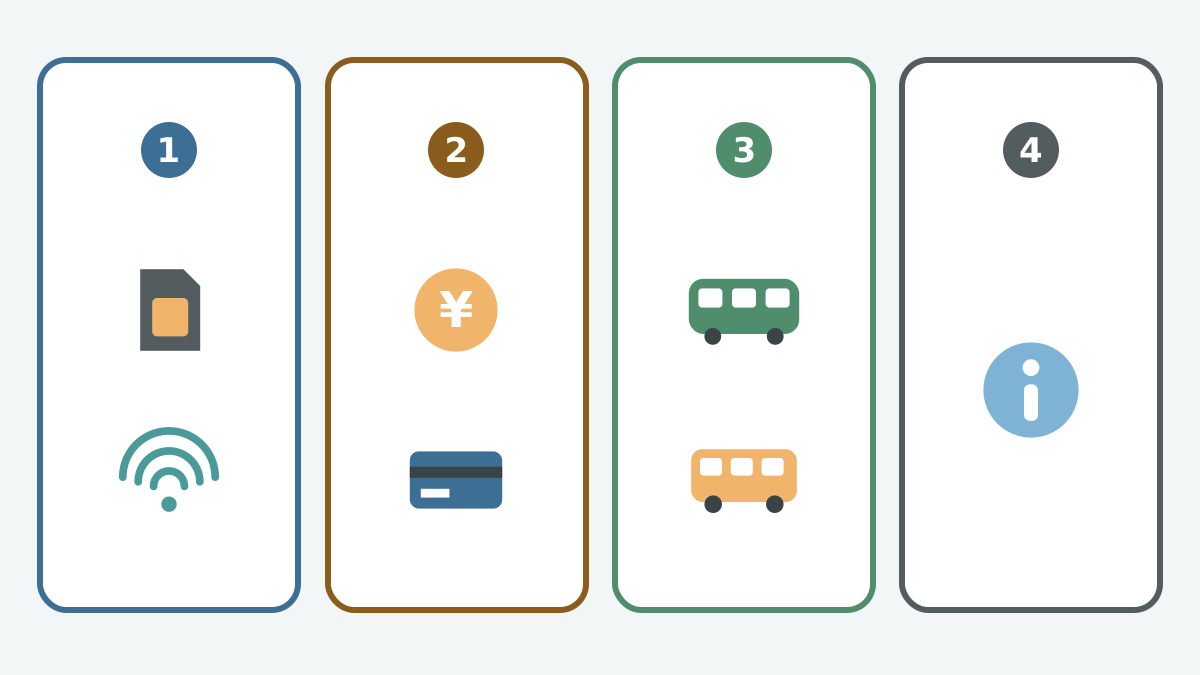
The diagram below shows the order to get set up after you land: 1 SIM and Wi-Fi, 2 cash and exchange, 3 JR and buses, 4 the information desk. If you get stuck, ask at the information desk.
This image was generated by AI for illustrative purposes.
Check the Basics of SIM and Connectivity Inside the Airport
According to the official service guide, New Chitose Airport has prepaid SIM vending machines. Locations are listed for both the domestic and international terminals, including 2F and 3F of the international terminal.
Choose a SIM based on the length of your stay, the data allowance, and whether you need a physical SIM or an eSIM. You'll need to check prices and stock at the machine itself. Also check in advance whether your smartphone supports eSIM and isn't SIM-locked.
On a short trip, simply having a connection at the airport makes a big difference to your peace of mind. On the way to Otaru you'll need to contact your hotel, check JR times, translate and confirm payments, so it's best to sort out connectivity first.
Currency Exchange and Cash: Carrying Even a Little Is Safer
According to New Chitose Airport's official guide, currency exchange services are available on domestic terminal 1F, international terminal 2F and 3F, and elsewhere. Travelex and SMART EXCHANGE are listed, and the currencies handled vary by counter and machine.
Travelex in the international terminal 2F arrivals lobby is listed as open 8:30–19:00. However, hours may change with flight schedules. For late-night arrivals or early-morning departures, it's safer not to assume you'll definitely be able to exchange money at the airport.
Card payments are widespread at Hokkaido's main tourist spots, but cash can be useful at small shops, coin lockers, on buses and in emergencies. Having enough for your transport and one meal to start with will put your mind at ease.
Use the Information Desk to Check Transport and Sightseeing
New Chitose Airport has information desks on 1F, 2F and 3F of the international terminal and elsewhere. The official guide lists what each counter handles, including facility information, flight information, transport information, Hokkaido tourist information, and wheelchair and stroller rental.
For first-time visitors to Hokkaido, the best way to travel depends on whether you're going to Sapporo, heading straight to Otaru, or going to your hotel first. At the information desk, you can check current service status and where to board.
If you have a lot of luggage, are traveling with children or are arriving at night, it's safer not to rely on a map app alone. Checking the boarding point and last departure time at the information desk before you set off reduces the chance of going wrong.
IC Cards Are Handy, but Check for Each Operator
According to JR Hokkaido's official Kitaca guide, IC cards can be used within the same area, such as the Sapporo or Asahikawa area. They're convenient for trips from New Chitose Airport toward Sapporo, but there are restrictions on continuous use across areas.
Buses need even more care. Chuo Bus's official site says its airport shuttle buses accept IC cards such as Kitaca, Suica and PASMO. However, even airport shuttle buses differ by operator, and Chuo Bus's official site also notes that IC cards can't be used on services run by Hokuto Kotsu.
In other words, it's safer not to assume that an IC card alone will cover all your travel in Hokkaido. Split it up: use it on JR, use it on buses where accepted, use it for shopping, and carry cash too.
What to Check Before Heading to Otaru
To get from New Chitose Airport to Otaru, the basic route is to take the JR Rapid Airport toward Sapporo, then continue toward Otaru. If you have a lot of luggage, check transfers, seating and your hotel's check-in time in advance.
- New Chitose AirportCheck connectivity, cash, transport
- Toward SapporoJR Rapid Airport
- Otaru
Simplified diagram, not a map (distances are not to scale)
Check transfers, seating and hotel check-in time in advance
After arriving on an international flight, immigration, baggage claim, setting up your connection, exchanging money and getting to the station all take time. Don't go by your scheduled arrival time alone and pack your Otaru dinner or activity bookings too tightly.
In winter or busy seasons, snow, crowds and delays add to this. In some cases it's easier to stay in Sapporo or near the airport on your first night and head to Otaru the next day.
FAQ
Can I buy a SIM card at New Chitose Airport?
There are prepaid SIM vending machines in the domestic and international terminals (2F and 3F). Check prices and stock at the machine, and make sure beforehand that your phone supports eSIM or isn't SIM-locked.
Where and when can I exchange currency at New Chitose Airport?
There are exchange counters and machines on domestic terminal 1F, international terminal 2F and 3F, and elsewhere. Travelex on international terminal 2F is listed as open 8:30–19:00, but hours can change with flight schedules, so for late-night arrivals or early-morning departures it's safer not to count on exchanging money at the airport.
Can I use Kitaca or Suica on buses in Hokkaido?
Chuo Bus airport shuttle buses accept Kitaca, Suica, PASMO and other IC cards, but Hokuto Kotsu buses don't. Check for each operator, and carry some cash too.
How do I get from New Chitose Airport to Otaru?
The basic route is the JR Rapid Airport toward Sapporo, then on toward Otaru. Arrival procedures for international flights take time, so don't pack too much into your first day.
Summary
When you arrive at New Chitose Airport, sorting out connectivity, cash and transport in that order before leaving the airport makes the rest of your journey much smoother. You can find SIM vending machines and currency exchange on international terminal 2F and elsewhere, and if you're unsure, asking the information desk about boarding points and last departure times is the most reliable option.
IC cards are handy, but some transport doesn't accept them, so carry cash too. On the day you head to Otaru, give yourself plenty of time, and if you arrive in winter or at night, consider moving the next day.