
Accessible Niseko: Winter with a Wheelchair
This article contains ads (affiliate links). If you book or buy through these links, COTARU, the operator of this site, may receive a commission.
This guide is for wheelchair users and the family and friends travelling with them. Niseko gets a lot of snow, and steps and snowy paths can get in the way — but if you decide in advance who will help you and where, snowy scenery, onsen and even sit-skiing are within reach. Below, we separate what we could confirm from official sources and what you should ask hotels and venues before you go.
Key points
- Accessibility varies a lot between hotels and venues — email them with specific questions before you book
- Many JR stations are unstaffed or have no elevator. Contact JR Hokkaido in advance on a weekday
- HANAZONO's ski school (NISS) lists adaptive lessons among its private lessons
- Snow makes wheelchairs hard to push. Check the route from your hotel door to the car first
The Short Answer: Ask Specific Questions in Advance
Accessibility in Niseko varies a lot between hotels, ski resorts and shops. Even when a place says it is "barrier-free," what that means differs, so the most reliable approach is to email specific questions before you book.
| Situation | What to do | Who to ask |
|---|---|---|
| Flights and the airport | Tell the airline about your wheelchair when you book | Airline, New Chitose Airport |
| Travelling by JR | Contact JR before you travel (weekdays 9:00–17:50) | JR Hokkaido (web form, phone, staffed stations) |
| Buses and taxis | Check whether you can ride while seated in your wheelchair | Hotel transfer, bus and taxi companies |
| Your hotel | Ask about the entrance, room, bathroom and snow clearing, with photos | Hotel |
| Skiing and snowboarding | Ask whether adaptive lessons are offered and how equipment works | Ski school |
The sections below cover what we know and what to watch out for in each situation.
From the Airport to Niseko: Decide Who Helps on Each Leg
It's a long way from New Chitose Airport to Niseko. Deciding in advance who will help you on each leg of the journey makes things much easier.
- New Chitose AirportAsk your airline and airport staff
- JR, bus or private transferContact JR in advance. For vehicles, check you can ride in your wheelchair
- Your Niseko hotelCheck the route from the door to your room and to the pick-up point
Simplified diagram, not a map (distances are not to scale)
Travel time depends on how you go. See our airport-to-Niseko guide to compare options
- Inside New Chitose Airport: Wheelchair loans, elevators and accessible toilets are covered in our New Chitose Airport barrier-free guide. Request airline assistance when you book.
- From the airport to Niseko: Compare buses, JR and transfers in New Chitose Airport to Niseko. Whichever you choose, check before booking whether you can ride in your wheelchair or whether it can be folded and stowed.
- Taxis: JNTO says most standard taxis can't take electric wheelchairs. If you need a vehicle you can ride in while seated in your wheelchair, ask your hotel whether it can arrange a transfer or car.
Travelling by JR: Contact Them in Advance on a Weekday
JR Hokkaido's guidance for wheelchair users says:
- How to ask: Use the web enquiry form, call, or ask at a staffed station. Enquiries are handled on weekdays, 9:00–17:50 (except over New Year). If you'll travel on a weekend or holiday, contact them on a weekday beforehand
- Ask early: Last-minute requests may not be possible. Depending on staffing, you may be asked to change your travel date or station
- Stations: Many stations are unstaffed or have times without staff. Some have no elevator or escalator, some require crossing the tracks on a footbridge, some have gravel platforms, and in winter there is snow on the platforms
- Seats: Some limited express trains have seats for wheelchair users. Tell station staff when you buy your ticket
- Companions: Passengers who can't use station or on-board toilets on their own are asked to travel with a helper
You can check facilities station by station on "ecomo-rakuraku," a site JNTO recommends. For example, Kutchan Station (the nearest station to Hirafu) is listed as needing assistance between the entrance and the ticket gate and as having no wheelchair-accessible toilet; the page gives guideline hours for assistance and asks you to contact the station in advance (checked 7 November 2026). Station facilities can change, so confirm with JR Hokkaido before you travel.
Choosing a Hotel: What to Ask Before You Book
Niseko accommodation ranges from large hotels to chalets with stairs. Our guide to where to stay in Niseko explains the areas. If you use a wheelchair, emailing these questions before you book will save you surprises on arrival.
| What to ask | Why |
|---|---|
| Are there steps or a ramp at the entrance? Is the door automatic? | Steps make it hard to get in and out on your own |
| Is there an elevator? Which floor is the room on? | Chalets and pensions may have stairs only |
| Size of the room, toilet and bathroom; grab rails; type of shower | To check your wheelchair fits and transfers are manageable |
| Snow clearing between the entrance and the drop-off point or car park | Wheelchairs are hard to push through settled snow |
| Can I ride in the transfer vehicle in my wheelchair, or can it be stowed? | So you aren't stuck at night or on snowy days |
| Entrance and washing area of the shared or private baths | To decide whether you can enjoy the onsen |
Asking for photos of the room and entrance makes things much clearer. If you'd like to try an onsen, some hotels have private baths (family baths) you don't share with others. For onsen etiquette, see Your First Onsen in Niseko.

This image was generated by AI for illustrative purposes.
Sit-Ski and Bi-Ski: Finding a Lesson
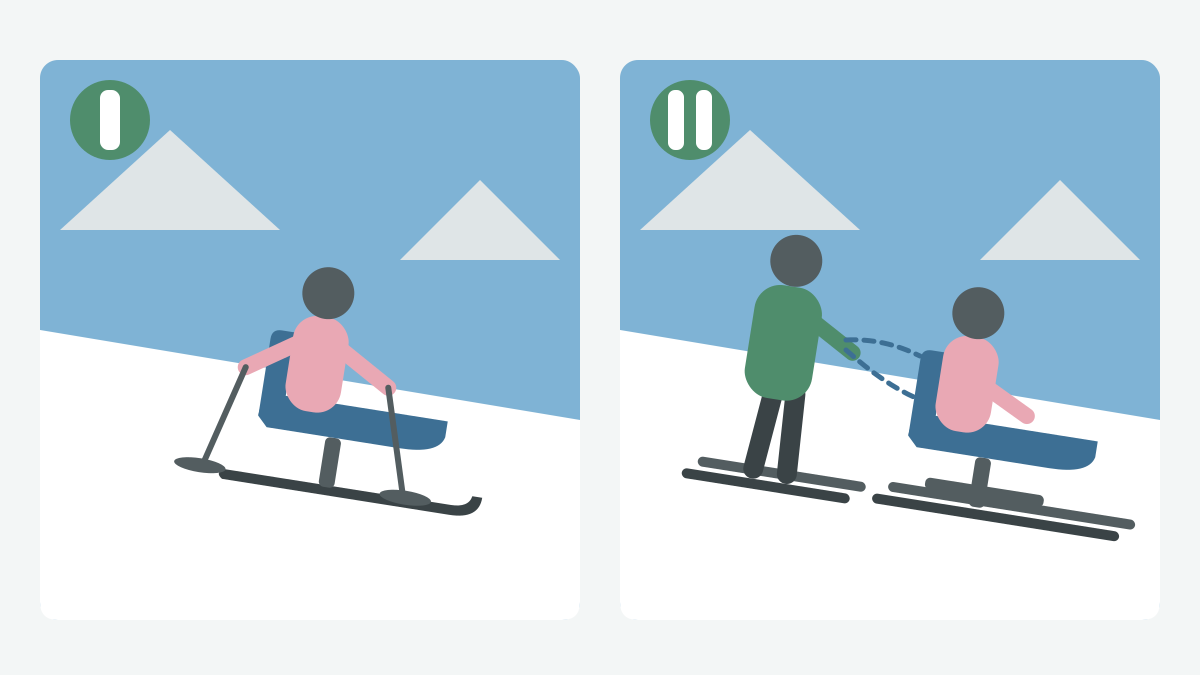
Equipment that lets you ski while seated is generally called a sit-ski (in Japanese, "chair ski") or a bi-ski, and the sport as a whole is known as adaptive skiing.
| Equipment | In short | Often suited to |
|---|---|---|
| Sit-ski (mono-ski) | One ski under the seat. You steer with short ski poles called outriggers | People who want to ski independently |
| Bi-ski | Two skis under the seat for more stability. Often skied with an instructor holding on from behind | First-timers, people who need more support |
Which suits you depends on your body and experience, so talk it through with the ski school.
Of the ski schools at Niseko's four resorts, HANAZONO's ski school (NISS: Niseko International Snowsports School) lists "adaptive" alongside ski, snowboard and telemark on its official private lesson page. Its 2026-27 season runs from 28 November 2026 to 11 April 2027 (tentative). The page doesn't say whether lessons use a sit-ski or bi-ski, whether equipment is provided or what ages are accepted, so contact the school before you book (for example via the contact form on the official site).
As of 7 November 2026, we couldn't find adaptive lessons on the official ski school pages for Grand Hirafu, Niseko Village or Annupuri. Ask each school directly whether they can help. For an overview of the resorts and schools, see our Niseko ski resort guide.
When you get in touch, it helps to include:
- Your condition and the wheelchair you use day to day (manual or electric)
- Your skiing experience (first time, or have you used a sit-ski before?)
- Whether you'll bring your own equipment or want to rent
- What help you need getting on and off lifts and gondolas
- How many people are with you and whether they'll ski too
This image was generated by AI for illustrative purposes.
Getting Around a Snowy Town
Niseko gets frequent snow in winter, and pavements and car parks can be snowy or icy. Wheelchair wheels can sink into soft snow and slip on packed snow or ice. These tips can make getting around easier:
- Keep outdoor distances short: Check whether you can be dropped off right at the door of shops and onsen
- Avoid the heaviest snow: Don't push it on heavy snow days or early in the morning before snow clearing
- Go with a helper: Someone to push makes steps and snowy slopes much less stressful
- Stay warm: Sitting still makes you cold quickly. Bring gloves, a lap blanket and a waterproof cover (see Niseko winter weather and what to wear)
- Allow extra time: Snow can slow traffic and delay transfers and buses
For ideas on days off the slopes, see Niseko for non-skiers. If you'd like to join a tour, ask the operator in advance whether wheelchair users can take part.
Where to Get Help
- Travel problems: JNTO's Japan Visitor Hotline (050-3816-2787, 24 hours, English, Chinese and Korean)
- Injury or sudden illness: Call 119 for an ambulance
- Station facilities: ecomo-rakuraku (elevators, toilets and more by station)
- Advice on travelling in a wheelchair: JNTO points to Accessible Japan for questions such as taxi options
Map
FAQ
Can I take a sit-ski lesson in Niseko?
HANAZONO's ski school (NISS) says on its official private lesson page that adaptive lessons are available. It doesn't say whether that means a sit-ski or bi-ski, or whether equipment is provided, so contact the school before you book.
Can I get to Kutchan or Niseko station by JR in a wheelchair?
JR Hokkaido says many of its stations are unstaffed or unstaffed at certain times, some have no elevator, and platforms have snow in winter. Contact JR Hokkaido before you travel by web form, by phone or at a staffed station (enquiries are handled on weekdays, 9:00–17:50).
Can I ride a taxi without leaving my wheelchair?
The Japan National Tourism Organization (JNTO) says most standard taxis can't take electric wheelchairs. If you need a vehicle you can ride in while seated in your wheelchair, ask your hotel whether it can arrange a transfer.
What should I ask my hotel?
Ask about steps or ramps at the entrance, elevators, the size of the room, toilet and bathroom and whether there are grab rails, snow clearing between the door and the pick-up point, and where the car park is. Asking for photos makes it much clearer.
Summary
The key to enjoying Niseko in winter with a wheelchair is asking specific questions in advance. Contact JR on a weekday, check your hotel's entrance, room, bathroom and snow clearing with photos, and if you want to ski, ask HANAZONO's school and others about adaptive lessons. On snowy days, keep outdoor distances short and allow plenty of time.