Former Temiya Line Walking Guide — Walk Hokkaido's First Railway [Otaru]
・
The remains of the "government-run Horonai Railway," opened on November 28, 1880 (Meiji 13), still survive as they were in the middle of Otaru. The former Temiya Line walkway, maintained as a promenade about 1.6 km long, is a rare walkable disused railway in Japan, with rails, sleepers and crossing gates preserved along almost its entire length. It's a 5-minute walk from the Otaru Canal and free to enter. You can enjoy this railway heritage, set against Hokkaido's industrial history, together with stone warehouses and Meiji-era streetscapes.
What is the former Temiya Line — the history of Hokkaido's first railway
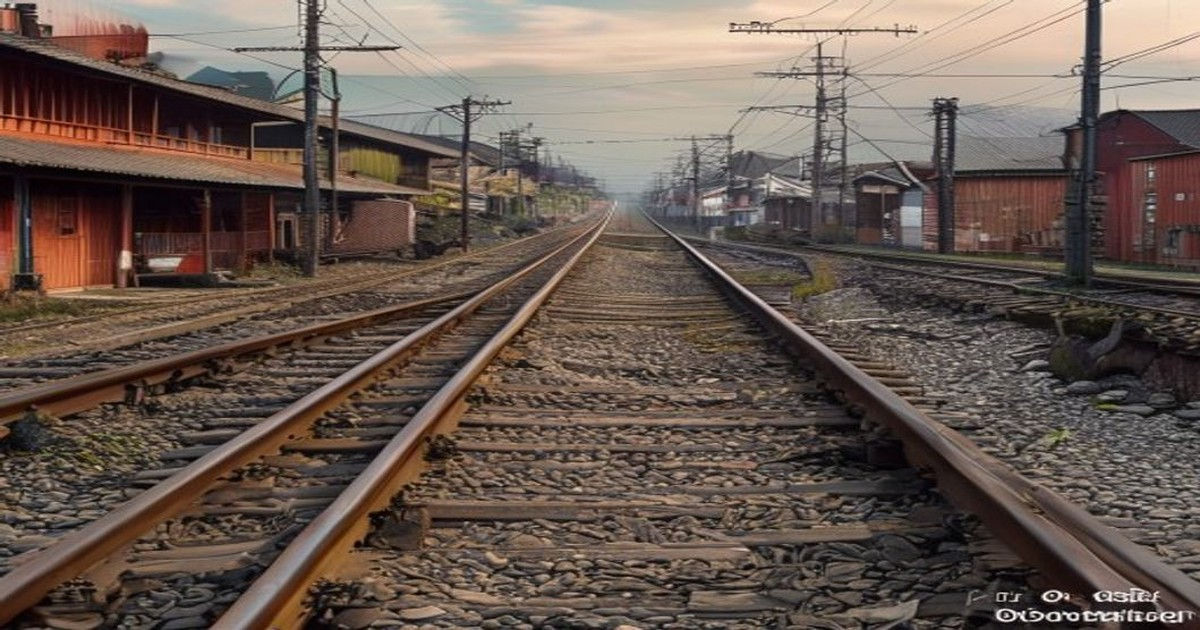
This image was generated by AI for illustrative purposes.
The official name of the former Temiya Line was the "JNR Temiya Line," and its origins go back to the early Meiji era. The government planned and built it as a logistics trunk line to carry coal mined at the Horonai coal mine (now Mikasa City) in inland Hokkaido to Otaru Port.
The Temiya–Sapporo section opened on November 28, 1880, and the whole Temiya–Horonai line was completed on November 13, 1882. As Hokkaido's first railway, it linked coal mine development with port logistics and underpinned Otaru's rapid growth. Besides coal, it was also used for shipping seafood and connecting with nearby commercial facilities.
Passenger service ended in May 1962 (Showa 37), and the line itself was abolished on November 5, 1985 (Showa 60). After that, Otaru City acquired the land from JR Hokkaido in fiscal 2001 and began building the walkway. The full walkway of about 1.6 km opened in November 2016, and in 2018 it was also selected as "Hokkaido Heritage (Otaru's railway heritage)."
That the track laid in 1880 still retains its original form 145 years later speaks to the historical weight of the former Temiya Line.
Walking route — a 1.6 km promenade
| Item | Details |
|---|---|
| Length | About 1.6 km (official figure) |
| Time needed | 30–40 min on foot (at a leisurely pace) |
| Fee | Free |
| Open | All year, all day |
The usual starting point for sightseeing is where Chuo-dori crosses the former Temiya Line (around 1-chome Ironai, Otaru, Hokkaido). It's about a 5-minute walk from the Asakusa Bridge area of the Otaru Canal and about 10–15 minutes from JR Otaru Station. The sight of the tracks crossing the road as they are has the strongest visual impact of all the former Temiya Line's remains, making it a fitting starting point for your walk.
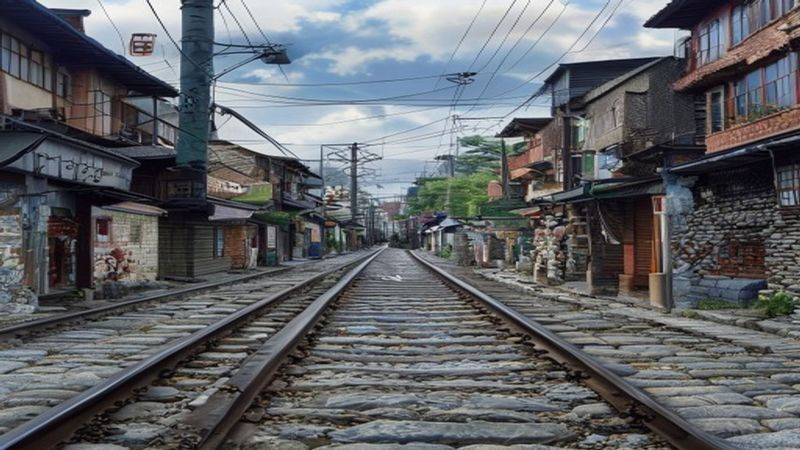
This image was generated by AI for illustrative purposes.
The walkway was developed in two stages: the roughly 510 m from Sushiya-dori to Chuo-dori opened in fiscal 2001, and the roughly 1,160 m from Chuo-dori to Otaru Museum opened in November 2016 (about 1,670 m in total). It is an almost flat, straight path, rare in Otaru, so it's easy to walk even without a map.
The walkway ends at the Otaru Museum Main Building, which stands on the site of Temiya Station, the terminus of the former Temiya Line (1-3-6 Temiya, Otaru, Hokkaido). Visiting the railway exhibits inside right after your walk gives you a three-dimensional grasp of the line's history. Bicycles and cars are not allowed on the walkway; the rule is to leave bicycles outside and walk. Check Otaru City's latest guidance before you visit, too
Highlights and photo spots
The biggest feature of the former Temiya Line is that, more than 40 years after it closed, the rails and sleepers are preserved along almost the entire line. Promenades where you can actually walk on the tracks are rare in Japan, and framing the tracks against stone and brick warehouses is known as the classic shooting angle. You can enjoy different looks depending on camera position, such as vertical shots that use the tracks' vanishing point or horizontal shots including the warehouse walls.
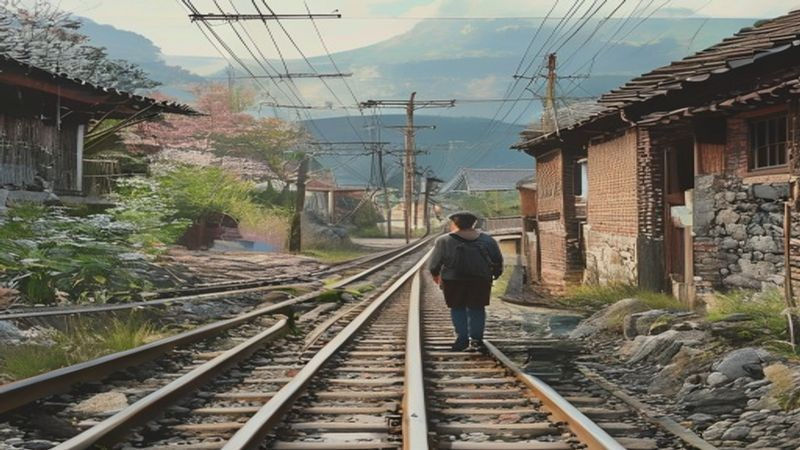
This image was generated by AI for illustrative purposes.
The crossing gates and barrier arms from the line's active days remain along the walkway as they were, and the crossing remains near Chuo-dori are a photo spot that strongly preserves the atmosphere of the railway's working years.
The site of the former Ironai temporary station, opened in August 1912 (Taisho 1), is now a rest area modeled on the old station platform. Information boards are installed, making it a spot to rest while reading about the history of the time. Parts of the platform's stonework and structure also partly remain.
From around Chuo-dori to Sushiya-dori, stone warehouses built in the Meiji and Taisho eras line the tracks continuously. The former Nippon Yusen Otaru Branch, a nationally designated Important Cultural Property, is located behind the tracks, and there is continuity with the Ironai main street area known as the "Wall Street of the North." Otaru's unique urban landscape, where railway remains and modern architecture stand side by side, is concentrated along the former Temiya Line.
Seasonal looks
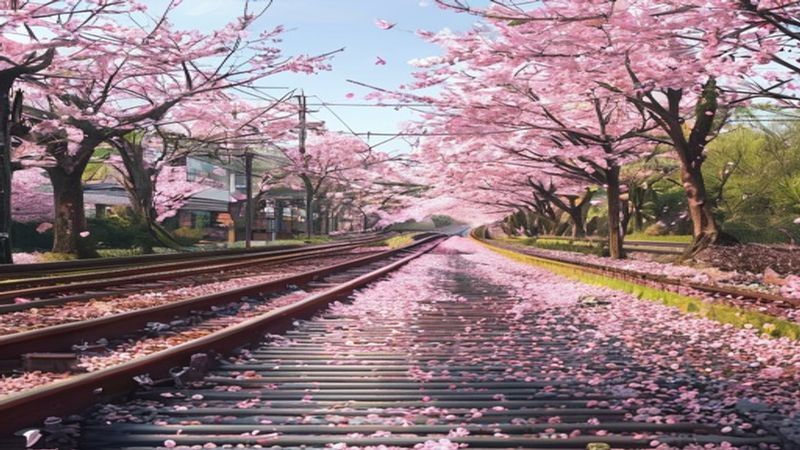
This image was generated by AI for illustrative purposes.
Spring (late April to mid-May) In Temiya Park next to the walkway (within a 5-minute walk), about 700 cherry trees, including double-flowered cherries and Sargent cherries, bloom. The usual peak is early to mid-May, though it varies by year. A spring walk combining the walkway and Temiya Park lets you enjoy both the railway remains and the cherry blossoms. Otaru's cherry blossoms are covered in detail in the complete guide to Otaru cherry blossom season and viewing spots.
Summer (late July) Every year in late July, the "Otaru Glass Market" is held on the former Temiya Line tracks. It's an open-air market where colorful glassware and glass wind chimes brighten the walkway, and you can feel a bustle completely different from the usual promenade.
Autumn (mid to late October) When the surrounding trees change color, you can enjoy the contrast of the stone warehouses' solid walls and the autumn leaves.
Winter (around February) For about 10 days in early February every year, the former Temiya Line is used as a main venue of the "Otaru Snow Light Path." Candles made of snow and glass candles glow orange, turning the tracks into a magical space. It's an almost flat walkway, rare in Otaru, so it's easy to walk even when snow piles up. After snowfall, the rails and sleepers are covered with snow, giving yet another look.
Combining with nearby spots
The Otaru Museum Main Building, at the end of the walkway, is an essential facility for experiencing the former Temiya Line's history. It opened in 1963 (as the Hokkaido Railway Memorial Museum at the time) on the site of Temiya Station, the line's terminus.
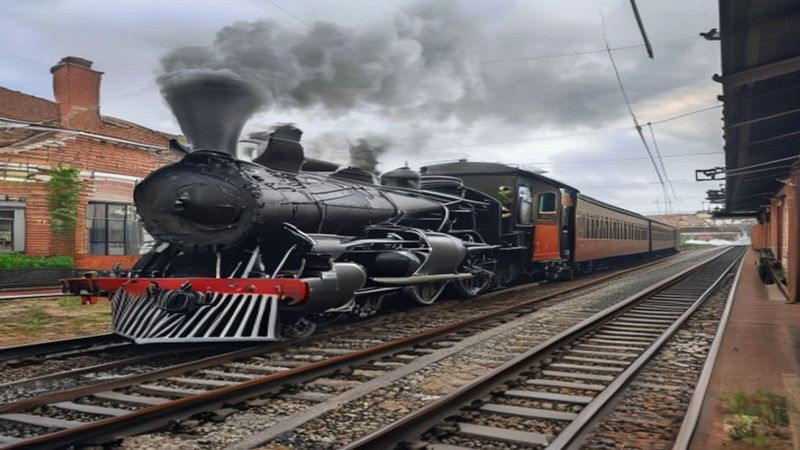
This image was generated by AI for illustrative purposes.
| Item | Details |
|---|---|
| Address | 1-3-6 Temiya, Otaru, Hokkaido 047-0041 |
| Hours | 9:30–17:00 |
| Closed | Tuesdays (the next weekday if a holiday) and New Year (December 29 to January 3) |
| Admission (regular season) | General ¥400 / High school students and Otaru residents 70+ ¥200 / Junior high and younger free |
| Admission (winter: early November to late April) | General ¥300 / High school students and Otaru residents 70+ ¥150 / Junior high and younger free |
| Phone | 0134-33-2523 |
The nationally designated Important Cultural Property "Former Temiya Railway Facilities (Locomotive Shed No. 3)" is open to the public, and the steam locomotive "Shizuka (Taisho)," built at the Temiya works in 1895 (Meiji 28), is the oldest surviving Japanese-made steam locomotive. About 50 railway vehicles representative of Hokkaido are preserved and displayed outdoors and indoors. Rides on the steam locomotive "Iron Horse" ran from April 29 to October 13 in fiscal 2025, but check Otaru Museum's latest guidance for the fiscal 2026 operating period and fares before you visit.
It's about a 5-minute walk from the start of the former Temiya Line (near Chuo-dori) to the Otaru Canal (Asakusa Bridge). The route Otaru Canal → former Temiya Line walk → Otaru Museum is well established as a course that lets you experience Otaru's historic urban space continuously on foot alone. For planning a day of sightseeing in Otaru, see the Otaru day trip model course. A half-day cycling course using e-bikes is introduced in the Otaru rental bike half-day course. Bicycles aren't allowed on the former Temiya Line walkway, but using a bike to get around before and after your walk widens your range.
Access and practical information
Go straight along Chuo-dori toward the sea (north) from the main exit of JR Otaru Station, and in about 10–15 minutes on foot you'll reach the starting point of the walkway (near the Chuo-dori crossing). From the Asakusa Bridge area of the Otaru Canal, it's about a 5-minute walk toward Chuo-dori.
Another option is to take a bus first to Otaru Museum at the end of the walkway and walk back, combining it with Chuo-dori and the Otaru Canal. Take route 10 "to Otaru Aquarium via Takashima 3-chome" from stop 3 at the Otaru Station bus terminal and get off at the "Sogo Hakubutsukan (Otaru Museum)" stop.
Getting around Otaru in general is summarized in detail in the Otaru transportation guide.
| Item | Details |
|---|---|
| Location (starting point) | 1-chome Ironai, Otaru, Hokkaido (near the Chuo-dori crossing) |
| Length | About 1.6 km |
| Time needed | 30–40 min |
| Admission | Free |
| Open | All year, all day |
| From JR Otaru Station | About 10–15 min walk |
| From the Otaru Canal | About 5 min walk |
🗺️ Location of the former JNR Temiya Line (Google Maps)
You can check the location of the former JNR Temiya Line on Google Maps. For the locations and travel times of nearby facilities such as the canal, Temiya Park and Otaru Museum, see each spot's description in the article.
Summary
The former Temiya Line has the historical background of being Hokkaido's first railway (opened in 1880), yet it is maintained as a walkway anyone can enjoy, free and open all year. The rails, sleepers and crossing remains are preserved as they were, and the experience of actually walking a disused railway is rare in Japan. Being a 5-minute walk from the Otaru Canal also makes it easy to fit naturally into your Otaru sightseeing route.
At Otaru Museum, at the end of the walkway, you can learn more deeply about the line's history, and combined with the real steam locomotives on display, you can experience Meiji-era railway heritage over a whole day.
A plan to drop by the former Temiya Line while getting around the area on a COTARU rental bike works well as a way to tour Otaru's historic district compactly. Coming by e-bike to near Chuo-dori, leaving the bike and walking the walkway there and back is a time-efficient combination. For details see the Otaru rental bike half-day course.
FAQ
How long does it take to walk the old Temiya Line?
Allow about 30 to 45 minutes to walk the whole route at a relaxed pace. It's an easy distance to combine with the canal and Sakaimachi Street.
Is the old Temiya Line free to visit?
The walking path is free. If you want to dig into the history, adding the main building of the Otaru Museum makes it easier to understand.
Can I enjoy the old Temiya Line on a rainy day?
You can walk a short section, but when the footing is bad, don't push it. Combining it with indoor sights around the canal or a café break is a good plan.