Hokkaido Area Guide ・ Chitose & New Chitose Airport
New Chitose Airport Domestic ↔ International Transfer Guide | Connecting Facility and Walking Times
・
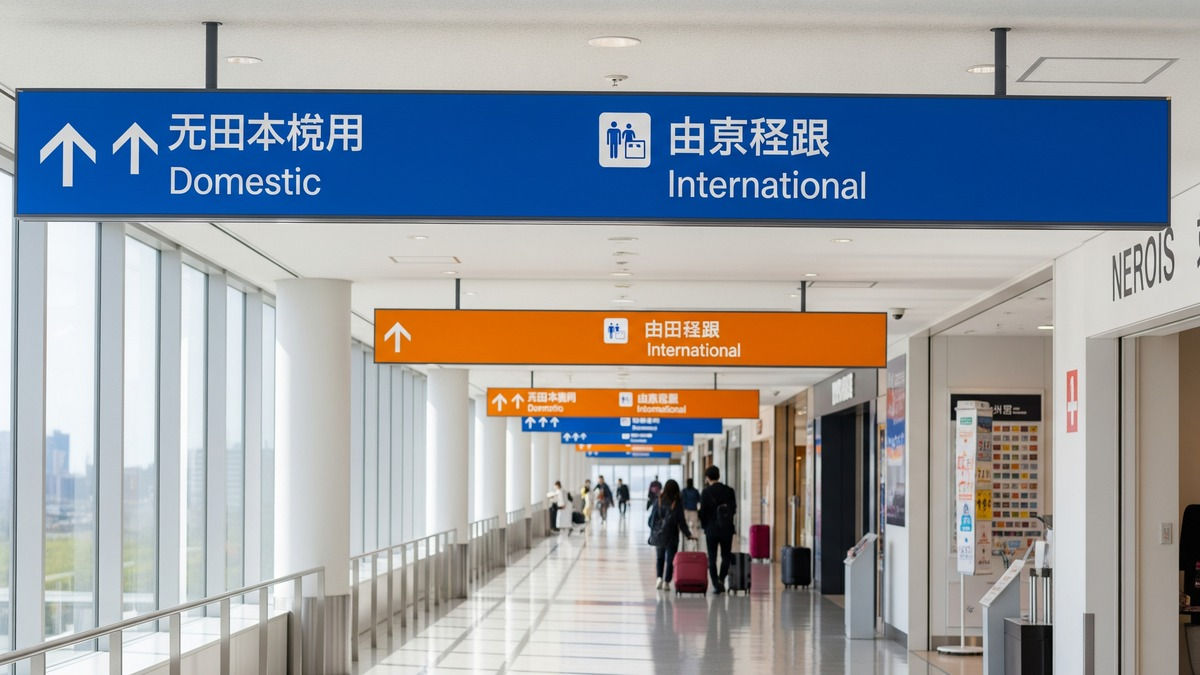
At New Chitose Airport, the domestic and international terminals are separate buildings, linked by a dedicated building called the "connecting facility". Walking is the only way to get between them, and the 2F route with moving walkways takes about 10 minutes. This article explains how the connecting facility is laid out, how to walk the two routes, tips for heavy luggage, and how to make connections.
How the Terminals and the Connecting Facility Are Laid Out
New Chitose Airport has two buildings, the domestic terminal and the international terminal, with the connecting facility between them. Knowing this layout in advance makes it much easier to find your way around.
The domestic terminal is a large seven-story building with check-in counters, boarding gates, restaurants and souvenir shops. The international terminal is a separate building with immigration, the duty-free area and the international boarding gates.
The connecting facility has four floors above ground and one below, and connects to both the domestic and international sides. You can pass through on two routes, 2F and 3F, both open every day. They are normally open 5:00–23:00, but times can change with flight delays and other factors, so if you arrive late at night or depart early in the morning, check the official website beforehand.
🗺️ Location of New Chitose Airport (Google Maps)
Floor maps of the whole airport are published on the New Chitose Airport official website (hokkaido-airports.com). They include a floor guide to the connecting facility and the locations of the exits, so first-time visitors may want to check them before setting off.
Walking Between Terminals and How Long It Takes
The connecting facility has two routes, so you can choose according to your purpose and how much time you have. Signs are color-coded: blue for the domestic area and orange for the international area. Follow the signs hanging from the ceiling as you walk and you will reach your destination without getting lost.
Both routes are about 300 m long. The time it takes depends on how heavy your luggage is and how crowded it is, so give yourself plenty of time.
2F Route (Moving Walkways): The First Choice When You Are in a Hurry
The 2F connecting passage has moving walkways, so you can move smoothly even while pulling a suitcase. The whole floor is flat with few steps, and elevators are available, making it the easiest route to get around.
Allow about 10 minutes. If you are in a hurry to catch a departing flight or have a lot of luggage, this route is the safe choice. Signs in the passage are clear, so even first-time users will have no trouble if they follow them.
3F Route (Smile Road): When You Have Time to Spare
Smile Road on 3F is a shopping zone lined with restaurants, souvenir shops and entertainment facilities. Popular spots such as Royce' Chocolate World and Hello Kitty Happy Flight are also on this floor (for details, see our separate article "New Chitose Airport 3F Entertainment Zone: Complete Guide").
Allow 10–15 minutes, though of course it takes longer if you stop at shops along the way. It suits you if you can pass through more than an hour before boarding, or if you want time to choose souvenirs.
Tips for Moving with Heavy Luggage
If you are crossing the connecting facility with a suitcase or a large bag, a few pointers will make it easier.
The connecting facility has elevators that can be used with wheelchairs and large luggage. You can also use a luggage cart. On the moving walkway, place your suitcase in front of you so it stays steady, and you can move safely.
Signs are in multiple languages — Japanese, English, Chinese and Korean — so overseas visitors and anyone needing language support can also ask airport staff for help as they go.
If you would rather leave your bags and travel light, coin lockers and temporary baggage storage are also options. For the locations, sizes and prices of coin lockers, see "New Chitose Airport Coin Lockers and Luggage Delivery Guide".
Domestic → International Connections (from Domestic Arrival to Boarding)
When connecting from a domestic flight to an international flight, allow at least 120 minutes (2 hours) from arrival to boarding. In busy periods (Golden Week, summer holidays, New Year), security and departure immigration can take longer, so planning for 150–180 minutes is safer.
The steps of the connection are as follows.
- Arrive at the domestic arrivals lobby (domestic terminal 1F)
- Walk to the international terminal via the 2F or 3F route of the connecting facility (about 10–15 minutes)
- Check in at the international terminal (aim for 120 minutes before departure; this varies by airline)
- Pass through security
- Go through departure immigration
- Head to your boarding gate and wait for boarding
For domestic-to-international connections on the same airline with the same booking reference, such as JAL or ANA, through check-in may be available. Through check-in means your international boarding pass is issued along with your domestic one when you check in at your departure airport. In some cases you will not need to check in again at New Chitose, so it is a good idea to confirm with your airline's official website or customer support in advance.
For details of departure and arrival procedures and how to make the most of the duty-free shops, see "New Chitose Airport International Terminal Guide".
International → Domestic Connections (from International Arrival to Boarding)
If you arrive at New Chitose on an international flight and connect to a domestic flight, you need to go through immigration and collect your baggage, so allow at least 2–3 hours.
The connection works like this.
- Come out into the arrivals lobby on international terminal 2F
- Go through immigration (this can take 30–60 minutes in busy periods)
- Collect your checked baggage from the carousel
- Pass through customs
- Walk to the domestic terminal via connecting facility 2F (about 10–15 minutes)
- Check in at the domestic check-in counter (if you have separate tickets) or go to the transfer counter (if you have one ticket)
- Pass through security and head to your boarding gate
When connecting from an international to a domestic flight, you usually have to collect all your baggage and check in again on the domestic side (if you have separate tickets). Because of this extra step, you need even more time than for a domestic-to-international connection.
On the same airline with through check-in, such as JAL or ANA, your baggage may be sent straight to your final destination. Check directly with your airline for details.
Frequently Asked Questions (FAQ)
Here are the questions travelers most often ask about getting between the domestic and international terminals.
Q1. How many minutes does it take to walk from the domestic to the international terminal?
About 10 minutes using the moving walkways on connecting facility 2F, or 10–15 minutes walking along 3F Smile Road. If you have heavy luggage or it is crowded, allow 15 minutes or more.
Q2. Is there a shuttle bus between the domestic and international terminals?
There is no dedicated shuttle bus between the terminals. Walking through the connecting facility is the only way. "Airport buses" are route buses to destinations outside the airport and cannot be used to move between terminals.*
Q3. What are the connecting facility's opening hours?
It is normally open 5:00–23:00. Hours may change with flight delays or schedule changes. If you arrive late at night or depart early in the morning, check the official website in advance.
Q4. When connecting from an international to a domestic flight, how much time do I need?
Adding up immigration, baggage claim, customs, the walk through the connecting facility and domestic check-in, you need at least 2–3 hours. In busy periods, 3 hours or more is recommended. Please also check your airline's connection rules.
Q5. Can I go through the connecting facility with a suitcase?
Yes. The connecting facility has elevators and moving walkways (2F), and luggage carts are available. If you are in a hurry, the 2F route, which is less crowded, is recommended. 3F Smile Road has many shops, and the passage can feel narrow when it is busy.
📸 The Latest from Otaru on Instagram
Once you arrive in Otaru from New Chitose, take a look at COTARU's Instagram too. We post Otaru scenery from our rental bikes, seasonal café menus and local tips in real time.
Summary: Walk Through the Connecting Facility, and Leave Plenty of Time to Connect
Walking through the connecting facility is the only way to get between terminals at New Chitose Airport.
- About 10 minutes on the 2F route (with moving walkways), 10–15 minutes via 3F Smile Road
- Normally open 5:00–23:00
- No dedicated shuttle bus between terminals
- Domestic → international connections need at least 120 minutes (150–180 minutes in busy periods)
- International → domestic: allow 2–3 hours or more including immigration
Connection times vary greatly depending on the airline, the type of connection and how crowded it is. Planning with plenty of time to spare is the best way to reduce stress at the airport.
From New Chitose Airport to Otaru, the JR Rapid Airport takes about an hour (get off at Otaru Station). At COTARU, you can easily get around spots within reach of Otaru Station on an electric-assist rental bike. Even hilly Otaru is an easy ride on an e-bike.
Related Articles
Items marked * (prices, opening hours, etc.) may change. Please check the latest information on each official website before you go.