Saikano Otaru Pilgrimage | A Guide to the Model Locations at Asahi Observatory and Jigoku-zaka
・
If you're walking Otaru, said to be the model for the setting of the manga and anime Saishu Heiki Kanojo (Saikano: The Last Love Song on This Little Planet), it's reassuring to first confirm that a "model location" means something different from an "official filming location" or "official certification." This article centers on Asahi Observatory and Jigoku-zaka, long talked about among fans, and covers access and points to know before you go.
Sorting out how Saikano relates to Otaru
Saikano is a manga by Shin Takahashi, serialized in "Big Comic Spirits" (Shogakukan) from 2000 to 2001. The protagonists are Shuji, a perfectly ordinary high school student, and his girlfriend Chise, who one day suddenly becomes the "ultimate weapon." The story is set in the snowy northern town where the two live; a TV anime adaptation came in 2002 and a live-action film in 2006.
Wikipedia states that the town where Shuji and Chise live "is said to be modeled on Otaru City," and several pilgrimage blogs and tourism sites introduce it the same way (secondary information, consistent across multiple sources). The town's depiction, with lots of snow, slopes and an observatory, and the sea nearby, is said to overlap with Otaru's terrain, and devoted fans have visited from the early 2000s when it was serialized to the present day.
However, in our research (as of May 2026), we could not confirm any comment in which the author, the publisher or the production side officially stated that "it is set in Otaru." This article consistently uses careful wording such as "said to be the model for the setting" and "loved by fans as a pilgrimage site."
This is a different status from an "official filming location" or "official certification." We note the strength of the sources for each place, so please use it as a reference.
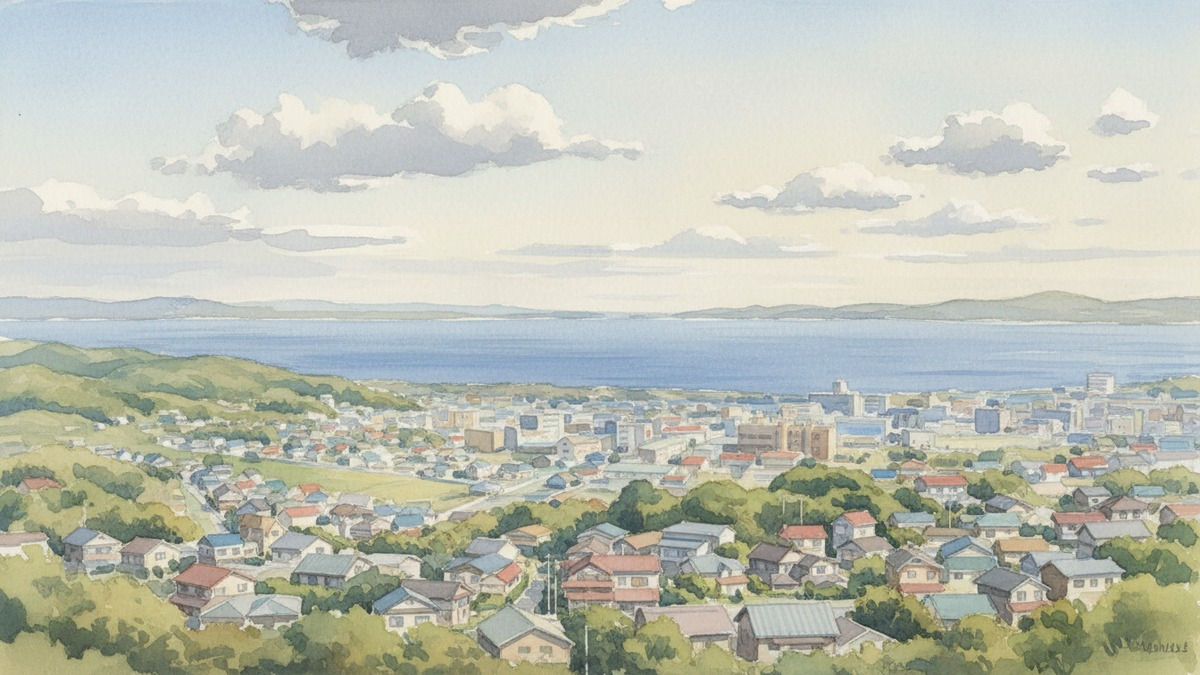
This image was generated by AI for illustrative purposes.
If you want to check several of Otaru's film and anime pilgrimage works together, also see the parent article, Otaru Film and Anime Pilgrimage Map.
| Spot | Source strength | How this article treats it |
|---|---|---|
| Asahi Observatory | Semi-official to secondary (consistent across multiple sources) | Guided as a main spot |
| Jigoku-zaka | Secondary (consistent across multiple sources) | Guided as a main spot |
| Miyakodori shopping arcade and around Otaru Station | Secondary (consistent across multiple sources) | Introduced as the starting point of the route and as a supplement |
| Former Temiya Line | No source confirmed (presumed) | Not included in this article |
Asahi Observatory: the model for the place Shuji and Chise visit again and again
Asahi Observatory looks out over central Otaru and Ishikari Bay from an elevation of about 190 m. Wikipedia states that "the model for the observatory in the manga is Otaru's Asahi Observatory, which was also used as a filming location for the film version," and several pilgrimage blogs and tourism sites introduce it the same way (source strength: semi-official to secondary).
However, the statement that it "was used as a filming location for the film version" is itself secondary information based on Wikipedia. We could not confirm it in primary sources from the production side (anime production GONZO / Toei Video) or the live-action film's production.
Taking this into account, this article consistently uses wording such as "said to be the model" and "said to have been used."
It is said to be the model for the observatory where Shuji and Chise appear again and again as a special place in the story. Memorable scenes are said to be depicted there in both the anime and the film, and fans of the work regard it as "the most essential of the Saikano pilgrimage sites."
Note that in our research we could not confirm a primary source (such as an official comment) from the author (Shin Takahashi) or the production side stating that "Asahi Observatory is the model." The Wikipedia entry is the highest basis at present.
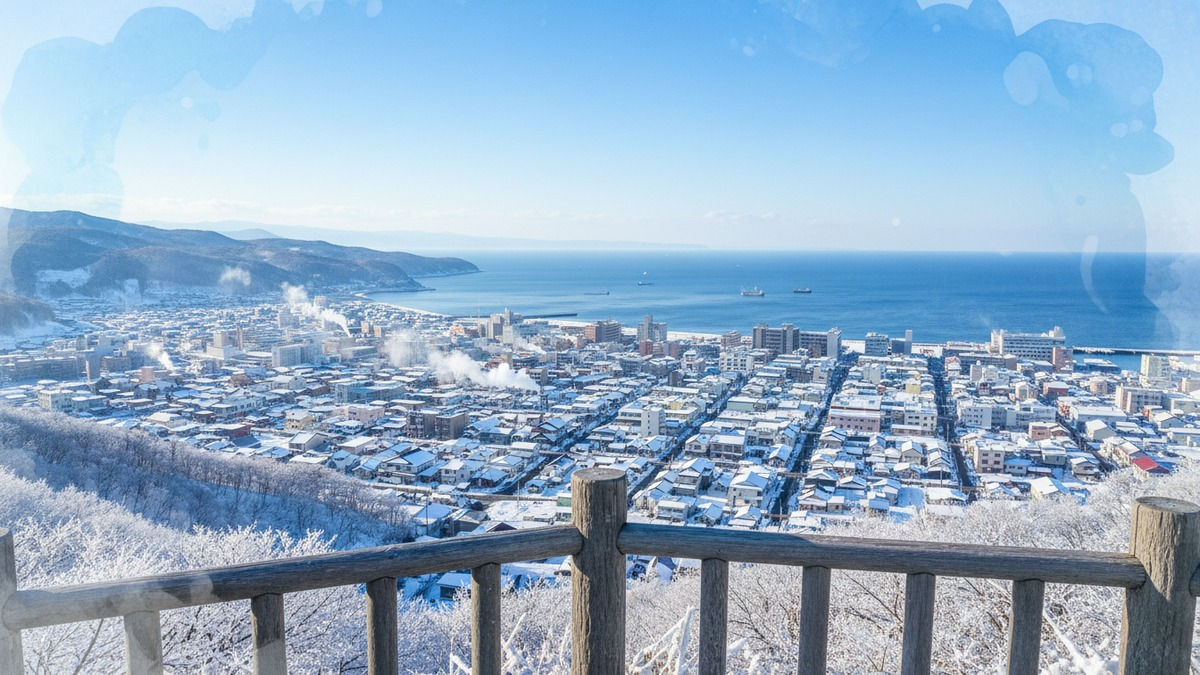
This image was generated by AI for illustrative purposes.
Access and basic information
| Item | Details |
|---|---|
| Address | Tomioka 2-chome, Otaru, Hokkaido (047-0033) |
| Fee | Free |
| Closed | Open every day (the road is closed in winter) |
| Parking | Free, about 20–30 spaces |
| Elevation | About 190 m |
| Inquiries | Otaru City Tourism Promotion Office 0134-32-4111 |
Access (public transport): From JR Otaru Station, take Hokkaido Chuo Bus "Route 19 (Shodai Line)" → get off at the "Shogyo Koko-mae" bus stop → about 1.4 km on foot, about 30 minutes because it's uphill.
Access (car): About 10 minutes from JR Otaru Station. About 20 minutes from Otaru IC on the Sapporo-Otaru Expressway.
The view from Asahi Observatory and sightseeing tips
On a clear day, the blue sea of Ishikari Bay and the townscape of central Otaru spread out below Asahi Observatory. It is sometimes introduced as a night-view spot, but visiting alone at night is dangerous because it's dark underfoot, so it's safest to go during daylight hours.
For fans of the work, it is a moving place as "the model for where Shuji and Chise spent important scenes together." Simply enjoying the view while overlaying the scenes from the work, time passes naturally. There is a fairly large space around the observatory where you can sit and gaze at the scenery at leisure. Parking is free, so you can also come by car.
Check in advance before visiting in winter
The road (a city road) to Asahi Observatory closes in winter. In the 2024–2025 season it was closed to vehicles from November 23, 2024 to March 29, 2025. The period may change by year.
Visiting on foot may be possible in some cases, but it's very dangerous because of snow and ice. If you're planning a visit between autumn and spring, always check the latest information with the Otaru City Tourism Promotion Office (0134-32-4111) in advance.
Visiting alone at night is also dangerous and not recommended. Going on a clear day during daylight is the safest.
Jigoku-zaka: the model for the long slope repeatedly depicted as the route to school
Jigoku-zaka is one of Otaru's famous slopes. It is a long slope with a gradient of about 10% and a length of about 1.5 km, and it has a history of being called "Jigoku-zaka" (Hell Slope) because students of the predecessor of Otaru University of Commerce struggled up it in midwinter.
Several pilgrimage blogs and pilgrimage maps introduce it as "the model for the route to the high school Shuji and Chise attend," and it is said to be depicted across several chapters in both the anime and the original manga (source strength: secondary, consistent across multiple sources).
Beyond Jigoku-zaka is the site of the former Otaru Commercial High School building, and climbing further leads to Asahi Observatory. "Climb Jigoku-zaka → on to Asahi Observatory" has become the standard pilgrimage course among fans.
Note that in our research we could not confirm any official comment stating that "Jigoku-zaka is the model." We include it in the article because multiple secondary sources agree.
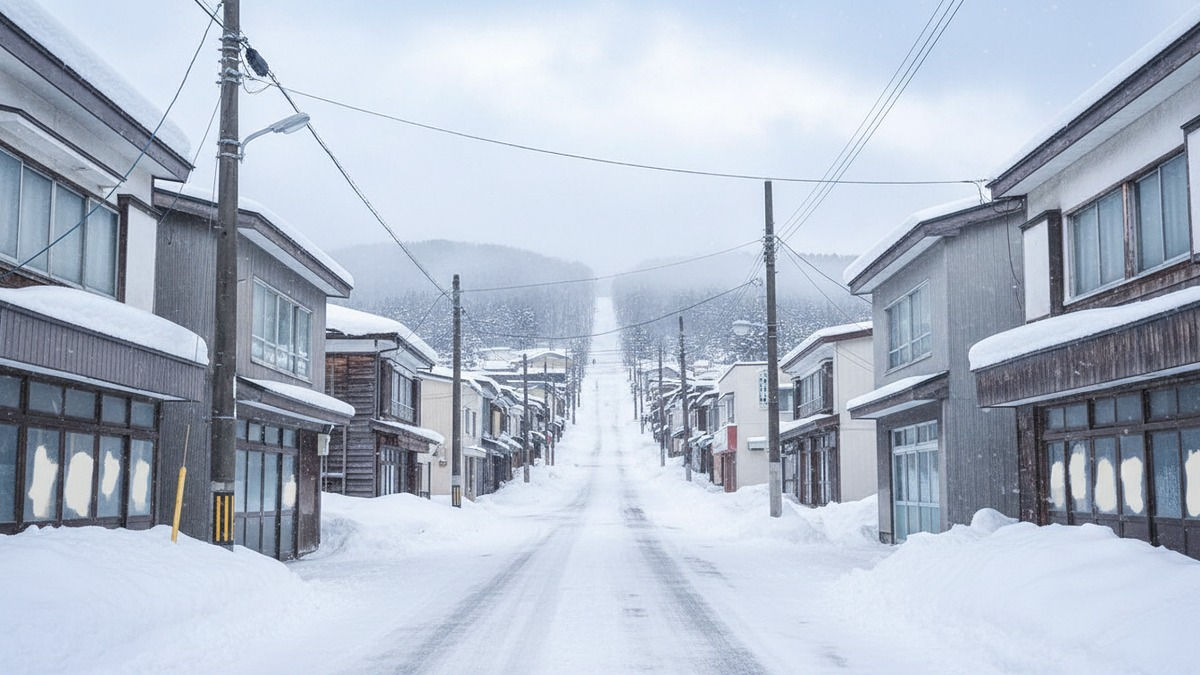
This image was generated by AI for illustrative purposes.
Access and basic information
| Item | Details |
|---|---|
| Address | Tomioka and Midori, Otaru, Hokkaido (from around the Midori 1-chome intersection toward Otaru University of Commerce) |
| Fee | Free |
| Closed | None (outdoor walking route) |
| Parking | None |
Access: About 10–20 minutes on foot from JR Otaru Station (to the foot of the slope). The whole slope is about 1.5 km long.
In winter, snow and ice make it very slippery. Bring snow boots or traction aids. Because it is a steep 1.5 km slope, it's important to stay hydrated and allow plenty of time.
Jigoku-zaka's historical background and a literary walk
Jigoku-zaka also has a historical background separate from the work. The novelist Takiji Kobayashi (best known for The Crab Cannery Ship) and the poet Sei Ito are said to have walked this slope in their student days, so it is also known as "the slope of literature."
Takiji Kobayashi was born in 1903 and grew up in Otaru, Hokkaido. He attended the predecessor of Otaru University of Commerce (Otaru Higher Commercial School) and is said to have walked Jigoku-zaka every day. This slope, where traces of the famous proletarian writer still remain, is also a place where you can feel Otaru's literary side alongside the pilgrimage.
Being able to walk while feeling both the emotion of the work and Otaru's history is the unique depth of Jigoku-zaka for pilgrims. However, when walking the slope, watch out for fatigue. Deciding to turn back partway is also important.
The starting point of the pilgrimage: Otaru Station and the Miyakodori shopping arcade
Before walking Asahi Observatory and Jigoku-zaka, it's good to treat the Otaru Station area as the starting point of the pilgrimage course. Otaru Station is introduced in several pilgrimage reports as "the setting of a meeting scene" (source strength: secondary).
The Miyakodori shopping arcade, about a 3–5 minute walk from JR Otaru Station, is also registered on a pilgrimage map as "the place where Chise and Akemi were in Akemi's flashback scene" (source: seichimap.jp). It is the second-oldest arcade shopping street in Hokkaido and retains a Showa-era atmosphere.
However, because the whole of central Otaru is said to be the model for the work, it is hard to assert that "this place is definitely that scene." It's safest to drop by the Miyakodori arcade and Otaru Station casually, simply as "places to feel the atmosphere of the setting."
Note that for the Otaru Canal, we could not confirm any source showing a direct correspondence with the work in our research. It is not included in this article.
From Otaru Station to Asahi Observatory: the recommended course and time needed
The standard Saikano pilgrimage route goes from Otaru Station via the Miyakodori arcade and Jigoku-zaka to Asahi Observatory. Here is a rough guide.
JR Otaru Station (start) ↓ 3–5 min on foot Miyakodori shopping arcade (supplementary stop, feel the atmosphere) ↓ About 10–20 min on foot Jigoku-zaka (foot of the slope) ↓ About 20–30 min walking uphill (steep, 1.5 km long) Asahi Observatory (finish, 190 m elevation, view of Ishikari Bay)
Total guide: About 1.5–2 hours on foot from Otaru Station to Asahi Observatory (including breaks and stops). Including time at the observatory, allowing half a day gives you plenty of time.
For the way back from Asahi Observatory, returning the way you came or taking a bus is realistic. If you don't have energy to spare, just walking to the foot of Jigoku-zaka to feel the atmosphere is plenty. The climb to Asahi Observatory is quite tough, so make a plan that doesn't push you too hard.
If you use a COTARU rental bicycle, the roads to Jigoku-zaka and Asahi Observatory are steep and for experienced riders. Combined with a pilgrimage around flat central Otaru and the canal area, you can enjoy it without overexerting yourself.
Touring several works over one or more days
Otaru is a town said to be the model for the settings of several manga, films and TV dramas. You can also combine Saikano with the model locations of other works.
| Course | Time needed | Stops |
|---|---|---|
| Saikano only (city center only) | About 2–3 hours | Otaru Station, Miyakodori arcade, up to the foot of Jigoku-zaka |
| Saikano only (to the observatory) | Half day | The above + Asahi Observatory |
| Across several works | Half day to a full day | Saikano + nearby spots from Golden Kamuy, Love Letter and others |
If you want to tour several works at once, it's reassuring to check the overall map and each work's locations in the parent article in the "Related reading" section below.
What to check before you go
Checking the following before your visit helps your plans on the day go safely.
| What to check | Details |
|---|---|
| Asahi Observatory in winter | Road closed (roughly late November to late March). For the latest information, contact the Otaru City Tourism Promotion Office at 0134-32-4111 |
| Jigoku-zaka in winter | Snow and ice. Snow boots and traction aids essential |
| Visiting at night | Not recommended at either Asahi Observatory or Jigoku-zaka |
| Copyright and photography | Posting manga or anime panels or character images is prohibited under Shogakukan's copyright policy. Photograph only the local scenery |
| Stamina and gear | Jigoku-zaka is a steep slope, 1.5 km long with a 10% gradient. Comfortable shoes and hydration essential |
| Nearby residential roads | The area around the slope is residential. Absolutely avoid noise, illegal parking and entering private property |
Related reading
A Saikano tour of Otaru is easier to plan when combined with the parent map and articles on walking routes, cycling routes and the canal area.
- Otaru Film and Anime Pilgrimage Map: the parent article sorting out sources and cautions for several works. You can also check works other than Saikano together.
- Golden Kamuy Otaru Pilgrimage | Walking the Former Nippon Yusen and Northern History: a pilgrimage guide to a popular work also set in Otaru. Easy to combine with the modern architecture area in the center.
- First Love Hatsukoi Otaru Filming Locations: the setting of a drama built around Hikaru Utada's songs. You can also tour spots in central Otaru and Saikano on the same day.
- Half-Day Model Course to Otaru Filming Locations by Bicycle: sorts out how to efficiently cover the center and the North Canal. Useful for a cycling pilgrimage in areas without slopes.
- Otaru Transportation Guide: sort out buses, walking and cycling before heading to Jigoku-zaka or Asahi Observatory.
Access and map
The maps below are for checking locations. When actually getting around, give priority to the season, weather and winter closure information. They are not an official pilgrimage route linking several points with lines.
Check the location of Otaru Station, the starting point for the Miyakodori arcade, Jigoku-zaka and Asahi Observatory.
Check the location of the Miyakodori shopping arcade, an arcade with a lingering Showa atmosphere 3–5 minutes on foot from Otaru Station.
Check the location of Jigoku-zaka. Use it as a guide to your route when walking from JR Otaru Station.
Check the location of Asahi Observatory. The road closes in winter, so check the latest information before you visit.
Check the location of COTARU, a convenient base for a break or checking your route before or after the pilgrimage.
FAQ
Here are the points people most often wonder about on a Saikano pilgrimage in Otaru.
Can I get as far as Asahi Observatory in half a day?
Walking from Otaru Station via Jigoku-zaka to Asahi Observatory takes about 1.5–2 hours on foot. Including time and breaks at the observatory, allowing half a day is reassuring. If you also include supplementary spots in the city such as the Miyakodori arcade, a plan with time to spare is best.
Can I go to Asahi Observatory at night?
Asahi Observatory is sometimes introduced as a night-view spot, but this article does not recommend visiting alone at night. Considering the darkness underfoot, the risk of falling on the steep slope and the lack of transport at night, it's safest to visit during daylight hours.
Can I visit in winter?
The road to Asahi Observatory closes in winter (roughly late November to late March; it varies by year). Visiting on foot may be possible in some cases, but it's very dangerous because of snow and ice. Jigoku-zaka's surface also freezes in winter, so snow boots and traction aids are needed. Check the latest information with the Otaru City Tourism Promotion Office (0134-32-4111).
What if I have children with me or am not confident in my stamina?
Jigoku-zaka is a steep slope about 1.5 km long with a gradient of about 10%, and the road on to Asahi Observatory is physically demanding. If you're unsure of your stamina or have children with you, just walking to around the foot of Jigoku-zaka to feel the atmosphere is plenty. Even strolling only around the Miyakodori arcade and Otaru Station, you can feel the air of the work's setting.
Can I tour it on a COTARU rental bicycle?
The roads to Jigoku-zaka and Asahi Observatory are steep, so going directly by rental bicycle is for experienced riders. Used in combination with flat central Otaru and the canal area, you can enjoy it without overexerting yourself. For how to tour by bicycle, see the cycling course article in "Related reading."
Summary: walking Otaru's slopes and memories of Saikano
Otaru, said to be the model for the setting of Saikano, is well suited to walking its slopes while recalling the work's bittersweet afterglow. The view from Asahi Observatory takes in Ishikari Bay from 190 m up, a scene that stays with you in any season.
Walking up Jigoku-zaka imagining "maybe this is the slope from that scene": that kind of enjoyment is the real pleasure of a Saikano pilgrimage. The observatory view that opens up after climbing the steep slope step by step makes the trip worthwhile on its own.
Precisely because it is not an officially certified tourist site but "a model location protected together with fans," please enjoy it quietly when you visit, being considerate of local life and the natural environment.