Otaru Glass Workshop Experience Guide 2026 | Taisho Glass and Kitaichi Glass
・
The reason glass workshops cluster along Sakaimachi Street in Otaru is closely tied to the history of this port town, which flourished in the Meiji era. The glass industry, which began with making oil lamps, took root as a "hands-on craft culture" as tourism developed. There are three kinds of experiences — glassblowing, tombodama glass beads and sandblasting — and the plans offered differ by workshop. This article compares the experiences at two leading workshops (Taisho Glass and Kitaichi Glass) and suggests a model route for touring the workshops by rental bicycle.
What is a glass experience in Otaru? — a glass culture nurtured by a Meiji-era port town

This image was generated by AI for illustrative purposes.
Otaru's glass industry can be traced back to a workshop that began making oil lamps and glass fishing floats in 1901 (Meiji 34). Otaru then thrived as Hokkaido's largest commercial port, and there was high demand for the glassware needed for fishing, shipping and warehousing. Later, the decline of herring fishing and the spread of electricity changed its foundations as an industry, but from the 1980s onward it found a new direction as glass crafts for tourists.
Today, Sakaimachi Street and the Ironai area are lined with shops selling handmade glassware and hands-on workshops. The crafts you can try fall into three main types — "glassblowing", "tombodama (glass beads)" and "sandblasting" — each with a different time, price and difficulty. Which one you choose depends on when you visit and who you're with. Golden Week and the summer peak season are busy, so it's reassuring to secure a slot before your trip, especially for experiences that require booking.
Comparing the experiences: glassblowing, glass beads and sandblasting
The three experiences differ in process and in the style of the finished piece. Use the following to choose the one that suits you.
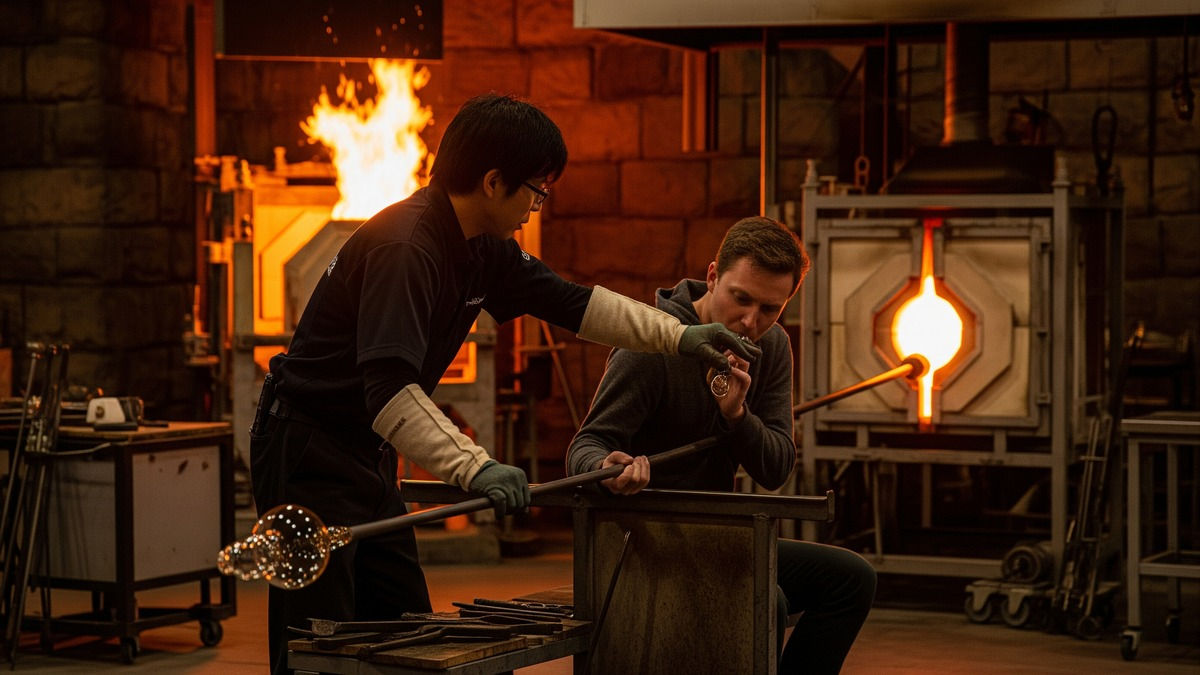
Glassblowing (Taisho Glass) is a technique where you gather molten glass on an iron pipe and shape it by blowing into it. With the heat of the furnace and its unique atmosphere, it's the most out-of-the-ordinary of the three. Finished pieces are glasses, small bottles and the like, with some individuality in color and shape. It takes about 20 minutes, but because the glass takes time to cool, you can't take your piece home the same day (pick it up later or have it shipped). If you're traveling, check how to receive it in advance. Advance booking is required, and slots fill up early in busy seasons.
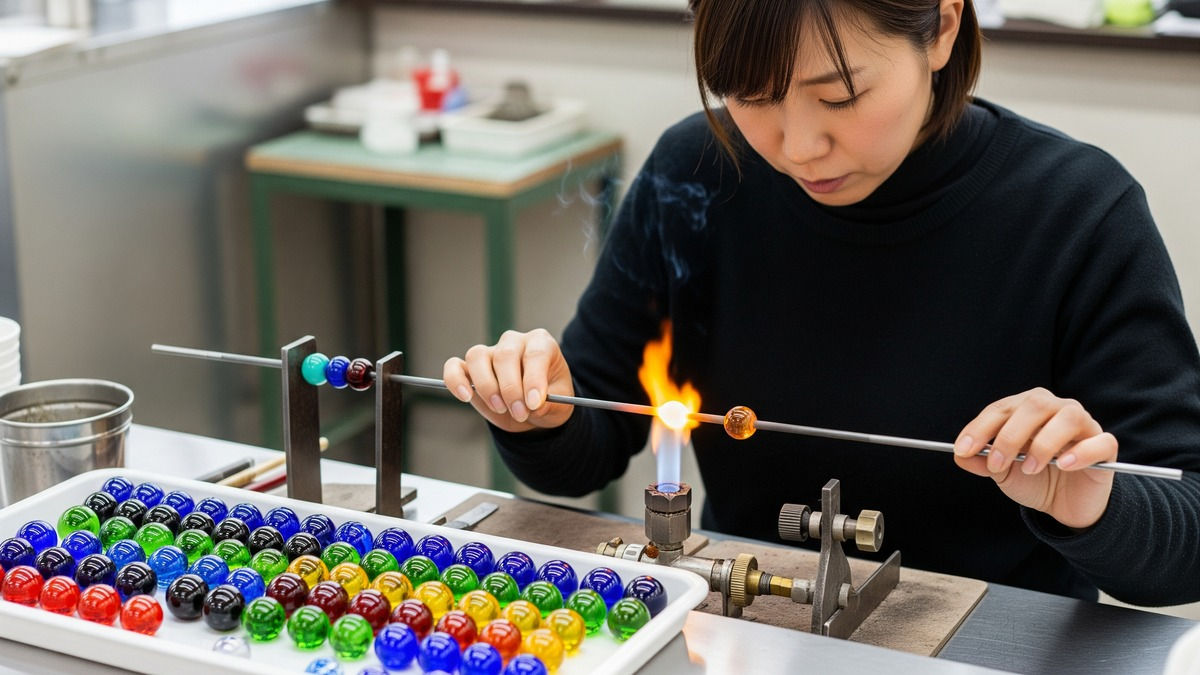
Tombodama glass beads (Taisho Glass and Kitaichi Glass) is a technique where you melt thin glass rods with a burner and wind them around an iron rod to form a round bead. You can take the finished bead home as an accessory. The experience is shorter than glassblowing (about 15–30 minutes), and children from elementary school age can enjoy it easily. Some workshops accept same-day sign-ups at the shop.
Sandblasting (Kitaichi Glass) is a technique where you mask the surface of a ready-made glass item and blast it with fine sand to carve a pattern. It uses no flame or heat, so it's safe to enjoy. You start by choosing a design and applying the masking, so there's a lot of design freedom, and it's popular as a way to make your own original glass or tableware. You can take the finished piece home the same day.
Workshop guide 1: Taisho Glass (Main Store) — glassblowing and glass beads
Taisho Glass is a handmade glass exhibition, shop and workshop facility in the former Natori Takasaburo Shoten (a copper, iron and hardware merchant) building, built in 1906 (Meiji 39). It was designated a historic building by Otaru City in 1985 (Showa 60), and its late-Meiji merchant-house exterior, combining Sapporo soft stone walls with steel columns, is one of its highlights.
This image was generated by AI for illustrative purposes.
The glassblowing experience takes place at the main store. It takes about 20 minutes, and your piece is picked up later (or shipped, at extra cost). You can't take it home the same day, so book with your travel schedule in mind. Each slot is for one person, so groups are guided in turn.
The glass bead experience is held at Tombodama-kan (next to the main store, 1-1-6 Ironai, Otaru). It takes about 15 minutes (plus about 40 minutes of cooling time), and you can sign up at the shop on the day. However, sign-ups may close when it's busy, so it's reassuring to check before you visit.
Taisho Glass also offers stained-glass plates (about 1.5 hours, ¥1,500), craft key chains (about 1 hour, ¥1,200) and original accessory making (15–30 minutes, ¥1,500–¥3,000).
Taisho Glass Main Store basic information
| Item | Details |
|---|---|
| Address | 1-1-8 Ironai, Otaru, Hokkaido 047-0031 |
| Phone | 0134-32-5101 |
| Hours | 9:00–19:00 (open every day) |
| Glassblowing fee | ¥5,500 (tax included) |
| Time (glassblowing) | About 20 min (piece picked up later or shipped) |
| Booking (glassblowing) | Advance booking on the reservation site is a MUST |
| Glass bead fee | ¥1,500 (tax included) |
| Time (glass beads) | About 15 min (plus cooling time) |
| Booking (glass beads) | Same-day sign-up at the shop (may close when busy) |
*Prices and hours may change. Check the Taisho Glass official website for the latest information.
Workshop guide 2: Kitaichi Glass (Building No. 3) — sandblasting and glass bead arrangement
Kitaichi Glass was founded in 1901 (Meiji 34) as its predecessor "Asahara Glass", a workshop that made oil lamps and glass fishing floats. The current Building No. 3 is a timber-framed, stone-clad warehouse built in 1891 (Meiji 24) (the former Kimura Warehouse), renovated in 1983, and Kitaichi has taken root on Sakaimachi Street as Otaru's leading glassmaker.
Note that Kitaichi Glass does not offer a glassblowing experience. It used to open a viewing workshop (hot work and lamp work) to the public for free, but viewing is currently suspended. The hands-on workshop offers two experiences: sandblasting and glass bead arrangement.
The sandblasting experience takes about 1 hour 30 minutes and costs from ¥3,300 (experience fee ¥1,200 + materials from ¥2,100). The finished piece is your own original glass item with a pattern carved into its surface, and you can take it home the same day. Booking is required online or by phone by 17:00 two days before (the day before, phone only).
The glass bead arrangement experience takes about 30 minutes and costs around ¥1,500 for materials plus about ¥100–¥200 for parts. You can book online or by phone (deadline 17:00 two days before) or sign up when you visit on the day. Last reception for both experiences is around 15:00–15:15.
Kitaichi Glass Workshop basic information
| Item | Details |
|---|---|
| Address (Building No. 3, workshop) | 7-26 Sakaimachi, Otaru, Hokkaido 047-0027 |
| Phone | 0134-33-1993 |
| Experience hours | 9:45–17:00 (last reception 15:00–15:15) |
| Sandblasting fee | From ¥3,300 (tax included) |
| Time (sandblasting) | About 1 hour 30 min |
| Booking | Online/phone (deadline 17:00 two days before); day before by phone only |
| Glass bead arrangement fee | Materials around ¥1,500 + parts |
| Time (glass beads) | About 30 min |
| Viewing workshop (glassblowing, lamp work) | Currently suspended |
*Prices and hours may change. Check the Kitaichi Glass official website for the latest information.
How to tour the workshops — a model route by rental bicycle
Using a rental bicycle from in front of Otaru Station, you can efficiently visit Taisho Glass (Ironai area) and Kitaichi Glass (Sakaimachi area). The two workshops are within walking distance of each other, but a bicycle gives you more flexibility and makes it easier to explore Sakaimachi Street between experiences.
🗺️ Location of the Sakaimachi Street area (Google Maps)
You can check the location of the Sakaimachi Street area, where the glass workshops are, on Google Maps. For each workshop's detailed address and booking information, see the workshop guide sections in this article.
As a half-day plan, an easy route is to book a glassblowing experience (Taisho Glass, about 20 minutes) in the morning, then move on to sandblasting (about 1.5 hours) or glass beads (about 30 minutes) at Kitaichi Glass. You can't take glassblown pieces home the same day, so arrange to pick yours up later or have it shipped.
This image was generated by AI for illustrative purposes.
You can also stop by Otaru Art Base (Ironai area) on your workshop tour. Otaru Art Base is for viewing. At the Stained Glass Museum (1-2-17 Ironai, Otaru), you can see stained glass made in England about 100 years ago that once adorned real churches. It doesn't offer glassmaking experiences, but many visitors combine it with their workshop tour as a place to experience historic glass art. Admission is ¥1,200 for adults with a single-museum ticket (May–October 9:30–17:00, closed Wednesdays).
To tour Otaru's sightseeing spots by bicycle, also see our Otaru Rental Bicycle Half-Day Course. For an overall route for sightseeing in Otaru by rental bicycle, see our Otaru Day-Trip Model Course.

This image was generated by AI for illustrative purposes.
Golden Week (late April to early May) and summer vacation (July–August) are when experience slots fill up especially fast. For experiences that require advance booking, such as glassblowing, it's reassuring to book as soon as your travel dates are set. Even glass beads and sandblasting, which accept same-day sign-ups, may close sign-ups when busy.
For getting from Sakaimachi Street to Otaru Station, see our Otaru Transportation Guide, and for sightseeing around Sakaimachi Street as a whole, see our Otaru Canal Area Complete Guide. If you're planning a glass experience to coincide with the cherry blossoms in April–May, also see our Otaru Cherry Blossom Guide.
Summary
What each glass workshop in Otaru offers differs. Taisho Glass offers glassblowing (¥5,500, advance booking required, picked up later) and glass beads (¥1,500, same-day sign-up at the shop), while Kitaichi Glass offers two experiences: sandblasting (from ¥3,300, book 2 days ahead) and glass bead arrangement (materials around ¥1,500, same-day visits OK). Rooted in the industrial history of the Meiji era, it has become established as "making things" tourism, and with a rental bicycle you can visit both workshops in half a day.
COTARU café, about a 5-minute walk from Otaru Station, is easy to stop by before or after your workshop experience. COTARU also rents e-bikes, which you can use as a starting point for touring the workshops in the Sakaimachi Street and Ironai areas. Along with your glass experience, take a relaxed bike ride around Otaru.