Hokkaido Area Guide ・ Chitose & New Chitose Airport
New Chitose Airport Seafood Souvenir Guide | Keeping It Cold and Getting It Home
・
If you want a souvenir that really says Hokkaido, New Chitose Airport has more to offer than sweets. Seafood is a strong choice too: kelp (kombu), dried salmon jerky (sake toba), scallop products, Matsumae-zuke (pickled squid and kelp), shiokara (salted fermented squid), and chilled or frozen seafood — all things that bring Hokkaido back to the dinner table once you get home.
This guide walks you through how to choose seafood and food souvenirs at New Chitose Airport, broken down by room-temperature, chilled, and frozen items, plus tips on keeping things cold, shipping, and carry-on rules. It's a practical guide whether you're heading home from a trip to Otaru, returning from a business trip, or picking up a gift for visitors from overseas.
The Short Answer: Choose Based on How Long You'll Be Traveling
If you pick seafood souvenirs just because they look delicious, you may run into trouble while carrying them around. What you should buy depends on whether you're flying straight home from the airport or staying another night in Otaru or Sapporo.
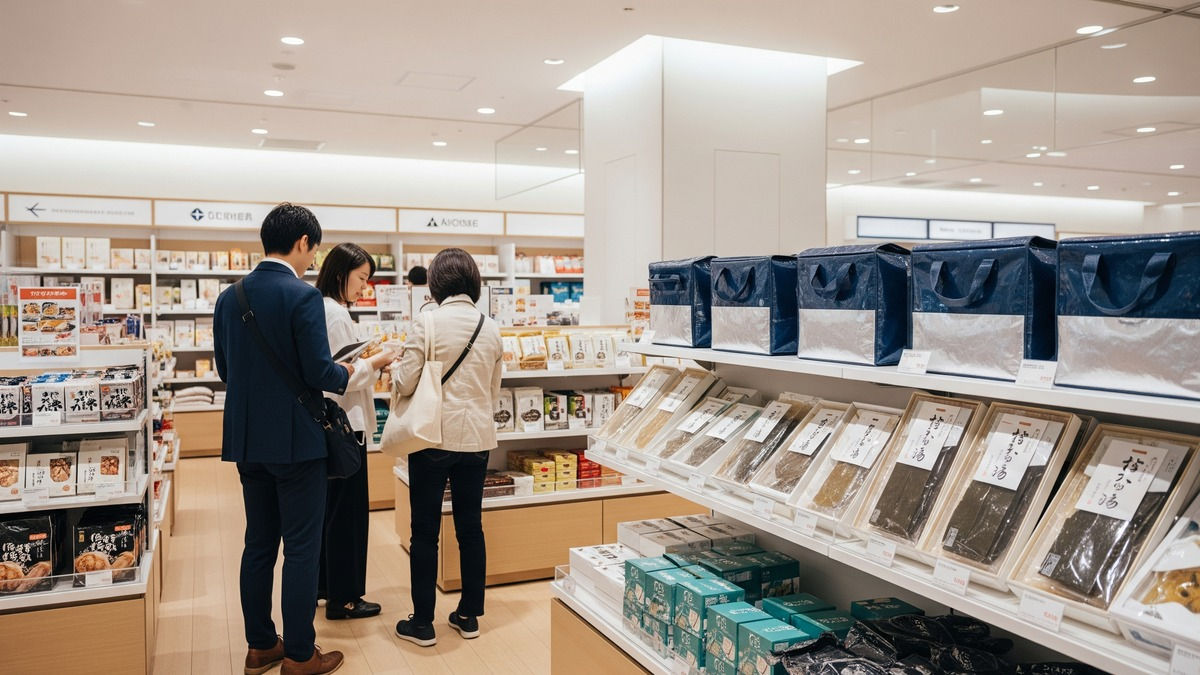
This image was generated by AI for illustrative purposes.
If you're heading home on the day you buy, chilled and frozen items are fair game. On the other hand, if you're going from the airport to Otaru to keep sightseeing, it's safer to stick with room-temperature items such as kombu, dried goods, canned and jarred foods, and vacuum-packed products.
| Travel plan | Best souvenirs | Things to watch |
|---|---|---|
| Flying straight home from the airport | Chilled items, frozen items, products in insulated boxes | Check how long they stay cold and your airline's rules |
| Another night in Otaru or Sapporo | Kombu, dried goods, canned and jarred foods, shelf-stable products | Consider shipping chilled items |
| Overseas or long-distance travel | Shelf-stable items, individually wrapped items, lightweight products | Check carry-on and quarantine rules |
Chilled and frozen seafood is tempting, but ice packs may be treated much like liquids or gels. If you plan to carry items on board or are flying internationally, check with the shop and your airline before you buy.
Seafood Shops on the Domestic Terminal 2F
Seafood souvenirs at New Chitose Airport are easiest to find on the 2nd floor of the domestic terminal. It's easy to work into your shopping before departure, and you can compare shops before going through security.
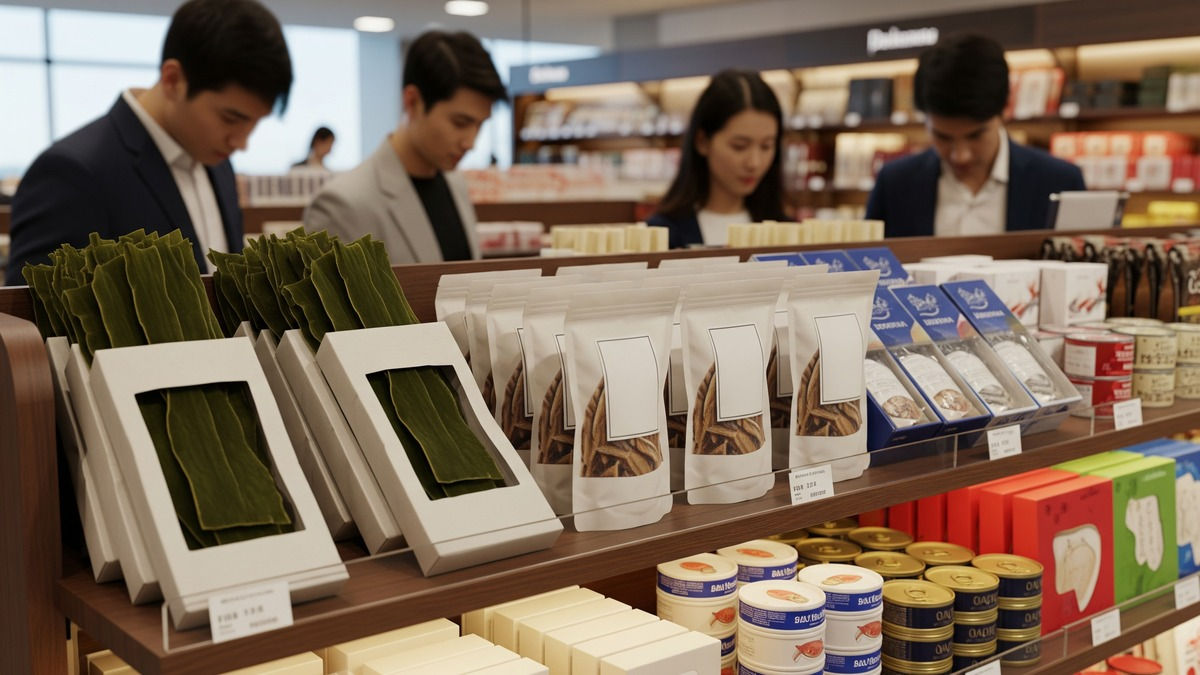
This image was generated by AI for illustrative purposes.
Umidokoro Matsuba sells processed seafood such as Matsumae-zuke, shiokara, scallop products, sake toba, komai (saffron cod), and hokke (Atka mackerel). According to official information, it's on the domestic terminal 2F and open 8:00–20:00. It's a good pick if you're looking for snacks to go with drinks or light dried goods.
Shima no Hito New Chitose Airport store focuses on seafood from Rebun Island, along with sea urchin, hokke, and original products. According to official information, it's on the domestic terminal 2F and open 8:00–20:00. It's ideal if you want seafood with a northern Hokkaido, remote-island character.
Shiretoko Sazaemon Honpo carries foods from the Shiretoko and Rausu area, Rausu kombu, and processed seafood. According to official information, it's on the domestic terminal 2F and open 8:00–20:00. For anyone who loves to cook, kombu for making dashi (soup stock) and processed products are easy choices.
Hokkaido Honpo General Souvenir Shop is an all-round store carrying everything from sweets and produce to meat, seafood, and alcohol. According to official information, it's on the domestic terminal 2F and open 7:30–20:30. It's a good option when you're short on time and want to buy everything in one place.
Choosing Between Room-Temperature, Chilled, and Frozen
If you're buying before heading to Otaru, start with room-temperature items. Kombu, dried goods, sake toba, delicacies, canned and jarred foods, and vacuum-packed products are easy to carry around and don't depend on whether your hotel has a fridge.
Choose chilled items only if you can get them into a fridge the same day. That's realistic if you're taking the JR train from the airport to Otaru and can drop them off right away at a hotel near the station, but it's best to avoid them on days when you plan to stop in Sapporo or at an outlet mall along the way.
Frozen items are best for shipping or for flying straight home. Even in an insulated box, their condition can change with the weather, travel time, and transport delays. Even in winter, there's no guarantee they'll hold up for long on heated trains and buses or in a warm hotel lobby.
Avoiding Mistakes with Cooling, Shipping, and Carry-On
A common mistake with seafood souvenirs is overestimating how long they'll stay cold. Count the time from when you buy at the airport to when you can put them in your fridge at home.
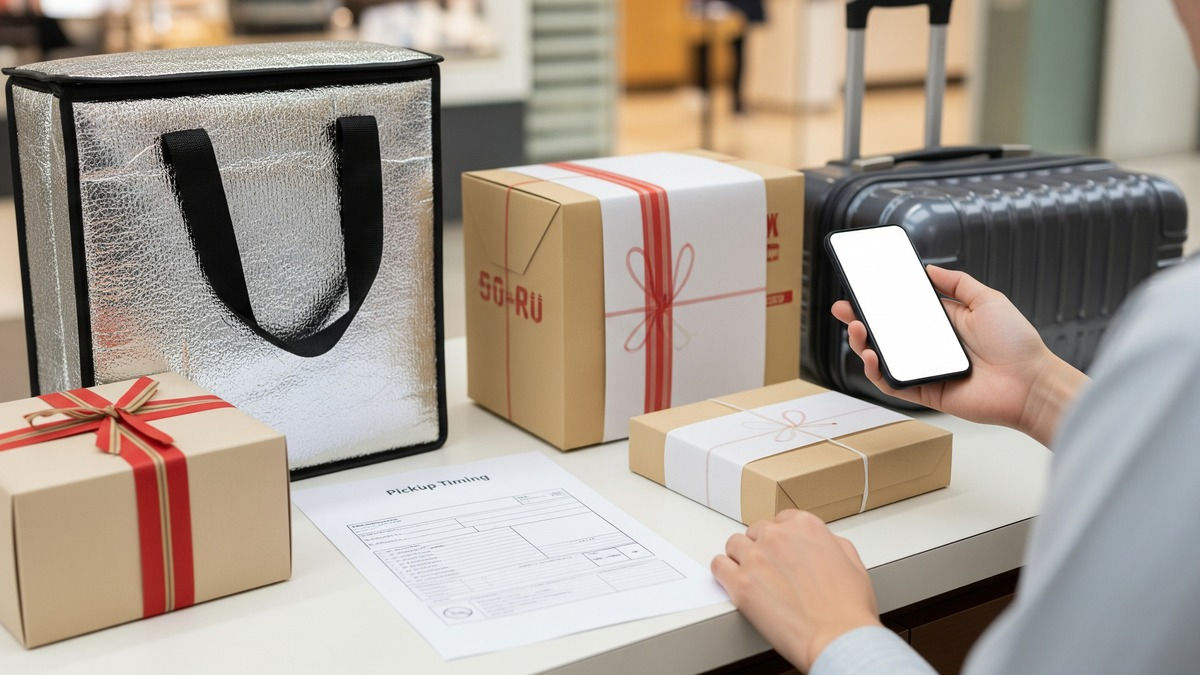
This image was generated by AI for illustrative purposes.
How ice packs and dry ice are handled depends on the product, the airline, and whether you're on a domestic or international flight. Liquids and gels in particular may run into restrictions on international flights. Tell the shop staff whether you're "taking a flight," "carrying it as hand luggage," or "putting it in checked baggage," and it will be easier for them to advise you.
If you're shipping, check the delivery date, whether it goes chilled or frozen, the delivery time window, and when someone will be home to receive it. Rather than sending it to your hotel mid-trip, it's easier to send it to your home address and receive it after you get back.
Combining Your Shopping with a Trip to Otaru
If you're buying at New Chitose Airport before going to Otaru, keep it to a small amount of compact, room-temperature items. If you want to go all in on seafood, a practical split is to eat at Otaru's markets and sushi restaurants, then pick up easy-to-carry processed products at the airport.
If you're flying out of New Chitose Airport on the way home, set aside 45–60 minutes before boarding. Comparing products at the seafood counters takes time, and you'll also need to check cooling and shipping options. During Obon (mid-August) and the New Year holidays, the checkout lines and security checkpoints also tend to get crowded.